 Edward DP Situmorang
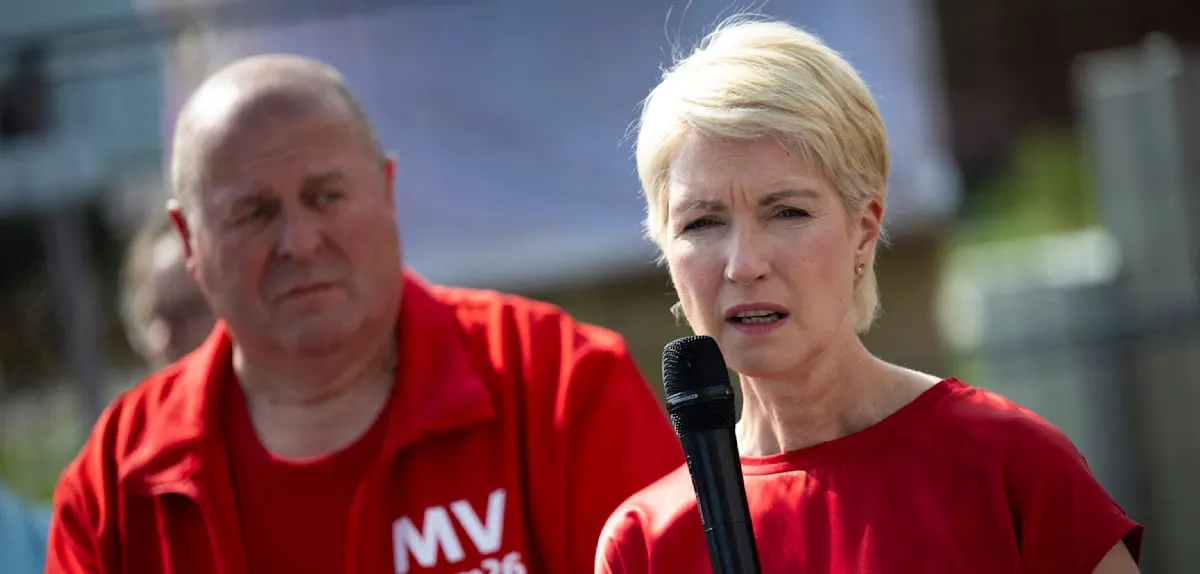
SCHWERIN – The political atmosphere in Mecklenburg-Vorpommern is heating up in anticipation of the state election in 2026. Senior politicians from the Christian Democratic Union (CDU) have openly attacked Manuela Schwesig, the current Governor and leader of the Social Democratic Party (SPD) in the region. They accuse Schwesig of being excessively polarizing and prioritizing personal agendas in a campaign described as a 'battle for survival' for the CDU, which is currently fighting desperately to regain its footing.
The situation for the CDU party in this federal state is indeed precarious, with recent polls showing support at only seven percent. This figure is significantly below the threshold required to re-enter the state parliament. Deep concerns pervade the entire CDU ranks, fearing a loss of their representation in the local political arena.
According to an anonymous senior CDU politician, Governor Schwesig is described as 'polarizing and only thinking of herself'. This statement reflects the deep frustration among conservatives regarding Schwesig's strategy and leadership style, which is perceived as disregarding consensus and widening ideological divides.
These attacks emerge amid an intensifying campaign, where Schwesig, as the incumbent, is the primary focus. Her campaign approach, accused of being 'personal' and tending to 'divide,' is believed to be the main trigger for the resentment among her political rivals.
Political observers believe that this criticism is not merely a typical political attack but also a reflection of the unease among challenger parties who feel marginalized by Schwesig's personal dominance. Her relatively stable popularity amidst national political fluctuations has become a thorn in the side of the CDU.
This condition adds to a long list of political dynamics occurring in Germany, especially following significant political tremors in various federal states. For instance, the surprising victory of the Alternative for Germany (AfD) party in Saxony-Anhalt has spurred calls for strategic changes among established parties. [Read more in the related article: Germany's Political Tremors: AfD Victory in Saxony-Anhalt Triggers Calls for Change].
The state election in Mecklenburg-Vorpommern is predicted to be a fierce contest that will not only determine the local power landscape but also potentially provide an early indication of federal political trends in Germany. The CDU must find a way to revitalize its voter base and offer a more compelling narrative.
Manuela Schwesig, who has served as Minister-President since 2017, is known for her firm political style. However, accusations of polarization could backfire, especially if voters perceive her priorities as leaning more towards individual interests rather than the collective needs of the state.
The CDU party, with a long history as one of Germany's dominant political forces, now faces an existential challenge in Mecklenburg-Vorpommern. Failure to cross the parliamentary threshold would be a severe blow with implications for the party's national strategy.
Schwesig's campaign strategy, which focuses on her central figure, may be effective in galvanizing personal support. However, on the other hand, it also creates negative perceptions among her political opponents. They see an attempt to build a cult of personality that disregards inter-party cooperation.
Editorial Insight:
The sharp criticism against Manuela Schwesig from the CDU camp signals an escalation of political tensions leading up to the 2026 state election. This dynamic is not just a battle between two major parties but also a reflection of the changing political landscape in Germany post-Angela Merkel, where fragmentation and political personalization are increasingly prominent. The election results in Mecklenburg-Vorpommern will serve as a crucial barometer for the stability of the federal coalition and the overall future direction of German politics.