 Robert Andrison
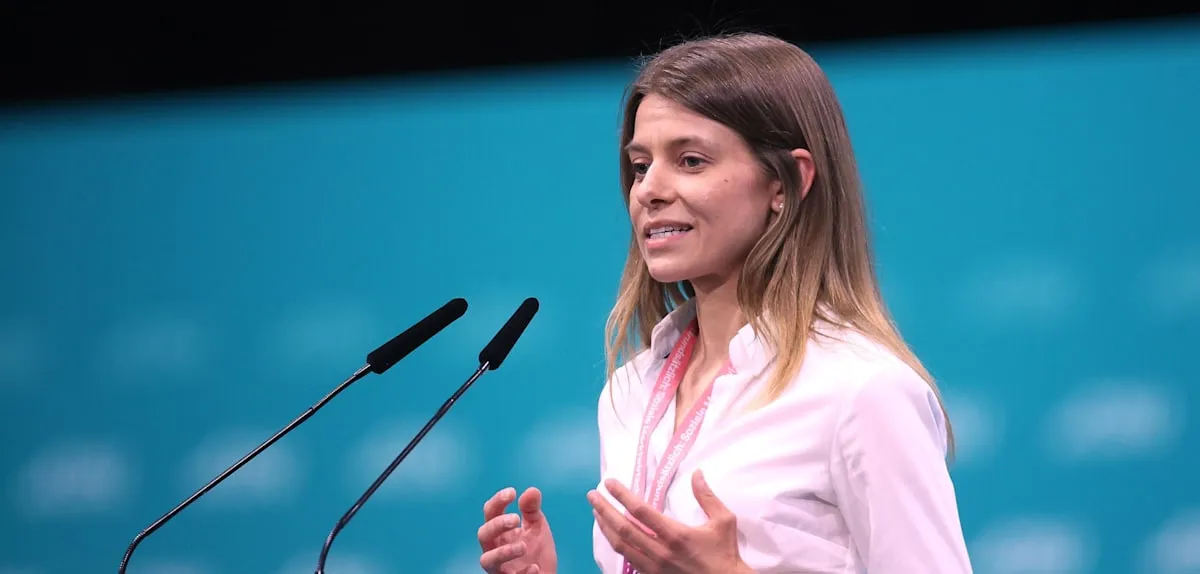
BRANDENBURG — Laura Strohschneider, a central figure and Chairwoman of the Junge Union (JU) Brandenburg, has surprisingly announced her resignation from the Christian Democratic Union (CDU) party and her position. This decision comes as a strong protest against the direction of her parent party’s policies and federal leadership, triggering a wave of internal debate within Germany's dynamic political landscape in 2026.
Strohschneider's resignation, from a potentially influential young figure, highlights deep dissatisfaction within the CDU's youth wing. She explicitly criticized the party's 'top personnel' and the 'course of the federal government,' indicating a fundamental dissonance between the aspirations of the younger generation and the prevailing leadership strategy.
Her criticism addressed various crucial issues that she believes the CDU and the government coalition have failed to address effectively. This includes economic policy, the response to climate change challenges, and migration issues, which continue to be fiercely debated in Germany. Strohschneider feels the CDU has lost touch with its base and failed to present a convincing vision for the future.
The Junge Union, as the largest youth organization in the German political spectrum, plays a strategic role in developing future leaders and voicing the aspirations of the next generation. The resignation of the chair of one of its state branches sends a serious signal about internal rifts within the party, particularly in the important state of Brandenburg.
Political observers in Berlin view this incident not merely as a common resignation, but as a manifestation of broader unease within the CDU. The party faces significant challenges in reconciling various factions and uniting its voice amidst increasing pressure from other parties. This issue is relevant to internal party debates, as highlighted in articles about “Merz Trapped Post-Election: Chancellor Abandoned by Own Party?”.
Strohschneider's decision can also be interpreted as the culmination of frustration over the party's inability to adapt to changing times and voter demands. She may feel that the aspirations for reform and innovation driven by the younger generation are not receiving sufficient attention from the more senior party leadership.
The political circles of CDU Brandenburg are now faced with the difficult task of filling the leadership vacuum and alleviating the internal tensions that have emerged. The search for Strohschneider's successor is expected to be a challenging process, given the visibility and influence she has built in the region.
At the national level, this incident adds to the list of challenges for the CDU in building a solid and cohesive image. With upcoming elections looming, the party needs strong internal unity to compete effectively and regain public trust.
Strohschneider's resignation also highlights the complexities of Germany's federal politics in 2026. Criticism of the 'Bundesregierung's course' suggests that opposition parties, including the CDU as a major opposition force or within a coalition, are seeking a more assertive and effective stance in criticizing central government policies.
Such phenomena are not new in the German political arena. Major parties often face significant internal disagreements, especially between conservative and progressive wings, or between senior and junior generations. However, the scale of a resignation like Strohschneider's remains a matter of concern.
Political analysts suggest that the CDU must undertake deep introspection immediately. Failure to address internal dissatisfaction could lead to a further exodus of promising young cadres, harming the party's long-term prospects. This parallels developing issues about the Threat to Democracy from the Majority Party if dissonance continues.
Strohschneider's decision could also trigger a broader discussion about youth representation in German political parties. How parties can ensure that the voices of the younger generation are heard and their aspirations adequately accommodated is an important question that needs to be answered.
Brandenburg, as one of the federal states in eastern Germany, has its own political dynamics. This region often serves as a barometer for shifts in voter sentiment across Germany, making this resignation even more significant.
Strohschneider herself has not given clear indications of her next political steps. However, her firm decision to leave the party demonstrates a strong commitment to her principles, regardless of the consequences for her political career. The public will continue to monitor further developments.
This resignation is not just local news, but a reflection of the structural challenges faced by traditional parties in the modern era. Demands for transparency, accountability, and adaptation to contemporary issues are increasing, requiring fundamental changes in how parties operate.
Other parties in Germany, as seen from the article “Shaking Germany: AfD Firmly Controls Saxony-Anhalt, Political Map Drastically Changes”, also face similar internal and external dynamics. New political forces and shifts in public opinion compel the entire German political spectrum to continuously adapt or risk losing relevance.
Amidst this political turmoil, the CDU must prove its ability to reform and respond to constructive criticism from within. The future of this party, and perhaps even Germany's political stability, will heavily depend on how they address upheaval such as that caused by Laura Strohschneider's resignation.
Brandenburg is now in the spotlight, not only because of Strohschneider's resignation but also as a testing ground for the CDU to demonstrate its capacity to overcome leadership crises and ensure its relevance in the eyes of increasingly critical young voters.
This event serves as a reminder that the internal dynamics of political parties are a vital component in determining a country's policy direction. Criticism from within, though sometimes painful, often serves as a catalyst for necessary change and improvement to maintain democratic integrity.
In the coming weeks, attention will be focused on how the CDU, both in Brandenburg and at the federal level, will navigate this turbulence and take strategic steps to prevent further exodus and restore the trust of its members, especially from the younger generation.