 Debby Wijaya
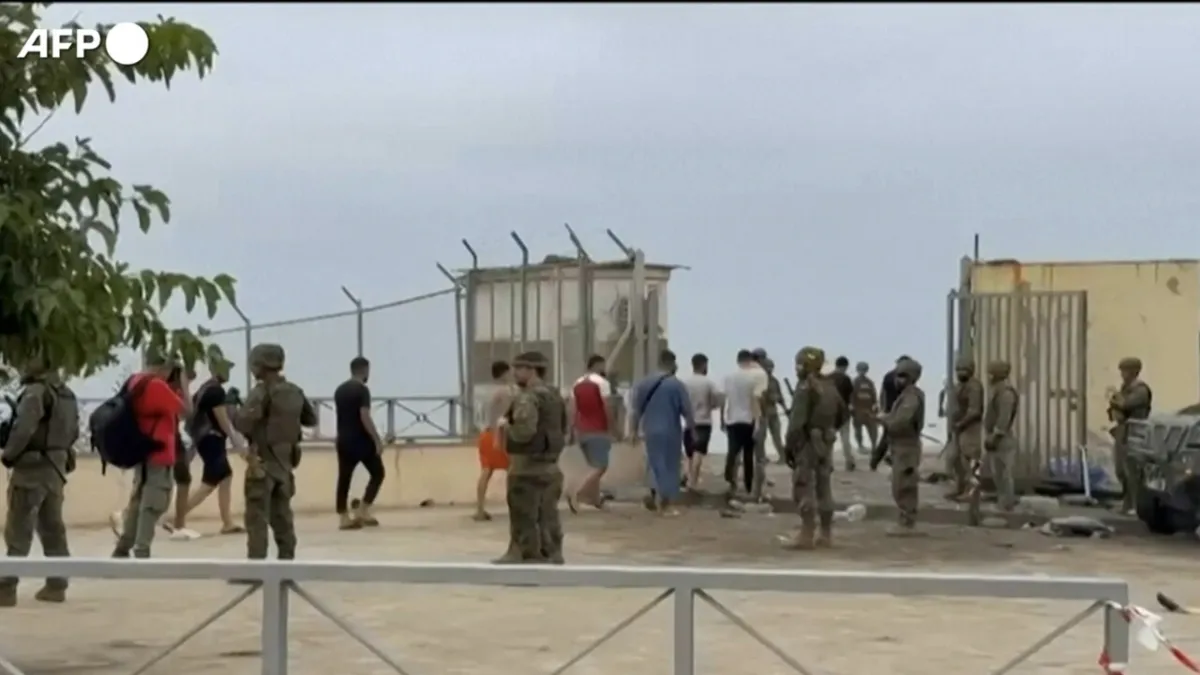
CEUTA — Thousands of migrants from various countries have reportedly attempted to enter the Spanish enclaves of Ceuta and Melilla in North Africa, both by land and by sea. This incident, occurring recently, once again highlights the border security challenges and the recurring humanitarian crisis at Europe's gateway.
MELILLA — Spanish authorities have deployed additional security forces to curb this influx. Mass attempts to breach the border have become a recurrent scene, demanding a prompt response from the Civil Guard and police guarding the border fences.
These two cities, Ceuta and Melilla, are geographically separated from mainland Spain and share a border with Morocco. This strategic position makes them a primary transit point for individuals seeking to reach the European Union, often undertaking perilous journeys from their home countries.
The latest wave of migrants underscores the persistent immigration pressure Spain faces. Although the numbers have not reached the peak of previous incidents involving tens of thousands of migrants, the scale of the threat remains significant, straining reception capacities and local resources.
The Spanish government has repeatedly called for greater solidarity from the European Union to address this complex issue. Spain's Minister of Interior emphasized at a press conference last week that the immigration problem is not merely a national burden but a collective challenge requiring coordinated solutions from the entire European bloc.
The humanitarian crisis accompanying each wave of crossings also draws sharp attention. Many migrants arrive in weakened physical condition, suffering from dehydration or injuries due to extreme journeys and clashes at the border. Local non-governmental organizations and the Red Cross continue to struggle to provide essential aid, but their resources are often limited.
This situation also raises questions about the role of migrants' countries of origin and transit countries, particularly Morocco. Some geopolitical analyses, as previously explored, point to the potential manipulation of the migrant crisis as a political bargaining chip in bilateral relations.
Similar past events have led to serious diplomatic tensions, including when Italy once considered suspending the Schengen Agreement for Spain in response to a major migrant surge.
At the EU level, debates on asylum and immigration policy reforms continue. Member states are still searching for common ground for a fair and effective framework to manage migration flows, while upholding humanitarian principles and international law.
Observers believe that without a comprehensive approach involving international cooperation, investment in stability in countries of origin, and clearer legal migration pathways, Ceuta and Melilla will continue to be the frontline of an unending crisis.
Physical border security, such as barbed wire fences and advanced surveillance systems, continues to be strengthened. However, every technological security enhancement seems to be met with innovative strategies from migrants in their crossing attempts.
Spain, as one of the EU member states on the frontline of the migrant crisis, continues to bear a significant burden in managing this situation. This pressure is not only economic but also social and political, affecting domestic public opinion and its international relations.
On several occasions, the Spanish military has been deployed to help secure the border, indicating the critical nature of the situation when migrant waves reach a very large scale. This shows that the crisis in Ceuta and Melilla extends far beyond ordinary policing issues.
The long-term consequences of this migration phenomenon on the demographics and socio-culture of Ceuta and Melilla are also a concern. The growth of the migrant population requires adequate integration and sufficient availability of public services.