 Edward DP Situmorang
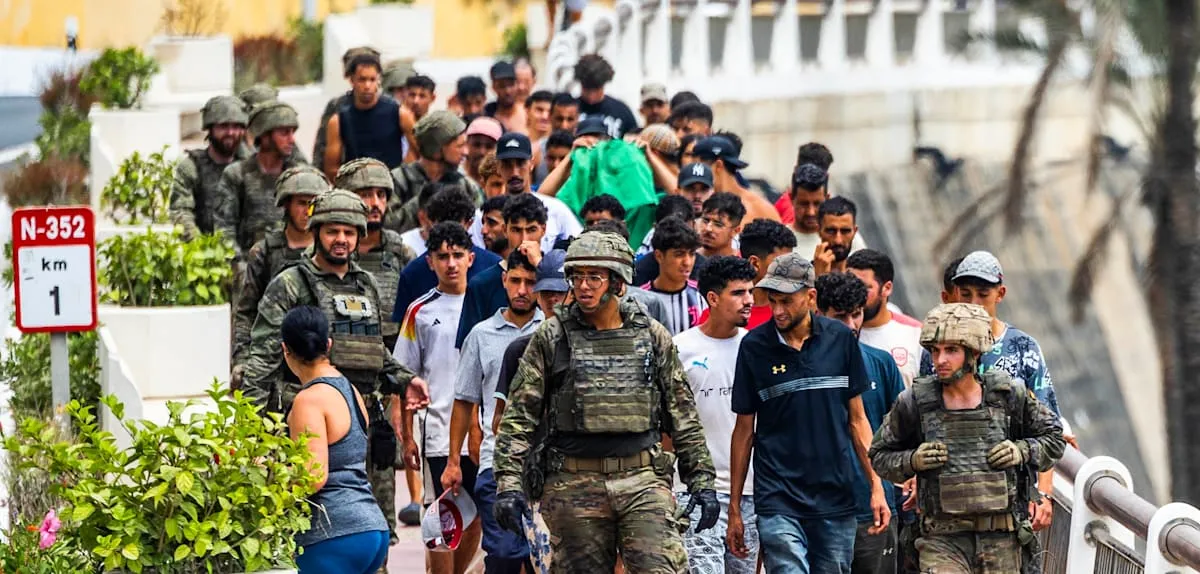
CEUTA — A humanitarian tragedy gripping Ceuta, the Spanish exclave in North Africa, reached its peak in 2026 when the city's border was reportedly "no longer there" after midday, triggering an uncontrollable wave of migrants and claiming significant lives. Rescue operations are still ongoing intensely, attempting to evacuate bodies continuously found amidst the ruins of collapsed border control. This incident highlights fatal negligence in crisis management by authorities.
Initial reconstruction of this deadly incident reveals a shocking fact: the government, both at local and national levels, had too long underestimated the danger signals that had emerged. Early warnings about a potential surge of migrants were ignored, leading to fatal unpreparedness when the human wave from Morocco suddenly flooded border posts.
What began as minor pressure transformed into a mass influx within hours. Thousands of individuals, driven by desperation and the hope for a better life, managed to breach the barricades and barbed wire fences that had long symbolized European resilience. The death toll, though not yet final, is expected to continue rising as bodies are discovered in various locations.
Sharp criticism has been directed at relevant officials deemed slow in responding to the emergency. Lack of coordination and effective mitigation strategies are major points of concern. The international community, including human rights organizations, calls for a thorough investigation into this incident and demands accountability from those responsible.
Rescue teams from various agencies, including the Red Cross and Spanish security forces, work tirelessly in Ceuta, facing difficult conditions in search and evacuation efforts. They contend with complex terrain and additional risks, while identifying victims, most of whom are sub-Saharan African nationals.
The phenomenon of migrant incursions into Ceuta is not new, but the scale and intensity of this 2026 incident indicate systemic failure. For years, the potential threat has often been underestimated, and comprehensive long-term solutions have not materialized. The Spanish government, now led by Prime Minister Pedro Sanchez, faces global pressure to explain its response.
This tragedy also reopens old wounds related to Spain's and Morocco's relationship on migration issues. Ceuta and Melilla, two Spanish enclaves in North Africa, have long been flashpoints for migrants attempting to reach European soil. This incident could damage diplomatic relations between the two countries, given the mutual accusations regarding border management.
Amidst this crisis, the European Union is once again confronted with an unresolved migration policy dilemma. The incident in Ceuta serves as a bitter reminder of the fragility of the bloc's external border system. There are calls for greater solidarity among member states, but also concerns about rising anti-migrant sentiment.
The social and economic impact on the city of Ceuta itself is significant. In addition to the grief over the lost lives, the city must cope with tremendous infrastructure and resource pressure due to the influx and the need for temporary shelters. Local residents directly experience the uncertainty caused by the vulnerability of their border.
Migration and border security experts are calling for fundamental reforms. They emphasize the importance of a more humane and coordinated approach, focusing not only on security but also on the root causes of forced migration. Without fundamental changes, similar incidents are feared to recur in the future, with worse consequences.
This 2026 Ceuta crisis has also sparked intense debate in Europe, as reflected in the related article “Ceuta Crisis 2026: Europe Divided, Morocco Denies Migrant Data!”. Europe is now urged to find more adaptive migrant management models, even considering the discourse of developing new migrant hubs outside the continent, similar to the Albanian model.
To this day, the sound of sirens and evacuation activities still dominate the atmosphere in Ceuta, bearing silent witness to the loss of lives and the collapse of hope. This tragedy will be recorded as one of the dark moments in the history of European migration policy, reminding us of the high price of negligence and neglect.