 Dorry Archiles
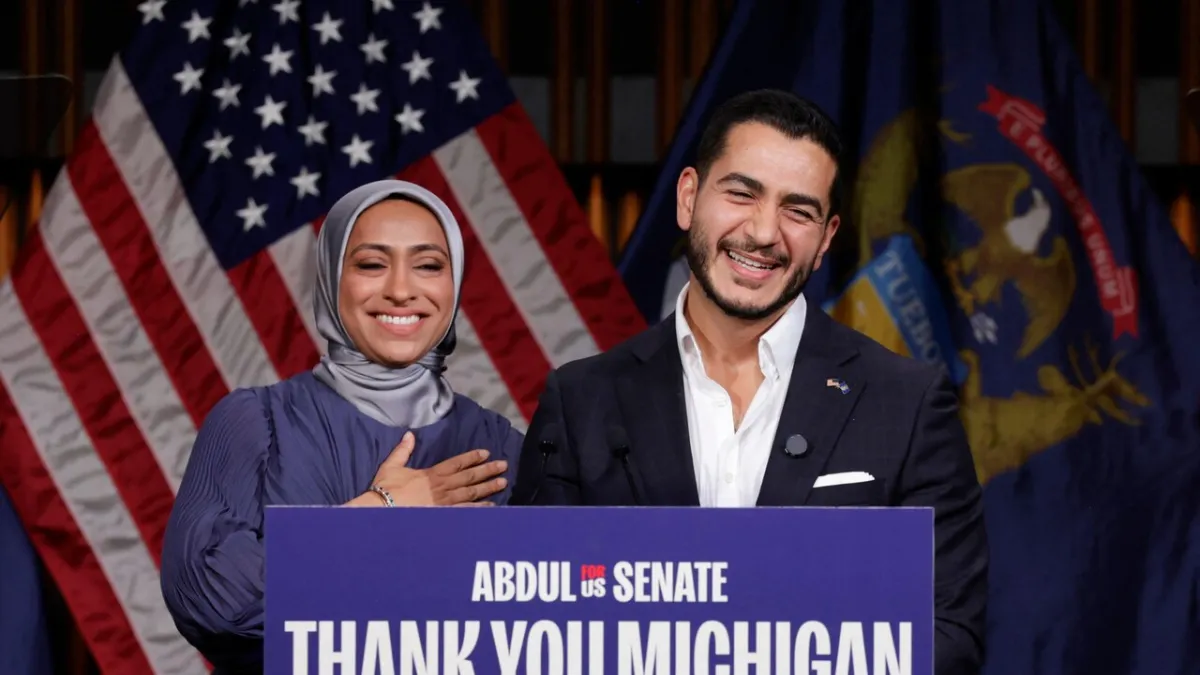
LANSING – The political landscape of Michigan roared following the 2026 Senate election, where Democratic politician of Muslim descent, Abdul El-Sayed, secured a significant victory. This triumph is more than just a change of seat; it represents a firm rebuke to the religiously charged campaign spearheaded by President Donald Trump and Vice President J.D. Vance. El-Sayed heroically defeated Republican candidate Mike Rogers, leaving a trail of victory that not only overturned predictions but also garnered national attention.
El-Sayed's journey to the United States Senate was marked by various challenges, including personal attacks targeting his religious identity. Critics accused the Republican camp, particularly President Trump and Vice President Vance, of employing Islamophobic rhetoric to discredit El-Sayed in the eyes of voters.
In a spirited post-victory statement, El-Sayed directly addressed these criticisms, delivering a sarcastic remark that went viral: JD habibi. This phrase, combining Vice President Vance's initials with the Arabic word for my darling or my beloved, served as a clever retort to divisive tactics.
This victory in Michigan strengthens the blue wave that has swept several states, indicating a shift in the political dynamics of the United States in 2026. The Democratic Party, in many aspects, successfully garnered sympathy from voters who are weary of polarization and extreme rhetoric.
Political analysts noted that this result reflects the failure of conservative strategies that overly relied on identity and religious issues as political weapons. Conversely, El-Sayed's message of inclusivity and focus on concrete policies resonated strongly with the people of Michigan.
Mike Rogers, El-Sayed's Republican opponent, previously an influential figure, had to concede defeat to the challenger. This loss marks a significant blow to Republican ambitions of maintaining Senate dominance.
The 2026 election was indeed predicted to be one of the most crucial in modern American history. The Democratic victory in leading Congress has been a hot topic, with markets accurately predicting the political surprises that define the US.
El-Sayed's win also sends a strong signal to the American Muslim community, affirming that religious identity should not be an impediment to political participation and public service. This serves as an inspiration for many other minority individuals and groups.
This success further adds to the growing list of Democratic victories in crucial Senate seats, such as in North Carolina, further solidifying the party's position on the national political stage.
The American public now awaits how El-Sayed will bring the aspirations of Michigan's constituents to Capitol Hill, and how he will contribute to broader policy debates, particularly concerning civil rights and minority representation.
The phenomenon of a Muslim politician winning a Senate election in a demographically diverse state like Michigan also provides a fascinating case study for global political scientists. It challenges common narratives about anti-immigrant and anti-minority sentiments often prevalent in political campaigns.
The impact of this victory is not limited to Michigan alone. It has the potential to provide new momentum for the Democratic Party in the blue wave sweeping America, where they successfully captured Congress and demonstrated significant political strength.
Editorial Insight: Abdul El-Sayed's victory in Michigan is more than just numbers on a ballot; it is a symbol of resistance against divisive identity politics. This outcome affirms that American voters, even amidst extreme polarization, still value candidates who can transcend prejudice-based rhetoric. This could set an important precedent for future elections, demonstrating the limits of negative sentiment-based campaigns and paving the way for more inclusive representation in government.