 Chandra Wijayanto
BORDEAUX — The European continent is currently gripped by a severe environmental crisis. Devastating wildfires in 2026 have forced hundreds of thousands of residents in Spain, France, and Italy to abandon their homes, creating a landscape akin to ghost towns in several regions. This situation has triggered a massive wave of evacuations, with Bordeaux in France being one of the most threatened cities.
Recent reports from various international media indicate that the fires have spread rapidly, fueled by extreme heatwaves and prolonged drought conditions. Several areas that were once bustling with activity are now eerily silent, deserted by their inhabitants for safety.
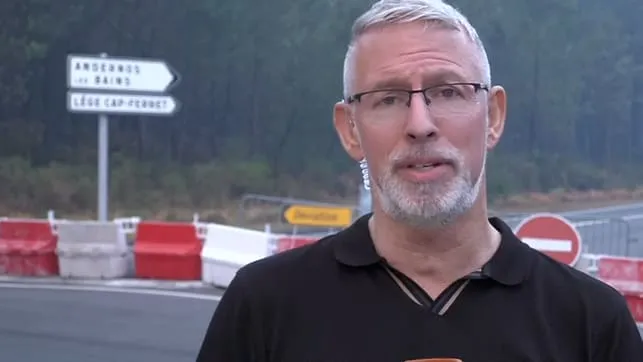
Thorsten Kremers, a senior journalist reporting directly from the scene, described the heartbreaking conditions. "Everything is locked down, as if all life has stopped here," Kremers stated, highlighting the severe impact of the disaster on local social and economic life.
Mass evacuations are not only occurring in France. Thousands of residents in several provinces in Spain and Italy have also been ordered to evacuate. Local governments are struggling to control the incessantly spreading fires, often for days on end.
The Gironde region around Bordeaux has become the epicenter of the fires in France. More than 20,000 hectares of pine forests have been consumed by flames, threatening settlements and vital infrastructure. Authorities have deployed thousands of firefighters, supported by water-bombing aircraft, in a tireless effort.
The impact of the inferno that has ravaged much of Europe is not just material loss. Thousands of wild animals have died, ecosystems are destroyed, and air quality has drastically deteriorated due to thick smoke blanketing the skies, even reaching cities far from the fire zones.
Climate scientists have repeatedly warned that the frequency and intensity of extreme wildfires will continue to increase in Europe due to global climate change. The year 2026 stands as stark evidence of these predictions, demonstrating the urgency for more serious mitigation actions.
The deadly smoke shrouding the skies of France and Spain has raised serious public health concerns. Authorities have issued air quality warnings and advised residents to remain indoors.
This crisis also highlights the emergency response capacity of European nations. Inter-state solidarity is required to tackle cross-border disasters that do not recognize administrative boundaries. International aid has begun to flow, but the scale of the damage demands a more coordinated response.
Thousands of personnel have been deployed from various neighboring countries to assist in the firefighting efforts. However, difficult terrain and strong winds complicate their work, causing the fires to continue spreading and threatening new areas every hour.
The government of France, led by President Emmanuel Macron, has declared a national emergency in several affected areas. Additional resources are being allocated for disaster management and assistance for the evacuees.
Post-disaster reconstruction efforts are expected to take years and require significant investment. Authorities have begun discussing long-term recovery plans, including reforestation programs and strengthening early fire warning systems.
This 2026 wildfire incident serves as a bitter reminder of Europe's vulnerability to the impacts of climate change. Without comprehensive adaptation and mitigation strategies, similar events are likely to recur with greater frequency and intensity in the future.