 Debby Wijaya
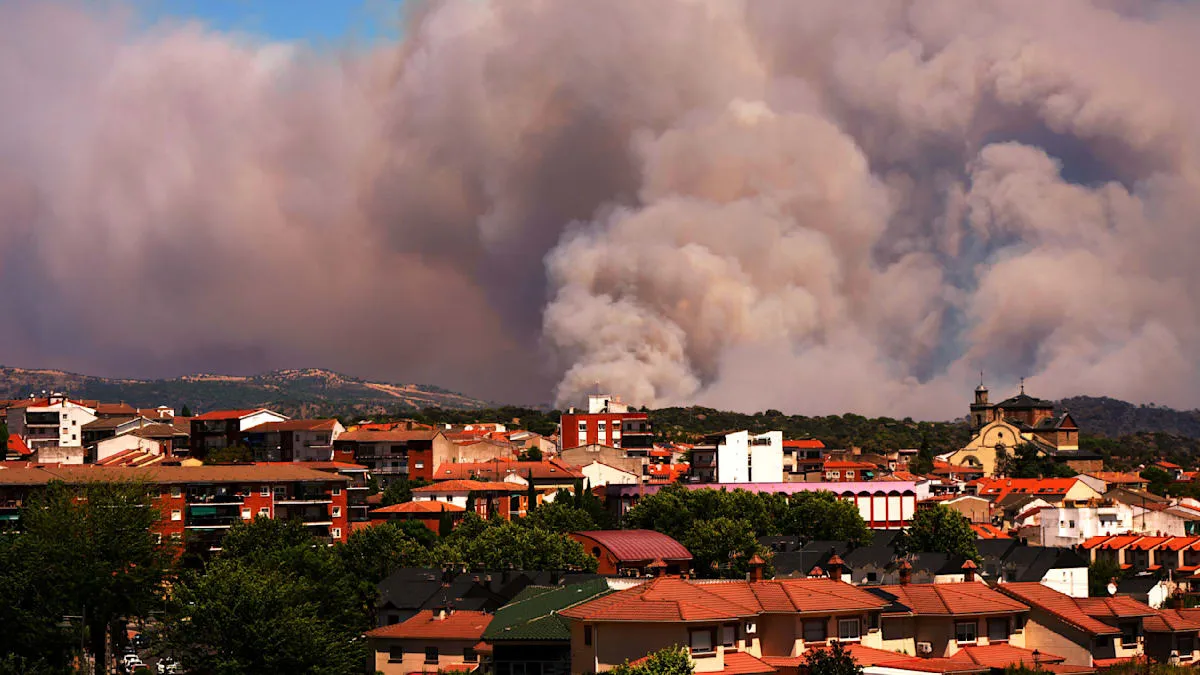
PARIS — Devastating wildfires swept across regions of France and Spain in mid-2026, creating a grim landscape of thick smoke plumes that are almost impossible to control. This phenomenon of collapsing giant smoke clouds poses a serious challenge for firefighting teams, threatening millions of lives and vital ecosystems in the two European nations.
This natural disaster has not only scorched thousands of hectares of land but also forced thousands of residents to evacuate from their threatened communities. Authorities in both countries have deployed all efforts, including water-bombing aircraft and thousands of personnel, but extreme conditions render the fight against the fires futile.
Jan Südmersen, a leading expert in vegetation fires, highlighted the complexity of this situation in an exclusive interview with WELT TV. According to him, the current fires exhibit characteristics vastly different from previous years, with astonishing intensity and speed of spread.
“Smoke clouds are now collapsing back to the ground. This phenomenon not only obstructs visibility but also traps heat and oxygen near the fire sources, creating ideal conditions for the fires to escalate and expand,” Südmersen explained. This situation, he stated, makes traditional firefighting efforts almost ineffective.
The ecological impact of these wildfires is severe. Ancient pine forests and rich biodiversity in the Pyrenees region and around the Mediterranean have been annihilated. Wildlife has lost its habitats, while air quality across Western Europe has drastically deteriorated due to smoke particles.
In Bordeaux, France, and Seville, Spain, hospitals are becoming overwhelmed with patients suffering from acute respiratory problems. Children and the elderly are the most vulnerable groups to smoke exposure, triggering an urgent public health crisis.
A prolonged heatwave that afflicted Europe throughout the summer of 2026 is the primary trigger. High temperatures and minimal rainfall have transformed vegetation into highly combustible dry fuel, creating a giant 'tinderbox' across the rural landscape.
The governments of France and Spain have declared a state of emergency in several regions, mobilizing the National Guard and requesting international assistance. However, the scale of this disaster highlights the limitations of existing infrastructure and mitigation strategies.
Climate experts warn that such incidents will become more frequent and severe in the future if significant steps are not taken to address climate change. Periods of extreme drought and heatwaves will become the new norm, demanding radical adaptation in land and forest management.
The situation in France and Spain serves as a bitter reminder of our Earth’s vulnerability to the impacts of the climate crisis. More than just a local disaster, it is a global call for collective action to protect the planet from further destruction. The international community is expected to coordinate more closely in mitigating and adapting to these extreme natural phenomena.
“We must begin to see these fires not as isolated incidents, but as real manifestations of a larger change. Our approach must be holistic, from prevention to more advanced firefighting technologies,” Südmersen concluded, emphasizing the urgency of action.