 Debby Wijaya
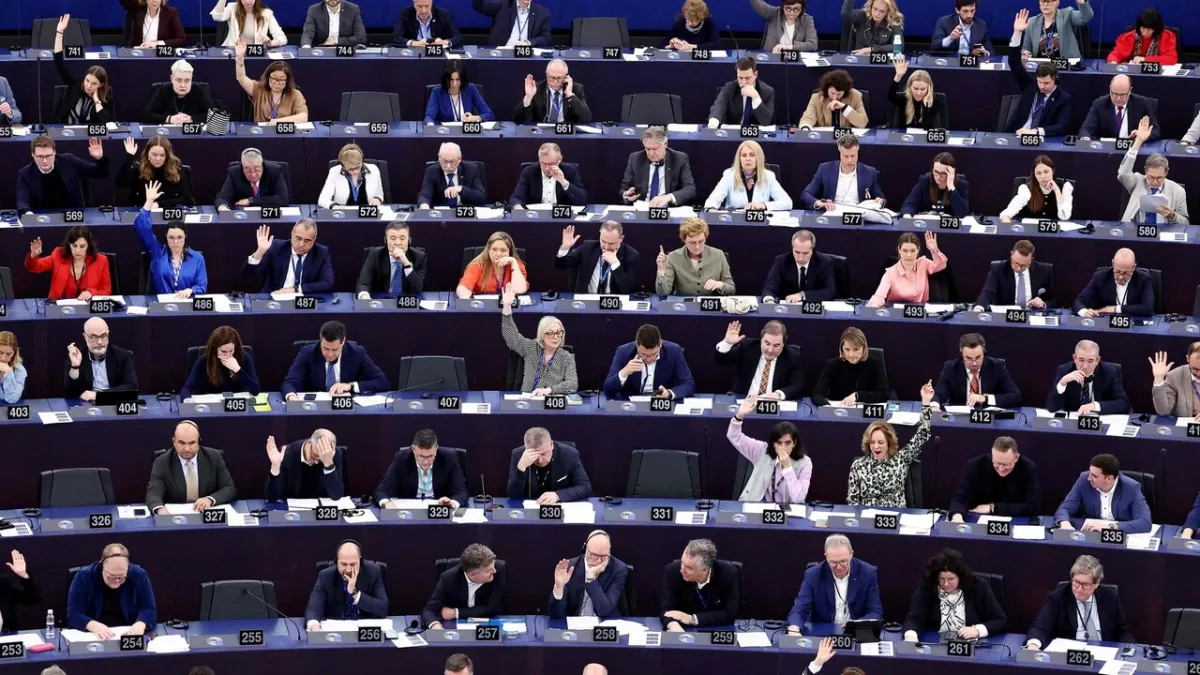
STRASBOURG — The European Parliament has officially approved an investigation into the Europe of Sovereign Nations (ESN), an alliance of far-right extremist parties gaining prominence on the continent's political stage. This crucial decision was made through a secret ballot, reflecting the high sensitivity and urgency of the European Union's institutional response to potential threats to the democratic principles underpinning its unity. This move marks a significant escalation in the oversight of political movements often accused of eroding cohesion and liberal values in the region.
Approval for this inquiry comes amidst growing concerns from various political factions regarding ESN's activities. While specific details of the alleged breaches have not been fully disclosed to the public, initial indications point to potential ethical violations, misuse of funds, or even attempts to manipulate political processes. The European Parliament, as the primary legislative body, is mandated to ensure integrity and transparency within the regional political landscape.
ESN, comprising several conservative nationalist and extremist populist parties from various member states, has seen rapid growth in recent years, capitalizing on a wave of anti-immigrant and Eurosceptic sentiment. Their presence frequently sparks intense debate about the future direction of the European Union, particularly concerning national sovereignty versus supranational integration.
The closed-door vote underscores the European Parliament's effort to act decisively yet cautiously. The secret nature of the ballot is believed to aim at protecting voters from potential external political pressure, while also ensuring decisions are made based on merit and available evidence.
Several political analysts view this investigation as a critical test for the resilience of EU institutions in confronting internal challenges. Professor Dr. Lena Schmidt, an expert in EU law from the University of Berlin, stated, "This is not just about one party. It's about how the European Union protects itself from actors who might seek to undermine its foundations from within. Transparency and accountability must be paramount, even when dealing with entities that oppose the spirit of unity."
This parliamentary action can also be seen as a proactive response to Europe's shifting political landscape. With the increasing popularity of far-right parties in various member states, including figures like Marine Le Pen in France – who also faces legal challenges related to her political activities – the EU seeks to send a clear signal that no entity is immune from scrutiny when fundamental values are at risk. In this context, cases such as Le Pen Trapped by Criminal Convictions, Vows Elysee Bid Without Electronic Tag illustrate that legal pressure on right-wing leaders is not new in Europe.
A special committee will be formed to follow up on this investigation. They will gather evidence, examine documents, and potentially summon witnesses to provide testimony. This process is expected to be transparent and objective, aiming to produce credible and unbiased findings.
The implications of this investigation are potentially far-reaching, both for ESN itself and for the broader political dynamics of the European Union. If the alleged violations are proven, ESN could face sanctions, including the withdrawal of parliamentary funding or even restrictions on participation in certain legislative activities. This would undoubtedly be a significant blow to the party's legitimacy and operational capacity.
Conversely, ESN supporters denounce this move as a political attempt to silence opposition and Eurosceptic movements. They argue that the investigation is politically motivated and aims to target voices that challenge the mainstream hegemony in Brussels.
Despite this debate, one thing is certain: the European Parliament's decision to approve an investigation into ESN marks a new chapter in the struggle to uphold the EU's core values. The outcome of this inquiry will have a significant impact on public trust in political institutions, as well as the future of the far-right movement on the continent in 2026 and beyond.
Further analysis from international political observers suggests this moment could be a turning point. "Parliament is showing its teeth," commented Dr. Hans Muller, a political analyst from a Brussels think tank. "This is not merely a formality; it is a declaration that certain boundaries will not be tolerated, regardless of growing popularity."
The European public now awaits further developments from the investigation, which is expected to provide clarity on the integrity and accountability of political groups operating at the heart of EU power. The final decision will be a crucial indicator of how far the European Union is willing to go to protect its democratic foundations.