 Dodi Irawan
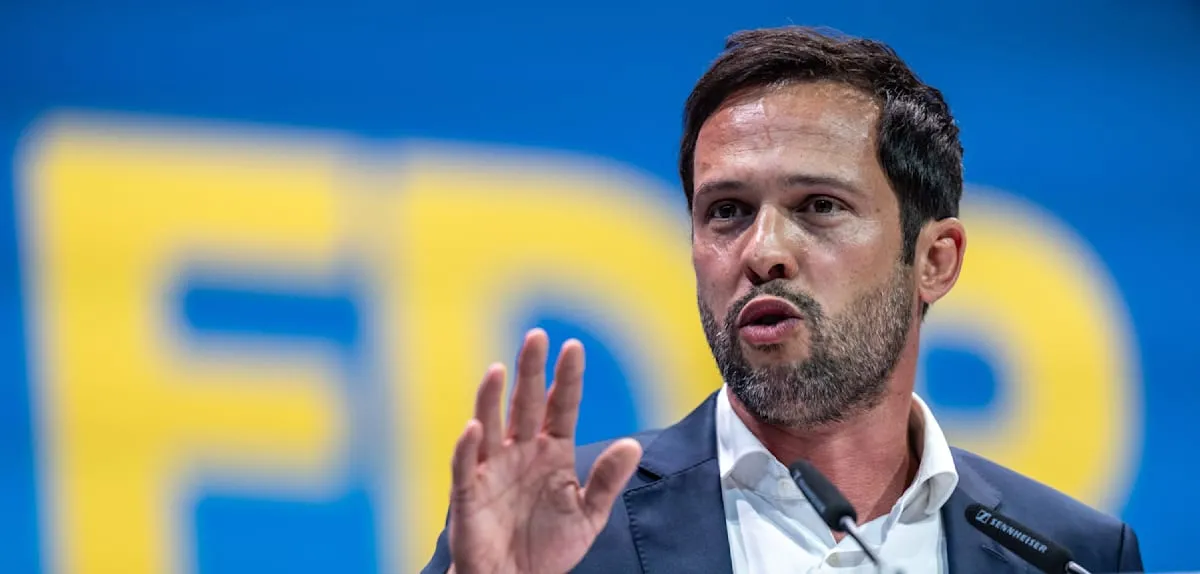
Berlin — The Free Democratic Party (FDP), through its Secretary General Martin Hagen, has vehemently accused the current German government of creating "pension chaos" and engaging in "political horse-trading." This sharp criticism emerges as the cabinet fails to address the recommendations of the Pension Commission or develop substantial alternatives for the reform of Germany's old-age security system in 2026.
Hagen was unequivocal in his statement, highlighting what he termed the government's lack of political courage and capability. "The government shows neither the courage to implement the proposals of the Pension Commission nor the political ability and courage to develop sensible alternatives," Hagen asserted, describing a concerning situation for the future of pensioners.
Germany's pension system, recognized as one of Europe's most comprehensive, faces immense demographic pressure. Low birth rates and increasing life expectancy have led to an increasingly imbalanced worker-to-pensioner ratio, necessitating urgent structural adjustments.
To address these challenges, the Pension Commission was established with a clear mandate: to formulate fact-based and consensus-driven reform proposals to ensure the system's sustainability. The resulting recommendations were intended to serve as a roadmap for the government.
However, according to the FDP, the coalition government has disregarded the commission's hard work. The procrastination in responding to or adopting these recommendations has created a policy vacuum that could potentially exacerbate future pension problems.
Hagen's use of the term "political horse-trading" (Kuhhandel) suggests an exchange of interests among coalition parties, where long-term solutions for pension issues might be sacrificed for short-term political consensus. This raises serious questions about the priorities and integrity of the policymaking process.
The implications of this alleged "pension chaos" could be far-reaching. Millions of German citizens, both current contributors and pensioners relying on old-age security, face uncertainty. The country's economic and social stability could be jeopardized if these fundamental issues are not addressed seriously.
Even though this criticism originates from within one of the ruling coalition parties, it indicates significant internal fissures and differing views on this crucial issue. The FDP's stance as an advocate for liberal economic reforms often clashes with the approaches of other coalition parties like the SPD or the Green Party.
Hagen's statement is not the first time pension issues have become a heated topic in German politics. Previously, various parties, including Manuela Schwesig, have also voiced concerns and even threatened vetoes regarding proposals to abolish "pension at 63," a sensitive issue affecting pensioners in the East.
The FDP urges the government to take concrete action immediately, either by implementing existing recommendations or presenting credible alternative plans. They demand a transparent and solution-oriented approach, rather than mere postponements or political compromises devoid of substance.
Should this issue continue to remain unresolved, observers warn that Germany could face a more severe pension crisis in the coming decades. Financial burdens will increase, and public trust in the state's ability to ensure its citizens' welfare could erode.
Therefore, the FDP's call through Martin Hagen serves as an important reminder of the urgency of pension reform. Bold leadership and a long-term vision are required to ensure the old-age security system remains relevant and sustainable for future generations in Germany.