 Debby Wijaya
Zurich — An internal conflict in global football has intensified after the International Federation of Association Football (FIFA) reaffirmed its commitment to plans involving private investors in the World Cup. This stance is maintained despite the Union of European Football Associations (UEFA), along with its 55 member federations, openly threatening to boycott the prestigious tournament if external investments are actualized. This dispute highlights a struggle for control over the financial future of the world's most popular sport.
The boycott threat from UEFA, a dominant force in European football, comes in response to FIFA's proposal to form a joint venture company that would manage the commercial and media rights of the tournament. This proposal, believed to be worth billions of dollars, aims to significantly increase FIFA's revenue but has raised serious concerns among regional federations.
UEFA, through its official statement, expressed deep concern regarding the potential for excessive commercialization and the loss of control over football's core values. They argue that the involvement of private investors could erode the autonomy of federations and shift the focus from sports development to mere profit.
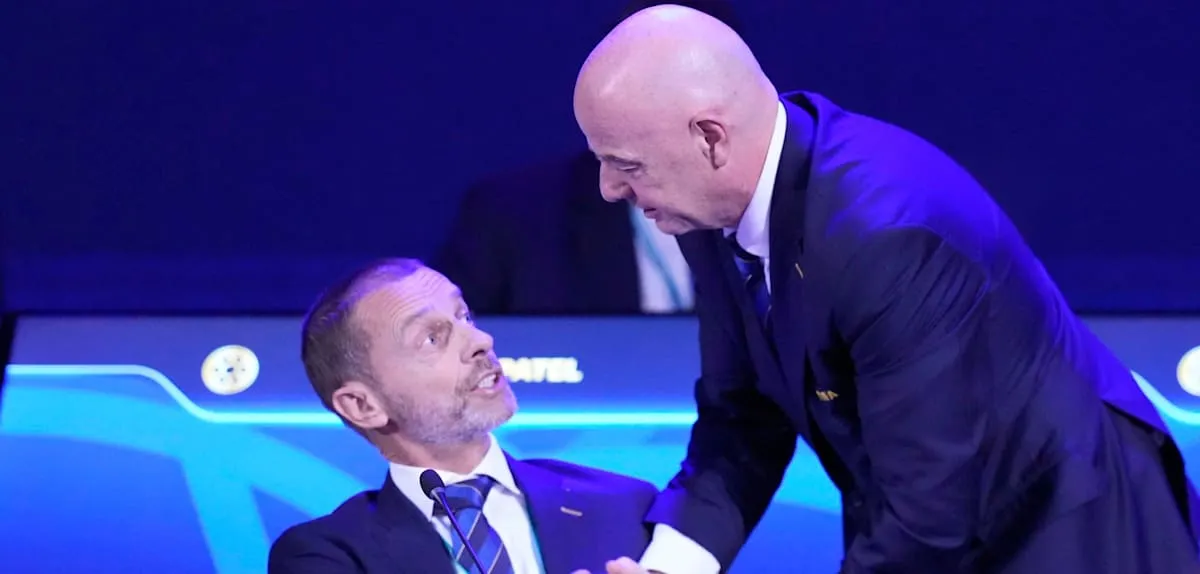
In response to the threat, FIFA, under the leadership of President Gianni Infantino in 2026, has shown an unyielding attitude. “No one is selling football,” stated the world football governing body firmly. FIFA has repeatedly emphasized that the primary objective of the investment plan is to strengthen football’s financial foundation globally, not to sell the sport's core assets.
FIFA's plan involves a significant capital injection from a consortium of global investors to fund the development of new tournament formats, including the expansion of the Club World Cup and the intercontinental World Cup. These funds are expected to distribute financial benefits to all FIFA members, especially developing countries that need infrastructure support and development programs.
Aleksander Ceferin, UEFA President in 2026, has been one of the most vocal opponents of this initiative. He fears that the proposed investment structure would grant too much power to external parties, potentially creating conflicts of interest and reducing transparency in decision-making. This view is supported by the majority of European federations who feel inadequately involved in the initial discussion process.
Tensions between FIFA and UEFA are not new. The two entities often clash over strategic issues, from reforms to the international match calendar to revenue distribution. However, this current dispute is considered more serious because it directly touches the core commercialization of the most prestigious tournament, the World Cup.
Former Bayern Munich President, Uli Hoeness, known for his vocal opinions in German football, had previously also strongly criticized FIFA's plan. Hoeness's condemnation, as reported in the article Hoeness Criticizes FIFA's Plans, UEFA Boycott Threat Intensifies on Cognitodaily.com, reflects strong sentiment in Europe that views FIFA's move as a potential threat to the sport's integrity.
A boycott by UEFA would have extraordinarily significant consequences. A World Cup without the participation of European teams, who are historical dominators of the tournament, would drastically lose its credibility and commercial appeal. This scenario could result in massive financial losses and damage FIFA's image as the sole governing body.
Nevertheless, FIFA seems confident that a solution can be found. Dialogue between the two parties is expected to continue behind the scenes, with the hope of reaching a compromise that satisfies all stakeholders. The ball is now in the court of football diplomats to prevent an escalation of the conflict that could shake the foundations of global football.
Furthermore, this dispute reflects broader power dynamics within football. The debate over who should control and benefit from the sport's biggest assets will continue to be a central topic, shaping the future of the global football industry in the years to come.