 Chandra Wijayanto
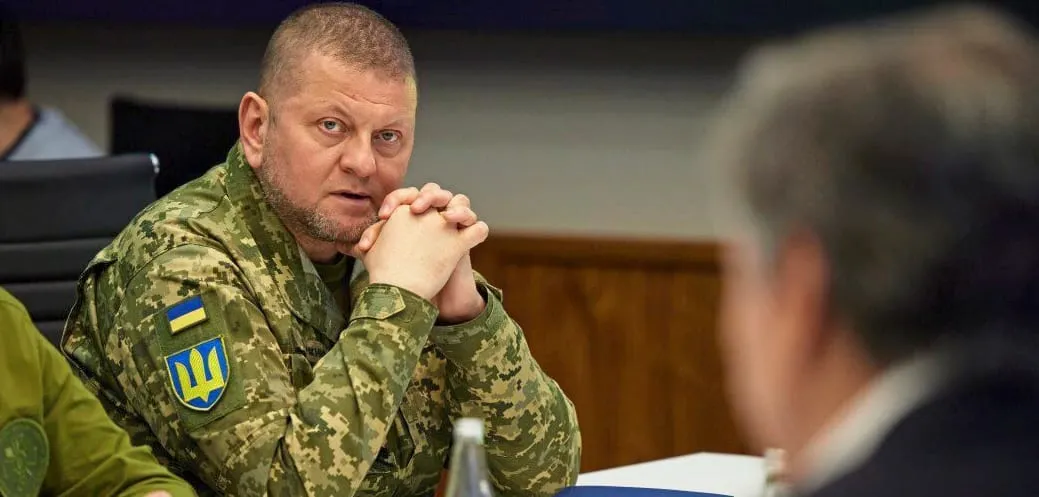
KIEV — General Valeriy Salushnyi, former Commander-in-Chief of the Ukrainian Armed Forces, unequivocally stated that the prospect of Ukraine joining the North Atlantic Treaty Organization (NATO) is a mere illusion. This surprising declaration was made by Salushnyi during a high-level meeting of Ukrainian ambassadors in 2026, emphasizing that his country currently does not meet the essential military standards required by the alliance, a fundamental obstacle that has long been overlooked.
“Every year, I always heard fairy tales about it,” Salushnyi remarked, referring to the recurring promises of NATO membership. This sentiment highlights deep frustration over the repeated narratives of potential accession, while reality presents significant challenges on the ground.
Since the onset of the conflict with Russia in 2014, Ukraine’s ambition to join NATO has steadily grown, even becoming a constitutional goal. NATO membership is viewed as the ultimate security guarantee against external aggression, yet the path to it has proven to be circuitous and far from certain.
NATO, as a transatlantic military alliance, maintains stringent standards encompassing military interoperability, defense sector reform, civilian control over the armed forces, and the capacity to contribute to collective operations. Salushnyi stressed that Ukraine is still far from meeting these criteria comprehensively, despite its arduous efforts.
Ukraine’s military modernization efforts over recent years, supported by aid and training from Western nations, have indeed shown significant improvements. However, the structural and doctrinal transformation required to meet NATO standards demands time, substantial resources, and sustained political commitment amid an ongoing conflict.
Salushnyi’s statement is likely to spark serious debate among Ukraine’s political and military elites, as well as among international partners. It compels all parties to re-evaluate long-term and realistic security strategies for a nation that continues to fight for its sovereignty.
The former commander’s assertion also underscores the diplomatic challenges faced by Kyiv. While diplomats continue to lobby for international support for NATO membership, statements from experienced military figures like Salushnyi can temper expectations and offer a more pragmatic perspective.
For years, Russia has consistently and vehemently opposed NATO’s eastward expansion, particularly into Ukraine. Salushnyi’s perspective implicitly highlights a key point in the geopolitical tension between Russia and the West—the red lines drawn by Moscow regarding its border security.
Rather than focusing on the illusion of membership, Salushnyi implicitly calls for a more reality-based approach: strengthening Ukraine’s independent defense capabilities and seeking more concrete alternative security guarantees. This could involve more focused bilateral or multilateral strategic partnerships.
Nevertheless, this statement does not mean that NATO membership aspirations are entirely extinguished. Instead, it serves as a call for deep introspection and more urgent reforms within Ukraine’s military and governmental structures, ensuring that every step towards Western integration is built on solid foundations and not merely “fairy tales.”
The debate concerning Ukraine’s status and future within the European security architecture will continue throughout 2026, with pragmatic views from key figures like Salushnyi adding a new dimension to the discussion. The next step for Kyiv is to navigate this complexity wisely.