 Chandra Wijayanto
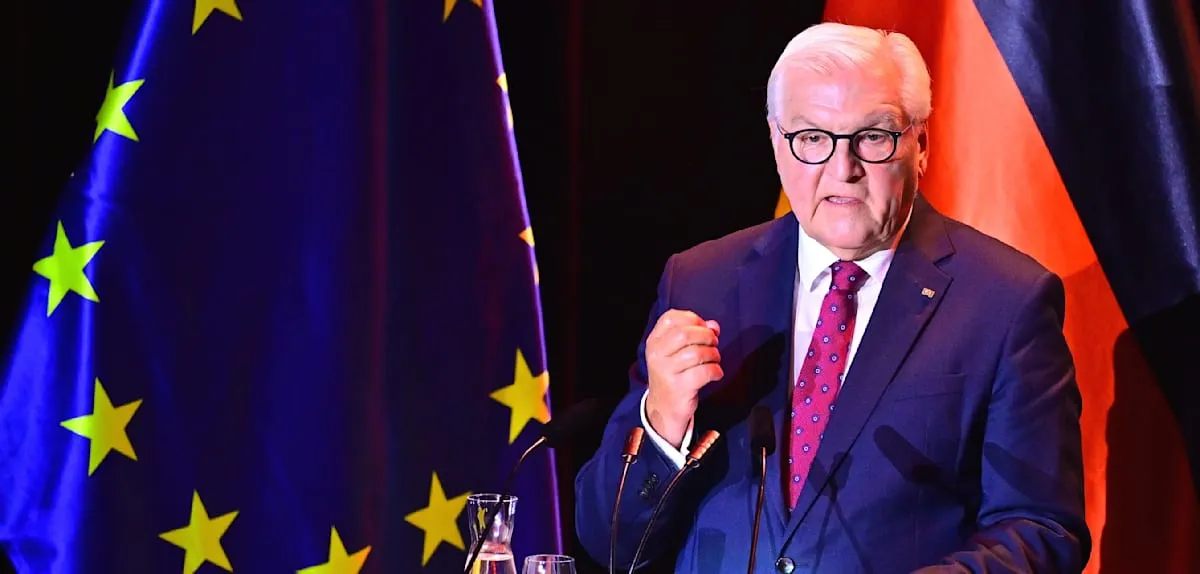
POTSDAM – German Federal President Frank-Walter Steinmeier issued a stern warning on German Unity Day, October 3, 2026, regarding extremist threats to the nation's democratic foundations. In his central address, Steinmeier not only highlighted the growing dangers of polarization but also sharply criticized the mass media's role, which he believes contributes to societal fragmentation.
The warning comes amid rising social and political tensions across Europe, including Germany, which faces waves of populism and extreme narratives testing the resilience of fundamental values. We are stronger than malice, Steinmeier affirmed, emphasizing the importance of citizen unity in facing these challenges.
The German head of state highlighted the widespread phenomenon of hatred and slander, particularly rampant on digital platforms. He argued that the true strength of democracy lies in society's ability to engage in dialogue, even amidst differing opinions.
While sharp criticism was directed at certain media segments, President Steinmeier also underscored the vital importance of responsible journalism. He stated that the media has a crucial duty to present facts and promote constructive discussion, rather than exacerbating tensions or inciting division.
President Steinmeier's speech echoed global anxieties about disinformation and the erosion of public trust in institutions. This challenge is not limited to Germany but is a critical issue in various other democracies worldwide.
Within the European context, particularly in countries like Germany, coalition governments frequently become targets of intense criticism. This issue aligns with political dynamics in Berlin previously highlighted in an article titled Kronenberg: Berlin's Left Coalition, People Brought into the Arena, which discussed the complexities of political alliances in the capital.
Steinmeier acknowledged reasons for optimism. He sees the strength of civil society, the commitment of citizens, and the spirit of unity, which has proven itself throughout German history, as foundations for overcoming current threats.
This optimism is rooted in the belief that constitutional principles and fundamental democratic values possess inherent resilience, provided they are continuously championed and protected by every segment of society.
He called upon all levels of society, from politicians to ordinary citizens, to take an active role in preserving and strengthening democracy. This includes the responsibility to combat hate speech, verify information, and participate in democratic processes.
President Steinmeier's warning and appeal are highly relevant in 2026, as many nations confront geopolitical uncertainties and internal challenges demanding strong responses from leadership and communities.
The core message of his speech is that while forces attempt to undermine unity and democracy, the collective strength of an empowered populace will always prevail.
He asserted that the future of German democracy depends on the willingness of every individual to defend truth, reject extremism, and adhere firmly to unifying values.
Editorial Insight: President Steinmeier's speech on German Unity Day was more than a mere ceremony; it was a profound reflection on the state of contemporary democracy. His critique of both the media and extremists signals an urgent need to re-evaluate the role of every societal pillar in maintaining political integrity. The hope placed in the strength of citizens indicates that leadership recognizes the vital importance of active public participation as democracy's last line of defense.