 Edward DP Situmorang
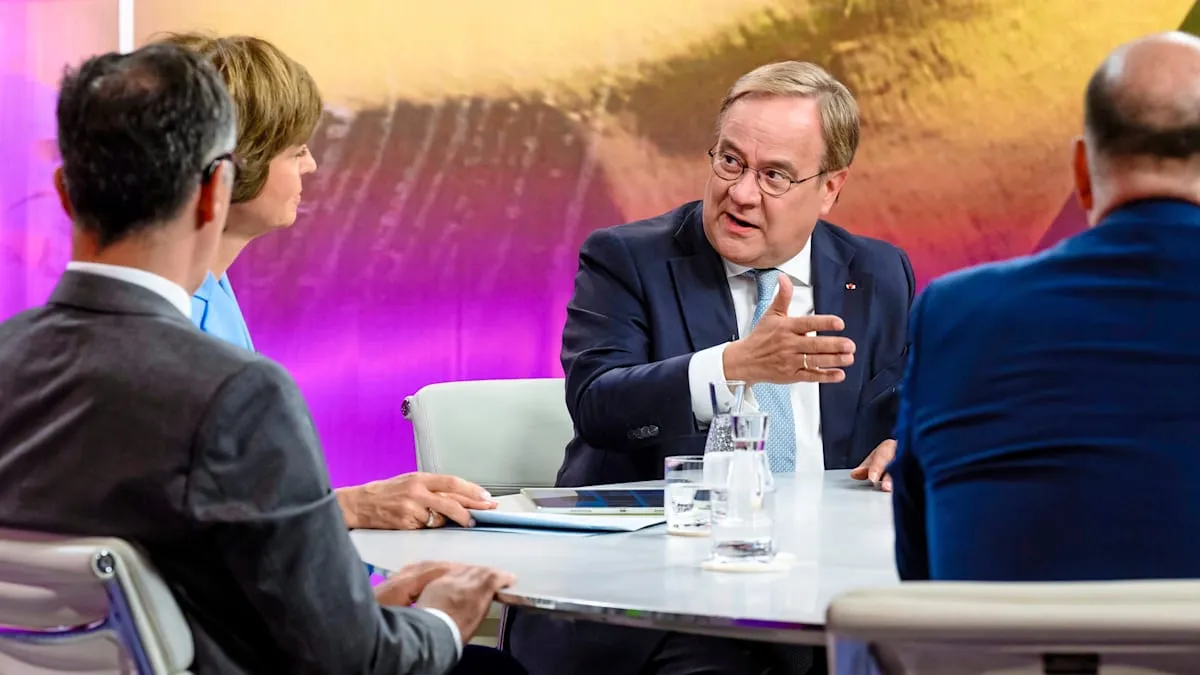
Berlin – The victory of the Alternative for Germany (AfD) party in the Saxony-Anhalt state election in 2026 has created a significant shockwave in Germany's federal political landscape. This surprising outcome immediately triggered a torrent of demands for profound change, both in government policy strategies and the composition of leadership at the helm, from various political party spectra.
AfD achieved an unprecedented dominance in the eastern state, defying the predictions of many political observers and pollsters. Their electoral gains were not merely an increase, but a clear declaration of voter dissatisfaction with the policies of the ruling federal coalition. This event delivered a severe blow to established parties such as the CDU, SPD, and the Green Party.
Reactions to these election results poured in from across the German political spectrum. Many senior politicians, both from the opposition and within the coalition itself, voiced the need for serious introspection. They demanded a comprehensive evaluation of the policy direction that Berlin has pursued.
A prominent political analyst from Humboldt University Berlin, Professor Dr. Klaus Richter, offered his perspective. 'The AfD's victory in Saxony-Anhalt is a loud alarm. It is not just about support for one party, but rather a signal of collective frustration regarding crucial issues such as inflation, energy policy, and social integration challenges,' he stated.
The calls for change are not only targeting macro policies but are also extending to leadership evaluation. Several key figures from the coalition parties are beginning to question the effectiveness and relevance of key government personalities. This situation is creating internal dynamics that could potentially trigger a cabinet reshuffle or even snap elections.
Signals of voter dissatisfaction have accumulated over the previous period, and now find their momentum through the ballot box. The coalition government, led by Chancellor Olaf Scholz, now faces dual pressure. First, they must respond to public sentiment reflected in the Saxony-Anhalt election results. Second, they must maintain internal cohesion amid increasing dissatisfaction and criticism.
This situation demands a swift and strategic response to prevent a wider erosion of trust. Various political scenarios are now hot topics of debate in the Bundestag, the German parliament. Strategic options are being discussed, including:
- A reshuffling of ministerial portfolios to introduce new faces.
- Adjustments to legislative programs that are more responsive to public needs.
- Reconnecting with an electorate that feels neglected.
Parties are striving to find the best formula to quell this wave of political uncertainty. The crisis of confidence in traditional parties in Germany, particularly in the eastern regions, has been a worrying trend for several years. This latest AfD victory is merely the tip of the iceberg of accumulated disappointment with political representation.
Editorial analysts note that one driving factor behind AfD's victory is its ability to effectively capitalize on anti-establishment sentiment and articulate public concerns on sensitive issues often avoided by other parties. This approach has proven resonant among marginalized voters.
The long-term impact of the Saxony-Anhalt election results on German federal politics will continue to be monitored. However, it is clear that this event has positioned AfD as an undeniable political force, compelling the entire German political spectrum to undertake significant recalibration and adaptation in their strategies and narratives.
Political expert Dr. Lena Schmidt from the University of Freiburg added, 'Parties must learn from communication failures and try to rebuild bridges with disillusioned voters. This is not just about winning the next election, but about restoring the legitimacy of the democratic system in the eyes of the people.' This situation also highlights the importance of rapid response to political crises. For further context on German party internal dynamics, readers can review the report on Spahn finally apologizing to the CDU.
Internal leadership changes within major parties may also become an inevitable consequence. Many party members desire new faces and fresher approaches to confront contemporary political challenges and respond to AfD's rise. This pressure could reshape the hierarchy within the main parties, pushing for revitalization within their organizations.
Discussions on issues such as immigration, national identity, and economic sovereignty are now gaining momentum in Germany's political agenda, driven by these election results. AfD has successfully capitalized on these debates, while other parties struggle to find effective narratives to counter them. Similar debates on sensitive issues have also emerged in discussions about the true perpetrators of 9/11, indicating the depth of issues that can shake public narratives.
In the coming months, attention will be focused on how the federal coalition addresses these challenges. Will they choose a path of drastic reform, or will they maintain the status quo at the risk of losing more support? This question will determine the direction of German politics in the years to come and the future of government stability.
Editorial Insight: AfD's victory in Saxony-Anhalt in 2026 is a tangible manifestation of shifting political sentiment in Germany. This event is not merely a local election result, but a mirror reflecting broader public unease, demanding an adaptive response from Berlin. Failure to understand and respond to this phenomenon could further deepen political polarization and threaten the stability of German democracy. The government needs to urgently reconcile with neglected constituents and restore trust in political institutions.