 Dorry Archiles
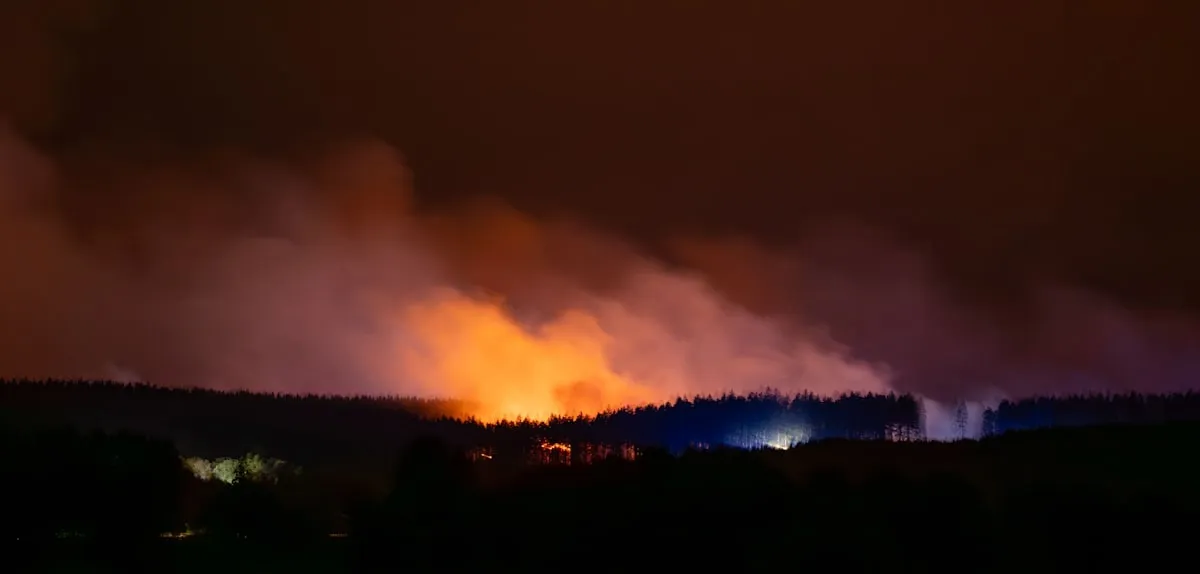
MONSCHAU – German authorities are intensifying evacuation preparations in the city of Monschau, near the Belgian border, following the escalation of a massive wildfire threatening residential areas. This situation contrasts sharply with developments in the Hurtgenwald region of Eifel, where residents are now permitted to return home after firefighting efforts successfully brought much of the blaze, which has raged for several days, under control.
The large fire, dubbed one of the worst in the region in the last decade, has sparked widespread concern over its environmental impact and the safety of the populace. Attention is now focused on Monschau, a historic town strategically located in the border zone, facing a direct threat from the advancing flames.
Local officials confirmed that comprehensive preventive measures have been meticulously prepared. Emergency evacuation plans, including the setup of shelters and secure transportation routes, are a top priority to ensure the safety of thousands of lives should the situation drastically worsen.
Meanwhile, in the Hurtgenwald region of Eifel, fire departments reported significant progress in containing the fire. The relentless efforts of hundreds of firefighters, supported by air units and volunteers, have managed to limit the affected area and cool critical hot spots.
The return of residents to Eifel signals a glimmer of hope amidst the crisis. However, early warnings remain in effect, and certain areas are still under strict surveillance to prevent potential re-ignition or the emergence of new fires. The community is urged to remain vigilant and follow instructions from the authorities.
The rapid spread of the fire was exacerbated by extreme weather conditions, including strong winds and a prolonged drought that has affected much of Europe in 2026. These climatic phenomena significantly increase the risk and intensity of wildfires, demanding the adaptation of more responsive disaster management strategies.
The German federal government has pledged full support, both in additional personnel and advanced equipment, to assist local governments in North Rhine-Westphalia in handling this emergency situation. Cross-regional and even cross-border coordination with Belgium is also being intensified.
The ecological impact of this fire is expected to be immense, destroying vital natural habitats and forest ecosystems. Environmental reclamation and restoration will require considerable time and resources once the fire is completely extinguished.
This incident once again reminds the public of Europe's vulnerability to climate change and the urgency of investing in stronger early warning systems and disaster response capabilities. Lessons learned from similar incidents worldwide in previous years serve as valuable references.
Editorial Insight: The fire incident in Germany is more than just a local occurrence; it highlights the global challenge of increasingly intense climate disasters. The contrast between recovery efforts in Eifel and evacuation preparations in Monschau illustrates the complex dynamics of crisis management. Rapid response and inter-agency coordination are crucial to minimizing losses, while also prompting a deeper discussion about long-term mitigation policies against the threat of wildfires, which may become the new normal.