 Stefani Rindus
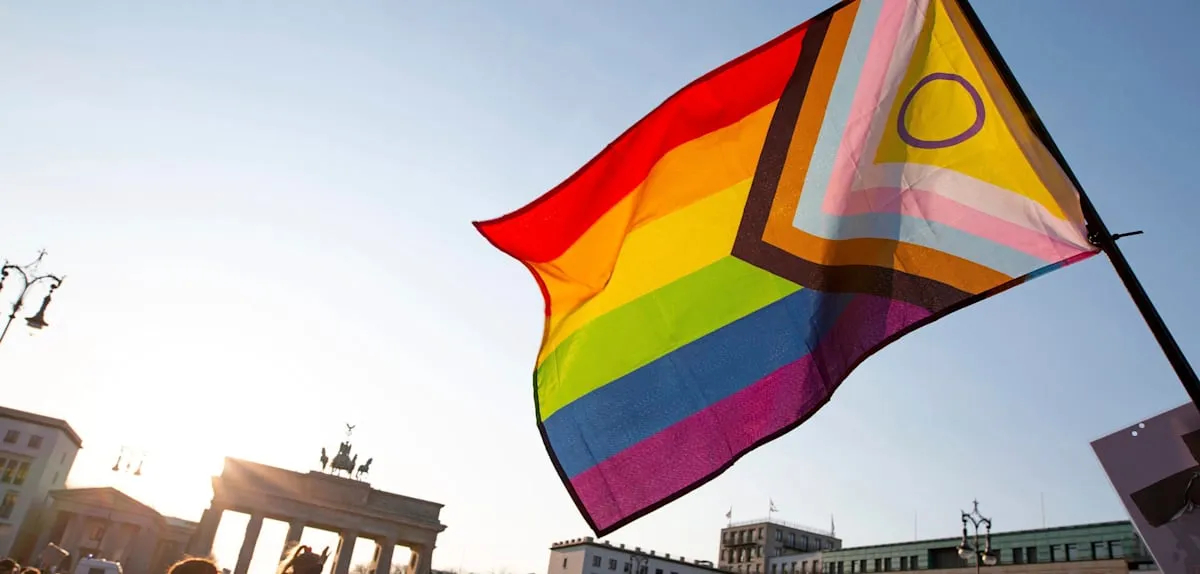
BERLIN — Germany faces a significant constitutional controversy following a tragic attack during the Christopher Street Day (CSD) celebration in summer 2026. Three major political parties—Die Linke, parts of Die Gruenen, and the Social Democratic Party (SPD)—have jointly called for an amendment to the Basic Law (Grundgesetz) to enshrine specific protection for sexual identity. This demand has sparked intense debate among legal experts and the public, given that Germany's Basic Law has historically guaranteed the principle of non-discrimination.
The call from these three factions emerged as a direct response to the violent incident that shook the LGBTQ+ community. They argue that explicit recognition of sexual identity in Article 3 of the Basic Law would provide a stronger legal foundation, while also sending a firm message about the state's commitment to equality and justice. Dorothea Mueller, a representative from Die Linke, stated, "This tragic event is clear evidence that existing protections are not enough. We need an unwavering constitutional guarantee."
The 2026 CSD tragedy, described by Chancellor Olaf Scholz as 'an attack on Germany's core democratic values,' resulted in dozens of injuries and profound grief. Although the perpetrators' motives are being intensively investigated by security authorities, the incident quickly became a catalyst for political discussions concerning the vulnerability of minority groups and the urgency of their legal protection.
However, not all parties agree that a Basic Law amendment is the right or even necessary solution. Many constitutional law experts argue that Article 3 of the Basic Law, which states, "No person shall be discriminated against on the grounds of sex, parentage, race, language, homeland and origin, faith, religious or political views," already encompasses the spectrum of sexual identity. Professor Klaus Richter of Heidelberg University explained, "The interpretation of Article 3 has historically evolved to accommodate various forms of discrimination. Explicitly adding sexual identity risks creating a hierarchy of rights or implying that other categories are less important."
Criticism of the proposed amendment also points to accusations of political motives behind the calls. Some observers have labeled this move as 'the days of the opportunists,' where parties leverage the emotional moment post-tragedy to boost popularity or claim leadership in human rights issues. Prominent political analyst, Dr. Eva Hartmann, in her column in the Frankfurter Allgemeine Zeitung, wrote, "Is this purely a push for justice or a clever maneuver ahead of elections? The public has the right to know the difference."
Germany's political landscape in 2026 indeed shows complex dynamics. With various domestic and global issues demanding attention, including economic turmoil and ongoing migration challenges, parties tend to seek opportunities to distinguish themselves. This constitutional debate has become a new arena for political competition. Constitutional issues, such as the threat of banning extremist parties, are also under scrutiny, demonstrating how central the Basic Law is to German political discourse.
Internationally, some countries have indeed explicitly included the protection of sexual identity in their constitutions. Canada, for example, has a Charter of Rights and Freedoms that includes sexual orientation. However, Germany's approach, which tends towards a broad and evolutionary interpretation of non-discrimination clauses, also has a strong historical foundation.
Current surveys show significant public support in Germany for LGBTQ+ rights, but perceptions regarding the necessity of a Basic Law amendment are divided. Most citizens feel that existing protections are adequate, while others urge that sexual identity be explicitly mentioned to avoid future ambiguities.
The process of amending Germany's Basic Law is not an easy task. It requires a two-thirds majority in both the Bundestag (Federal Parliament) and the Bundesrat (Federal Council), a consensus difficult to achieve, especially on sensitive issues laden with ideological nuances. Without substantial cross-party support, this proposal is likely to fail.
Regardless of the final outcome, this debate has succeeded in bringing human rights protection back to the forefront of national political discourse. It forces Germany to reconsider the extent to which its legal framework can adapt to the demands of modern society, while also questioning the boundaries between a moral response to tragedy and pragmatic political calculation.
This case underscores that even in a country with a well-established constitution, the interpretation and relevance of law always remain a battleground of ideas and interests. The future of sexual identity protection in Germany's Basic Law will heavily depend on politicians' ability to find common ground that transcends partisan interests and is truly based on the principle of substantive justice.