 Debby Wijaya
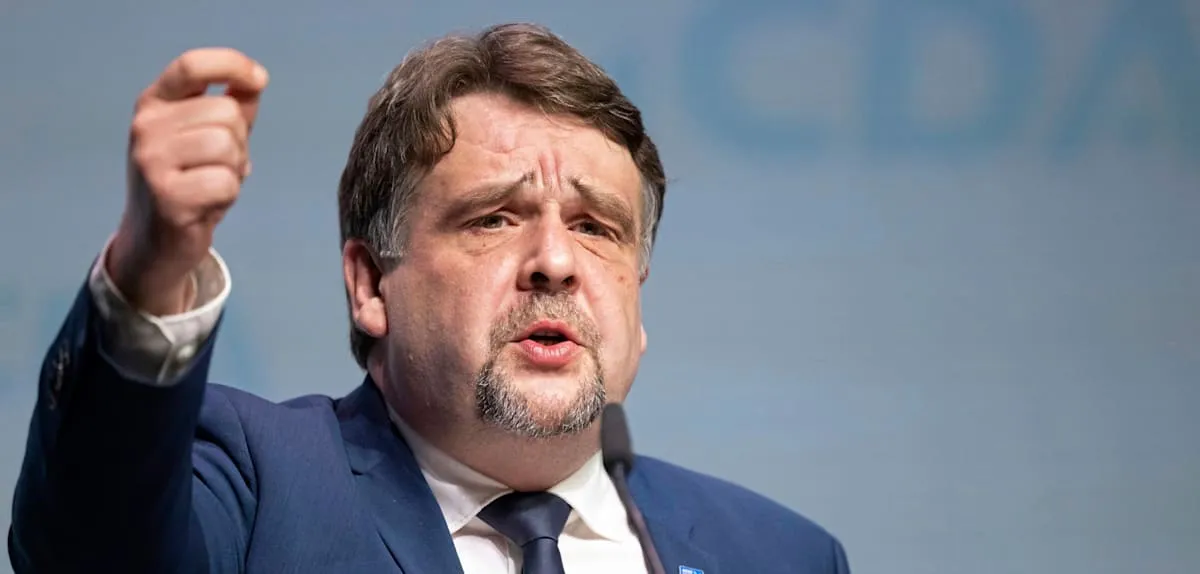
BERLIN — The German political landscape is in turmoil after the head of the Social Wing of the Christian Democratic Union (CDU) openly opposed the proposed pension reform from CDU party leader, Friedrich Merz. This rejection emerges as support for the demands of three Prime Ministers (PMs) from eastern German states, who advocate for a pension scheme free of deductions after 45 years of contributions, a principle considered fundamental for maintaining worker dignity in 2026.
This firm stance has the potential to create significant friction within the conservative party, ahead of various crucial national political agendas. The social wing asserts that stability and reliability are fundamental rights for every individual who has served for decades.
In an official statement, the Head of the CDU Social Wing emphasized the importance of maintaining legitimate pension guarantees. “Workers deserve respect and reliability, especially after decades of service to the nation’s economy,” he stated, echoing sentiments also voiced by the East German PMs.
Friedrich Merz's proposals for pension reform have not yet been fully detailed, but initial indications have raised concerns among workers and social elements of the CDU. Speculation regarding changes to the deduction-free pension scheme has triggered a wave of protests from trade unions and social organizations.
These three East German state PMs, who are at the forefront of the opposition, hail from regions with a long history of social and economic struggle. They believe that altering pension rules would betray millions of voters who rely on this stability for their old age.
Political observers assess that this resistance from the social wing is not merely an internal difference of opinion, but a reflection of a broader ideological struggle within the CDU. It also highlights the complexity of aligning pragmatic economic visions with the party's social commitments. Similar situations were observed in internal faction dynamics of the CDU/CSU some time ago.
Merz himself faces the challenge of uniting various factions within the party amidst public and electoral pressure. The pension issue is one of many sensitive policies he must manage, especially with increasing support for opposition parties in some regions, as highlighted in news concerning the AfD in Sachsen-Anhalt.
This pension debate is predicted to be one of the central topics at the upcoming CDU Party Congress in 2026. The outcome of this debate will not only determine the direction of CDU's social policy but also influence the party's image among voters.
The stability of the German pension system is indeed a crucial issue directly affecting millions of lives. Any changes require in-depth study and broad consensus to avoid detrimental social unrest.
This internal conflict is also under the national media's spotlight, which is monitoring how the CDU will resolve these substantial differences of opinion. The party's ability to reconcile differing views will be a test of Merz's leadership and the CDU's readiness to face the political challenges of 2026.
Moreover, pension issues often become a deciding factor in general elections. Parties that can offer financial security guarantees in old age tend to gain strong support from elderly voters and their families.
Moving forward, the public awaits whether Merz will revise his plans or if the CDU Social Wing will find a point of compromise. This decision will shape Germany's socio-political landscape in the coming years.