 Stefani Rindus
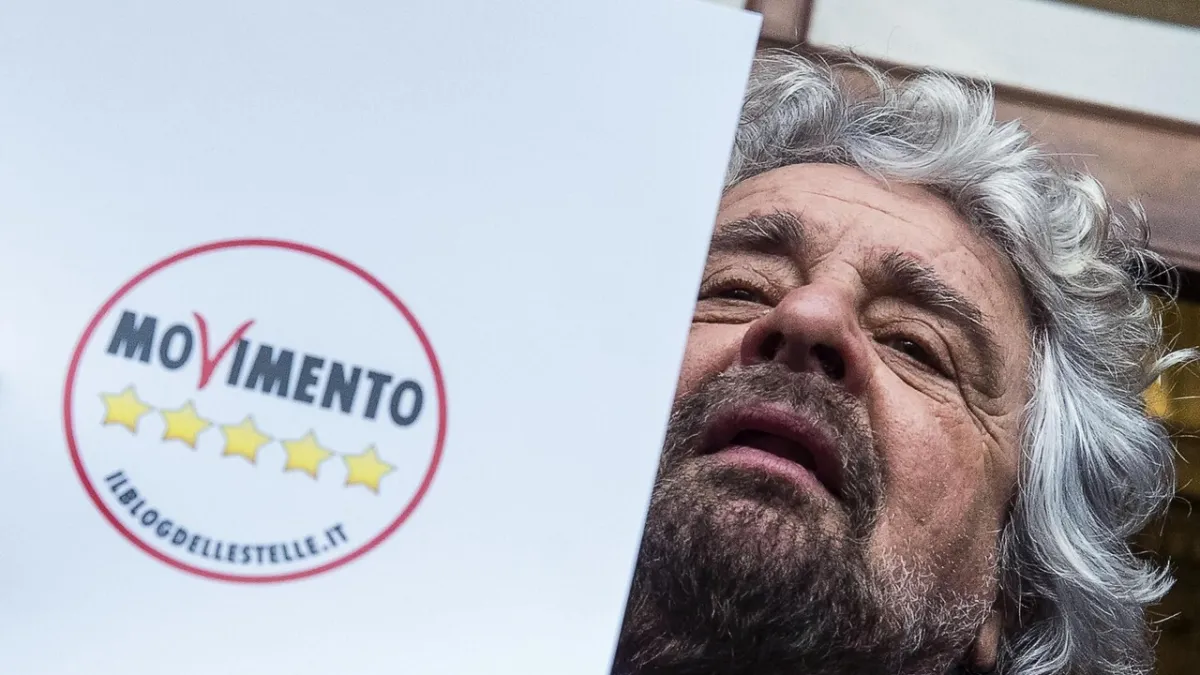
ROME — Beppe Grillo, the founding figure of the Five Star Movement (M5s), recently launched a scathing critique against the party he established, alleging that M5s has lost its fundamental identity and instead become trapped in the political system it was supposed to transform. He delivered this verbal assault via a post on his personal blog, signaling profound disappointment with the direction and internal changes within M5s in the Italian political landscape.
Grillo, known for his direct and often provocative rhetorical style, asserted that M5s has “lost its identity” and its members have “become conceited without reading the instructions.” This statement explicitly refers to the initial founding principles of M5s, which championed transparency, anti-establishment views, and direct citizen participation.
This criticism emerges amidst various political dynamics M5s has faced since entering parliament and even becoming part of coalition governments. The journey from a protest movement to a major political force has indeed brought significant adaptation challenges.
M5s initially emerged as a disruptive force, promising radical change to Italy’s traditional political system, which was perceived as corrupt and inefficient. They vowed to cleanse politics of oligarchies and bring the direct voice of the people to parliament.
However, over time, and with M5s's involvement in various government formations, both as majority and minority partners, the essence of the movement began to be questioned. Grillo, as the philosophical compass, apparently perceives a deviation from that initial vision.
Grillo’s blog post serves as both a reflection and a warning to M5s cadres. He warns of the danger of becoming absorbed in power games and forgetting the essential goal of being an agent of change, not merely a part of the status quo.
Analyses by Italian political observers often highlight the dilemma M5s faces: how to maintain anti-establishment idealism while having to compromise and negotiate as part of the very system they aim to reform.
The “instructions” Grillo mentioned can be interpreted as the fundamental principles enshrined in the Five Star Movement’s Charter, which emphasize grassroots policies and a rejection of personal interests in politics.
Founding figures expressing disappointment with the direction of their movements is not a new phenomenon in the political world. This situation indicates an intense internal struggle regarding M5s’s identity and relevance on the constantly shifting national political stage.
Responses from M5s’s leadership to Grillo’s critique have not yet been explicitly released to the public. However, such an open attack from an iconic figure like Grillo will undoubtedly trigger deep internal discussions and perhaps lead to a reevaluation of the party’s strategy.
In 2026, M5s continues to strive for stable footing amidst Italy's political fragmentation. Grillo's criticism can be seen as either a spur to return to ideological roots or a trigger for new internal turmoil that further tests the party's solidity.
The transition from a protest movement to a responsible governing party is always fraught with obstacles. This is a test for every political entity born from a spirit of radical change.
Loyalty to initial principles versus political pragmatism remains a constant battleground for many modern political parties. M5s, in Grillo's view, now faces a crucial identity crisis.