 Dodi Irawan
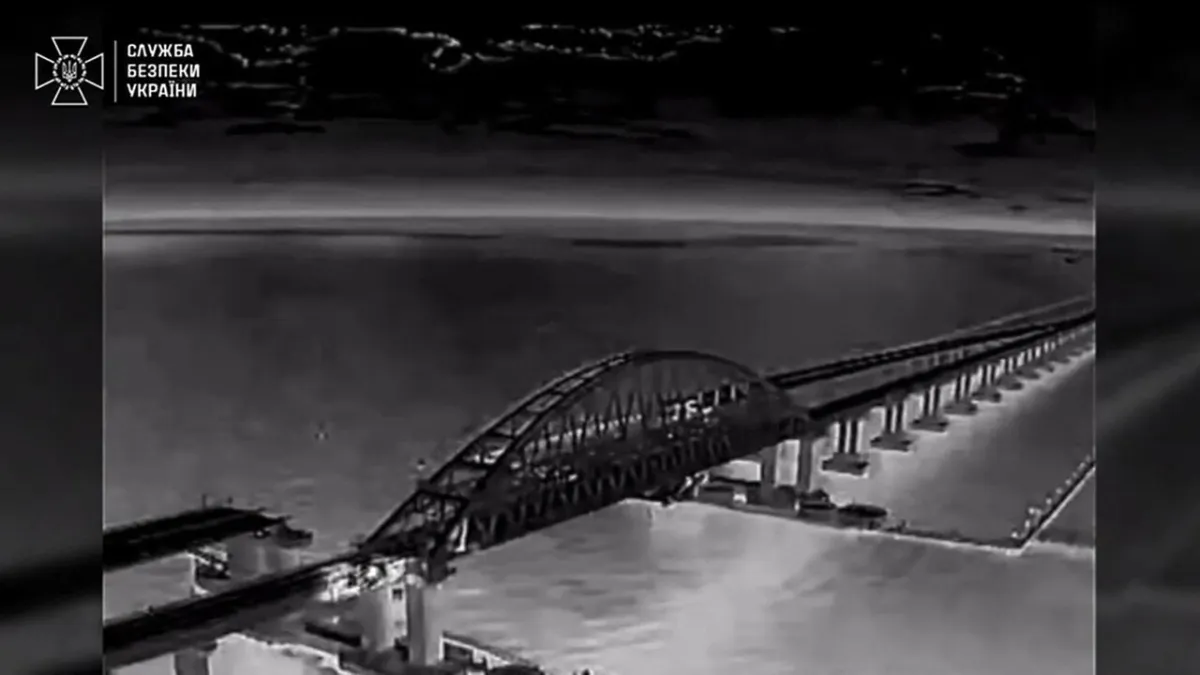
CRIMEA – The Crimea Bridge, a symbol of annexation and a vital supply route for Russian forces, reportedly collapsed after being hit by Ukrainian missiles in an operation Kyiv claims as a decisive blow. The dramatic incident, occurring in 2026, immediately triggered a wave of euphoria in Ukraine and strong condemnation from Moscow, deepening the chasm of the ongoing conflict.
The precision strike targeting this critical infrastructure highlights Ukraine's increasingly sophisticated military capabilities. Visual footage circulating shows significant sections of the bridge, including both rail and road links, plunging into the waters of the Kerch Strait, effectively paralyzing one of Russia's main logistical routes to the Crimean peninsula.
Ukrainian President Volodymyr Zelensky, through his official communication channels, expressed joy over the operation's success. He claimed it as a fitting response to Russia's continuous aggression. Zelensky's statement underscores Kyiv's determination to reclaim all its territories, including Crimea, illegally occupied since 2014.
The European Union swiftly conveyed its support for Ukraine, reiterating its commitment to the country's territorial integrity. A spokesperson for the European Commission called for restraint from all parties but simultaneously acknowledged Ukraine's right to self-defense against the invasion, hinting at potential further sanctions against Russia.
In Moscow, the Kremlin strongly condemned the attack as an act of terrorism and vowed commensurate retaliation. President Vladimir Putin reportedly held an emergency meeting with military and security leaders, asserting that this incident would not go unanswered, sparking fears of a broader conflict escalation.
Diplomatic tensions further mounted with a dispute between Moscow and Paris regarding the alleged presence of French soldiers in Ukraine. The Russian Ministry of Foreign Affairs demanded an explanation from France, accusing Paris of actively participating in the conflict, a claim firmly denied by the French government.
These tensions illustrate Europe's fragile relationship with Russia, especially after President Donald Trump's return to office in the United States, who has consistently called for a more equitable burden-sharing among NATO members. The Crimea Bridge incident has the potential to become a turning point in global geopolitical dynamics.
Military analysts note that the destruction of the Crimea Bridge will significantly impact Russia's ability to move troops, weapons, and supplies to and from the peninsula. This will force Russia to rely on longer, riskier overland routes through occupied territory, or sea routes more vulnerable to Ukrainian naval attacks.
Several international security experts predict that Russia's response will likely involve retaliatory missile strikes against critical Ukrainian infrastructure, exacerbating civilian suffering. The international community urges all parties to avoid actions that could worsen the humanitarian crisis.
In a broader context, this incident also sends a strong message to Western allies about the urgency of providing more advanced air defense systems and sustained military support to Ukraine. Kyiv's courage in confronting Russia's superior force continues to be a focal point of global attention.
Editorial Insight: The collapse of the Crimea Bridge in 2026 is not merely an infrastructure loss for Russia but a symbolic slap to their claims of control over the territory. It is tangible proof that Kyiv still possesses the capacity to strike strategic targets deep behind enemy lines, challenging Moscow's narrative of inevitable victory. Moving forward, this incident will likely trigger a wave of retaliatory attacks from Russia, testing Ukraine's resilience and the unity of Western support. The world must brace for increased conflict escalation and its impact on regional stability.