 Edward DP Situmorang
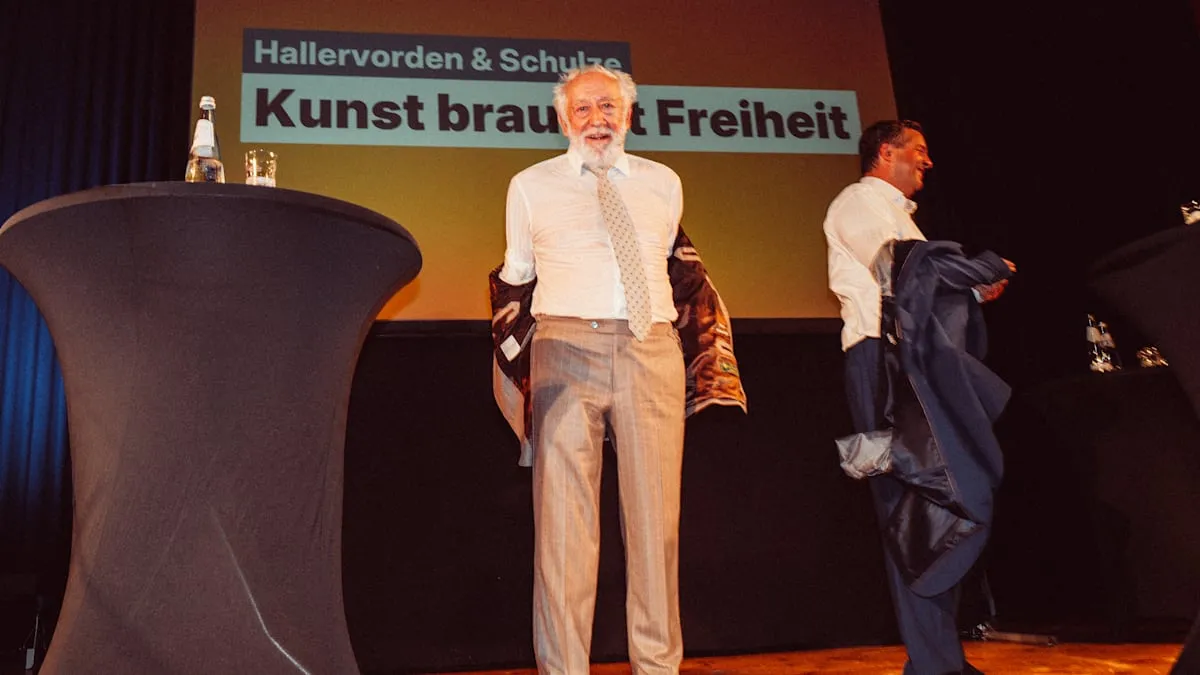
BERLIN — Legendary German actor and cabaret artist, Dieter Hallervorden, recently shook the national political stage with his sharp criticism of Chancellor Friedrich Merz and Defense Minister Boris Pistorius. Hallervorden's controversial statements immediately sparked widespread discussion, especially after he was featured as a star in a state election campaign by CDU lead candidate, Sven Schulze, this year in 2026. Schulze's move is now under scrutiny, questioning the effectiveness of a campaign strategy that relies on a satirical figure with overtly provocative political views.
Hallervorden, known for his satirical style and courage in expressing opinions, openly voiced dissatisfaction with Merz's policies and leadership as chancellor. He highlighted specific issues of public concern, including the direction of domestic policy and economic stability, which some citizens perceive as stagnant.
Merz was not the only target; Defense Minister Pistorius also became a prime subject of Hallervorden's criticism. His statements regarding Germany's defense agenda and the nation's involvement in global security issues prompted a response from the actor. This likely refers to discussions surrounding new conscription options currently being developed.
The decision by Sven Schulze, the lead candidate from the Christian Democratic Union (CDU) party, to involve Hallervorden in the state election campaign is at the core of the debate. This strategy is seen as an attempt to capture the attention of voters who might be weary of conventional political rhetoric. Schulze himself hopes that Hallervorden's charisma and popularity can boost the CDU's electability.
Using controversial non-political figures in a campaign is not without risks. Hallervorden's criticism is not only directed at political opponents but also has the potential to create discomfort or even polarization within the CDU's own support base. A major question arises: can Schulze control the narrative built by Hallervorden, or will he instead be overshadowed by this satirical figure?
Various German national media outlets immediately highlighted this event. Opinion columns and editorials extensively discussed the implications of Hallervorden's criticism on two central government figures. Some praised Hallervorden's courage, while others criticized the politicization of art or questioned the motivations behind the statements.
Dieter Hallervorden, with his long career in entertainment, has long been a critical voice against various governments. His track record as a fearless satirist has earned him credibility among some parts of society, making him an influential figure capable of shaping public opinion.
As of now, an official response from Chancellor Merz and Defense Minister Pistorius is still awaited, or perhaps they choose not to respond directly to avoid escalation. However, this issue certainly sparks internal discussions among the government elite.
This incident reflects the increasingly complex political dynamics in Germany in 2026, where the line between entertainment and politics blurs. Parties are striving to find innovative ways to reach voters, even by involving figures known for their radical views.
With the state elections approaching, Schulze's maneuver with Hallervorden could be a decisive factor. Whether this strategy will yield positive results for the CDU or backfire remains an intriguing question. German politics continues to deliver surprises, and Hallervorden seems to have not lost his touch.