 Debby Wijaya
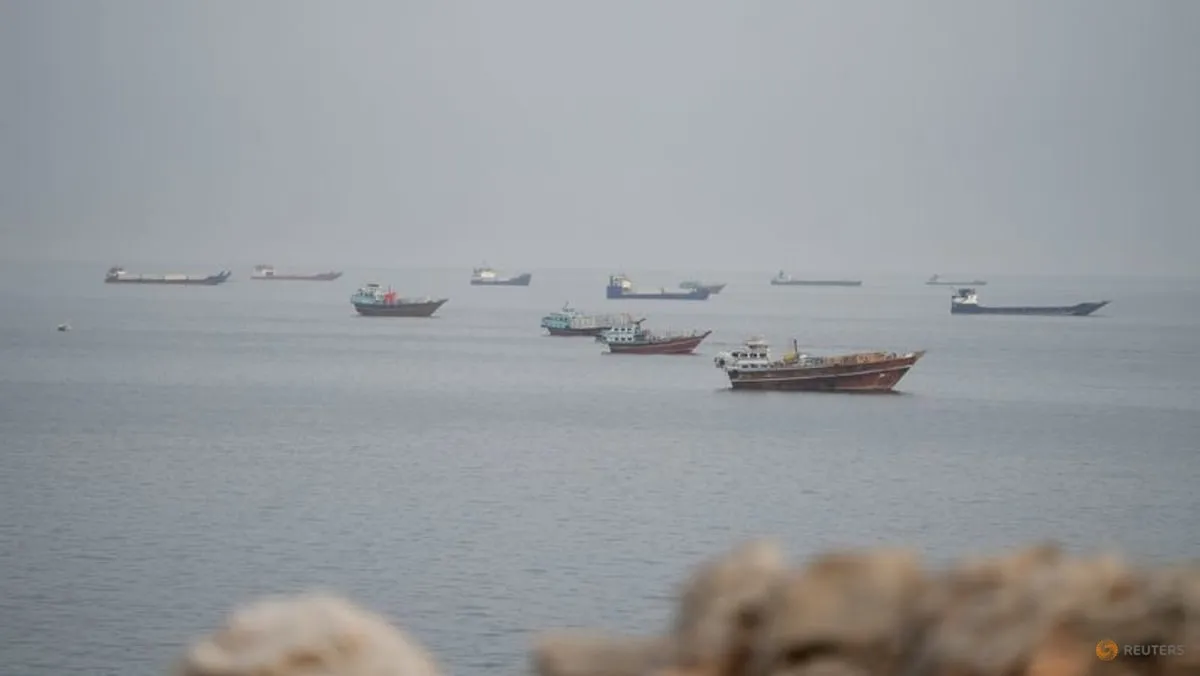
JAKARTA – Global crude oil prices registered a significant decline for the second consecutive week in early 2026. This volatility was triggered by United States President Donald Trump's decision to extend the blockade policy against Iran, curtailing potential supply and igniting serious concerns in the global energy market regarding price stability and economic prospects.
This decline confirms a weakening price trend observed since late last year. Market analysts estimate that both Brent and WTI (West Texas Intermediate) prices have fallen by over 3% in a week, breaching important psychological levels and fueling speculation about a global recession if supply and demand pressures remain unbalanced.
The economic blockade policy against Iran has been a cornerstone of the Trump administration's foreign strategy since the beginning of his second term. Washington insists that these sanctions are essential to restrict Iran's nuclear program and its support for groups deemed terrorist in the Middle East. This measure effectively obstructs Iranian oil exports to international markets.
The impact of the blockade has been directly felt on Iran's export capacity. Although Tehran has repeatedly stated it will find ways to circumvent the sanctions, their oil sales volume remains far below maximum potential. This creates global supply uncertainty, which in turn affects investment and trade decisions in the energy sector.
The Organization of the Petroleum Exporting Countries and its allies (OPEC+) are closely monitoring the situation. While some member states have voiced concerns, a consensus to adjust production levels has not yet been reached. Internal disagreements over production quotas and worries about declining global demand hinder a decisive collective response.
White House officials, including National Security Advisor John Bolton, affirmed President Trump's commitment to maintaining maximum pressure on Tehran. We will not ease sanctions until Iran demonstrates concrete and verifiable behavioral changes, Bolton stated at a recent press conference in Washington. This policy is an integral part of Washington's strategy to reshape the region's geopolitical landscape.
Oil price uncertainty has always been a crucial indicator for global economic health. A sharp decline potentially signals an economic slowdown, while an unexpected rise can trigger inflation and suppress consumer purchasing power. Current fluctuations complicate an already fragile global growth outlook, exacerbated by various other factors such as trade competition and the climate crisis.
The current situation is reminiscent of the era of strict sanctions against Iran in the previous decade, although the geopolitical context and market dynamics have since changed. Past experience demonstrates that such sanctions have complex ripple effects, not only for the sanctioned nation but also for overall global market stability.
Senior economist from a leading energy research institution, Dr. Sarah Khan, opined that the United States' unilateral policy, though aimed at national security interests, often creates unexpected economic ripples. The market requires predictability, and the extension of the Iran blockade only adds a significant layer of uncertainty.
Short-term projections indicate that oil prices are likely to remain under pressure as long as the Iran blockade remains in effect. However, in the medium term, the risk of escalating conflict in the Middle East or potential supply disruptions from other regions could at any time reverse this downward trend, pushing prices back to higher levels.
Major oil-consuming nations, such as Japan and China, are reportedly evaluating their energy strategies. Japan, for instance, continues to consider diplomatic measures amid sanctions that affect global energy stability. Japan Considers Crucial ICC Meeting Amidst Trump Sanctions, illustrating countries' efforts to manage the impact of US policies.
Editorial Insight: President Trump's policy towards Iran is a double-edged sword. While claimed as a political leverage tool, its economic impact is tangible and far-reaching, especially through the energy markets. The continuation of this blockade has the potential to trigger a reorganization of global oil supply chains and compel consumer nations to seek more stable alternatives, simultaneously increasing the risk of more extreme oil price volatility in the future.