 Chandra Wijayanto
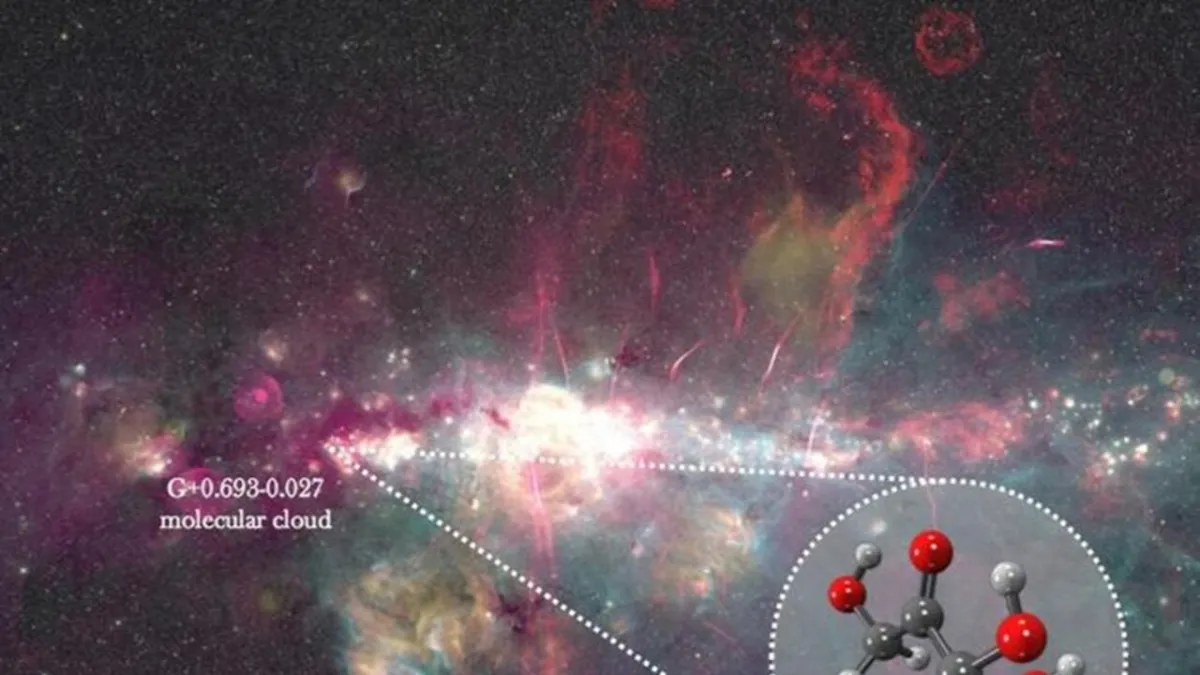
WASHINGTON D.C. – A significant recent discovery has shaken the world of astrobiology. Scientists announced the detection of complex sugar molecules in interstellar space, a finding that could potentially change human understanding of the origins of life in the universe. This discovery, announced in early 2026 by an international research consortium supported by NASA and ESA, confirms that the basic ingredients for life may be more widely dispersed than previously thought.
This cutting-edge research successfully identified sugar molecules, including simple sugars that are vital components in the structure of DNA and RNA. The detection was made in a giant cloud of gas and dust known as Sagittarius B2, a star-forming region approximately 26,000 light-years from Earth, using advanced radio telescope observatories.
The identified sugar molecules are strong indicators that prebiotic chemical processes, essential for the emergence of life, can occur naturally in extreme extraterrestrial environments. The presence of these sugars provides new support for the theory of panspermia, which proposes that life or its basic ingredients can spread between planets or star systems via comets and asteroids.
This discovery is not the first time organic molecules have been found in space, but the identification of sugars directly involved in the genetic code opens a new chapter. Previously, simpler organic molecules such as alcohols and amino acids have been detected, but these specific sugars, which form the backbone of DNA and RNA, signify a more advanced stage of chemical evolution beyond Earth.
Professor Anya Sharma, a leading astrophysicist from Cambridge University who led the data analysis team, expressed her excitement. “This is undeniable proof that the fundamental ingredients of life are abundantly available in the cosmos,” she stated during a virtual press conference broadcast from ESA headquarters in Paris.
Sharma continued, “The detection of these sugar molecules challenges the conventional view that complex molecules can only form in relatively ‘friendly’ environments. Extreme interstellar space turns out to be a highly efficient chemical factory.”
The detection method involved the use of the Atacama Large Millimeter/submillimeter Array (ALMA) in Chile, which by 2026 had been upgraded to capture a wider range of wavelengths and higher resolution. Data from ALMA was then analyzed with artificial intelligence algorithms, capable of distinguishing the spectral ‘fingerprints’ of sugar molecules among millions of other signals from space.
The implications of this interstellar sugar discovery are profound. It strengthens the hypothesis that the seeds of life are not exclusive to Earth, but rather a universal phenomenon. Scientists are now increasingly confident that extrasolar planets, especially those in habitable zones, may have received a supply of prebiotic molecules from the same cosmic environment.
The research team plans to continue their studies, focusing on identifying more complex organic molecules and investigating how these molecules can survive interstellar journeys. Advanced computer modeling will simulate conditions in molecular clouds, attempting to chemically replicate the formation pathways of these sugars.
This discovery reaffirms the crucial role of astronomy and astrobiology in answering fundamental questions about human existence. With each molecule detected, we move closer to understanding where and how life first emerged, not only on Earth, but perhaps throughout the vast universe.
Experts are also calling for increased global collaboration in upcoming space missions. The US President, along with EU and Chinese leaders, has affirmed commitment to funding ambitious space research projects, aimed at uncovering more hidden cosmic secrets this decade.