 Robert Andrison
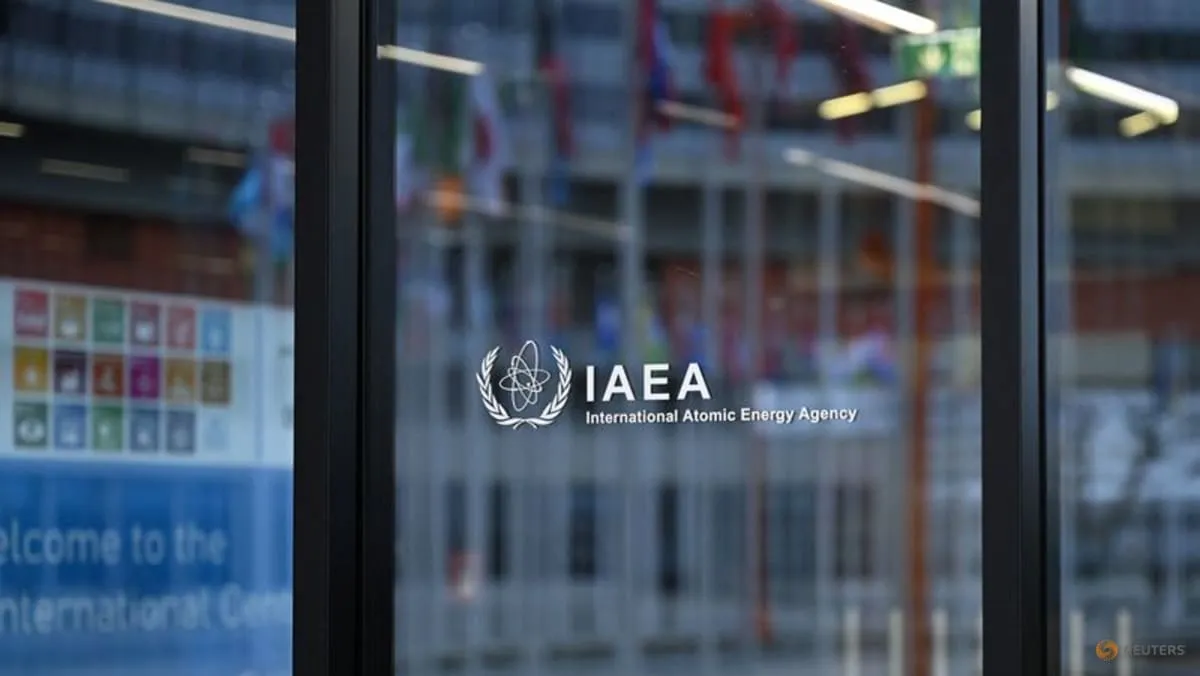
TEHRAN – The International Atomic Energy Agency (IAEA) has expressed deep concern over Iran's nuclear enrichment facility. A confidential report released on Friday (November 13, 2026) and accessed by Reuters revealed that Tehran has not permitted IAEA officers to inspect the site, even refusing access to its design plans. This situation has triggered serious concerns amid global diplomatic efforts to control the Islamic Republic's nuclear ambitions.
This confidential report underscores the escalating tensions between Iran and the international community. The refusal of inspections is considered a significant breach of Iran's transparency obligations, particularly under the Nuclear Non-Proliferation Treaty (NPT) to which it is a signatory. This move could further erode fragile trust and open the door to a broader escalation of diplomatic conflict.
Since the 2015 nuclear deal, known as the Joint Comprehensive Plan of Action (JCPOA), faced turmoil, Iran's nuclear program has remained under scrutiny. Although the agreement limited Iran's enrichment activities, the US withdrawal in 2018 and subsequent sanctions have led Iran to gradually reduce its compliance with those restrictions.
The IAEA's concerns center on the secretive nature of this uninspected facility. Without access, the global nuclear watchdog cannot verify the true purpose and scale of activities there. This raises questions about the potential development of nuclear capabilities outside international monitoring, posing a global proliferation threat.
International security experts warn that this situation could be a turning point. If Iran continues to refuse inspections and increases its uranium enrichment levels without oversight, it could trigger a strong response from Western and Middle Eastern countries concerned about a nuclear arms race in the region. This could also complicate future discussions regarding the limitation of Iran's nuclear program.
The global intelligence community has long suspected Iran of having a clandestine nuclear program with military objectives, although Tehran consistently asserts its program is purely for peaceful purposes, such as electricity generation and medical applications. However, the lack of transparency and refusal of inspections will only reinforce these suspicions.
As of now, there has been no official statement from Iranian authorities regarding this IAEA report. However, history shows that Tehran often responds to international pressure with defiance, asserting its sovereignty over its nuclear program. Reactions from the P5+1 member states (United States, United Kingdom, France, Russia, China, and Germany) are highly anticipated.
The implications of Iran's refusal are far-reaching. Not only for regional stability but also for the credibility of international nuclear oversight mechanisms. The IAEA's ability to carry out its mandate relies heavily on the full cooperation of member states. If this principle collapses, the consequences could be very detrimental to global security.
Editorial Insight:
This situation places Iran at a crucial crossroads. Refusal of IAEA inspections is not a trivial act; it is a clear signal that Tehran may have something to hide. The international community, especially under increasingly firm leadership, will not tolerate prolonged nuclear ambiguity. Further diplomatic pressure and heavier sanctions are likely to follow, potentially dragging the Middle East into a deeper vortex of uncertainty. The key lies in the IAEA's ability to maintain its relevance and authority in mitigating global nuclear proliferation risks, while Iran must decide if further isolation is worth the secret gains of its program.