 Angel Doris
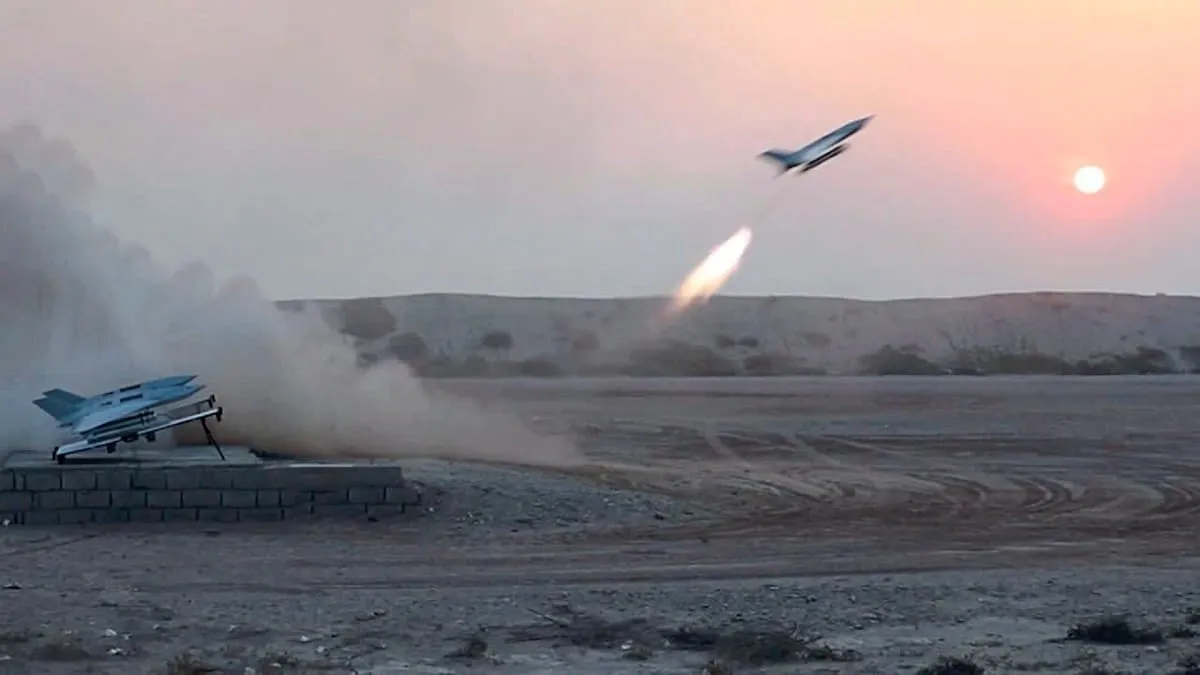
Middle East — Tehran recently launched a precision missile attack on United States military installations in the Middle East, a significant escalation following Washington's temporary halt of aggression against targets in Iran. This incident, carried out by Iran's Revolutionary Guards, overtly challenges the US military presence and underscores Tehran's efforts to assert its dominance amid peaking geopolitical tensions in early 2026.
This missile launch marks a new chapter in the turbulent conflict dynamics between the two superpowers. It is the first time Tehran has openly attacked American forces in the region after Washington had temporarily ceased its attacks, creating a dangerous precedent and raising concerns about potential broader retaliation.
Hans-Jakob Schindler, an internationally recognized extremism expert, highlighted the motivation behind this provocative act. "The Revolutionary Guards are trying to get the maximum out of this situation," Schindler stated, indicating that Iran is using this moment to test the limits of US patience and response, and to strengthen its bargaining position in regional and global diplomacy.
Schindler's analysis underscores that hardline elements within Iran's Revolutionary Guards consistently hold greater sway in strategic decision-making. They persistently advocate for more aggressive policies, believing that a confrontational approach is an effective way to maintain Iran's sovereignty and influence in the region.
This attack occurred amidst speculation regarding the future of the Iran nuclear deal and various parties' efforts to de-escalate tensions. However, the Revolutionary Guards' actions send a contradictory signal, implying that Tehran is not afraid to demonstrate its military might despite the risk of serious consequences.
Similar incidents have previously provoked strong responses from the United States and its allies. For instance, reports from the previous year indicated that the US and Saudi Arabia collectively pushed back against pro-Iran militias in Iraq, suggesting a pattern of response that could be repeated.
The United States government, through its Pentagon spokesperson, immediately condemned the attack and affirmed that Washington would protect its personnel and interests in the Middle East. However, details regarding the type of missiles used, the damage inflicted, and specific retaliatory measures have yet to be fully disclosed to the public.
The international community urges all parties to exercise restraint. Many world leaders fear that escalating tensions in this sensitive region could trigger a broader conflict, dragging various regional and global actors into an uncontrollable spiral of violence.
The Revolutionary Guards, as Iran's elite military force, have a long history of conducting operations aimed at strengthening Tehran's influence beyond its borders. They are known for their sophisticated ballistic missile capabilities and extensive network of proxy militias, making them a key player in any turmoil in the Middle East.
Increased confidence among Iran's Revolutionary Guards often correlates with their perception of weakness or hesitation from opposing parties. In this context, the cessation of US attacks might be interpreted as a window of opportunity to demonstrate strength without provoking an unwanted full-scale response.
Geopolitical analysts predict that this incident will increase pressure on the US administration to re-evaluate its strategy in the Middle East. The big question is how far Washington is willing to tolerate Tehran's provocations before taking more substantial military action.
The simmering tension between Iran and the United States is not just about military power, but also a struggle for ideological and political influence across the entire region. From Yemen to Lebanon, Iranian proxies continue to challenge the status quo, complicating efforts to achieve long-term stability.
Regardless, this incident once again reminds the world of the inherent volatility in the Middle East. With every missile launched and every statement hardened, the prospect of regional peace becomes more threatened, demanding smarter and firmer diplomatic approaches from all involved parties.
The future of US-Iran relations now stands at a critical crossroads. Both Tehran and Washington must consider the long-term consequences of each step, as a wrong decision could easily ignite a conflict that extends far beyond the borders of the Middle East.