 Debby Wijaya
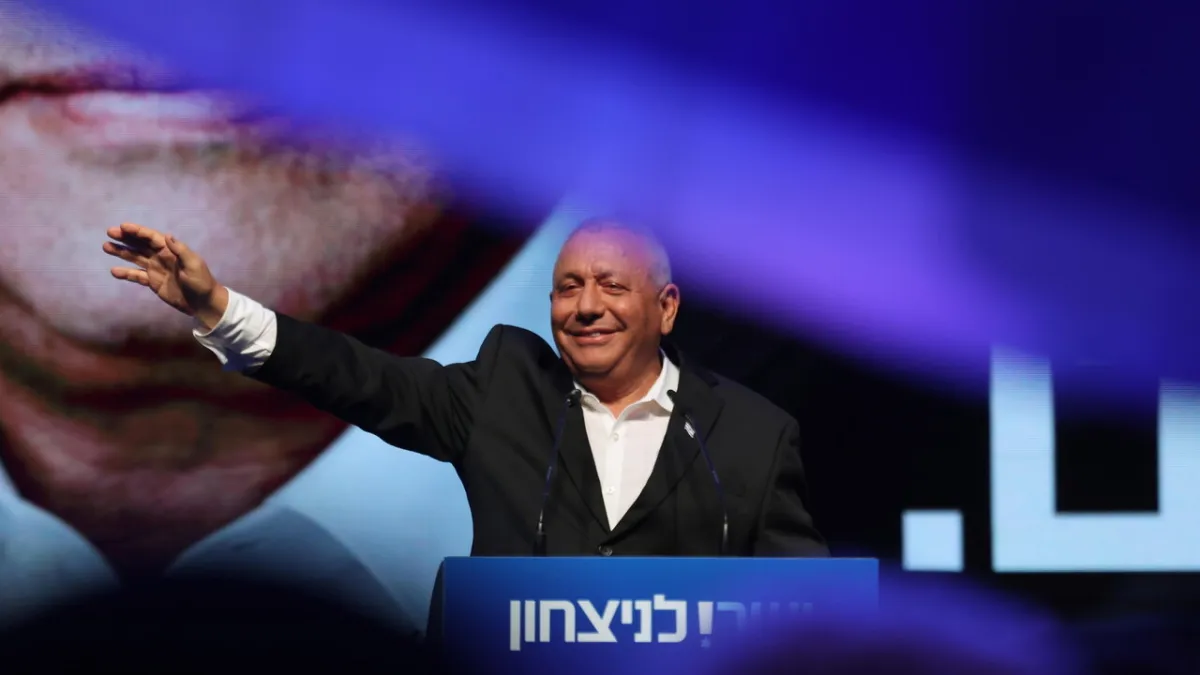
JERUSALEM – Israeli President Isaac Herzog has officially tasked former Israel Defense Forces (IDF) Chief of Staff, General (Ret.) Gadi Eisenkot, with forming a new coalition government in 2026. This appointment comes amidst significant political upheaval in the country, forcing incumbent Prime Minister Benjamin Netanyahu to fight fiercely to retain power by advocating for national unity. Eisenkot, a respected military figure, immediately responded to this mandate by urging Netanyahu to get rid of Itamar Ben Gvir, the controversial National Security Minister, as a prerequisite for a broader coalition.
President Herzog's decision marks a crucial phase in the Israeli political arena, following a prolonged deadlock between competing party blocs. Eisenkot, known for his pragmatism and security track record, is expected to bridge ideological gaps to achieve the governmental stability required. This mandate was granted after previous attempts to form a government reached an impasse.
Eisenkot's appointment by President Herzog was not without careful consideration. As a highly respected general, Eisenkot brings strong military credibility, a vital factor in Israel's political landscape which is always overshadowed by security concerns. His background is expected to quell divisions and bring focus to the nation's strategic challenges.
Meanwhile, Prime Minister Benjamin Netanyahu has not remained idle. He is attempting to play the national unity card, a political maneuver he has often employed in times of crisis. Netanyahu is reportedly working to embrace various political factions, including his traditional opponents, to form a broader and more stable government, which he believes is essential for confronting external threats and internal challenges.
However, Netanyahu's efforts are clashing with a key condition put forth by Eisenkot: the dismissal of Itamar Ben Gvir. Ben Gvir, representing the most extreme right-wing in Israeli politics, has often been a controversial figure with his rhetoric and policies triggering tensions, both domestically and in the eyes of the international community. His presence in the cabinet has become a stumbling block for many potential centrist and left-leaning parties.
Eisenkot's get rid of Ben Gvir statement sends a clear signal that a stable coalition will not be formed as long as Ben Gvir occupies a key position. This places Netanyahu in a severe dilemma, where he must choose between retaining his loyal ideological ally or sacrificing him for a broader consensus and the support of figures like Eisenkot.
Political analysis indicates that Eisenkot's demand reflects a widespread desire to temper extreme polarization within the government. Ben Gvir's provocative policies are widely seen as having damaged Israel's image and complicated diplomatic relations with other countries. Therefore, his removal is viewed as a preliminary step to rebuild trust and legitimacy.
This situation also highlights the vulnerability of Israel's parliamentary democracy, which frequently experiences fragmentation. With numerous political parties represented in the Knesset, coalition formation often becomes a complex bargaining process full of compromises. Every appointment and public statement carries significant political weight.
Israel faces various significant challenges in 2026, ranging from ongoing regional tensions to domestic economic issues. A stable and cohesive government is considered essential to navigate these complexities effectively. Therefore, public attention is now focused on whether Netanyahu will yield to Eisenkot's demands or seek another, potentially more difficult, path.
Discussions between Eisenkot and various party leaders are set to begin soon. General (Ret.) Eisenkot's success or failure in forming a government will not only determine the future political direction of Israel but also potentially reshape the political landscape permanently. Netanyahu's decision regarding Ben Gvir will serve as a primary barometer.
Editorial Insight: The current political crisis in Israel is not merely a power struggle, but a deep reflection of extreme ideological polarization. The appointment of Gadi Eisenkot as government formateur is a last-ditch effort to find common ground, yet his firm condition regarding Itamar Ben Gvir indicates that stability can only be achieved with a more moderate consensus. Netanyahu's ability to adapt to this new political reality will determine the future of Israeli politics amidst urgent regional challenges.