 Dodi Irawan
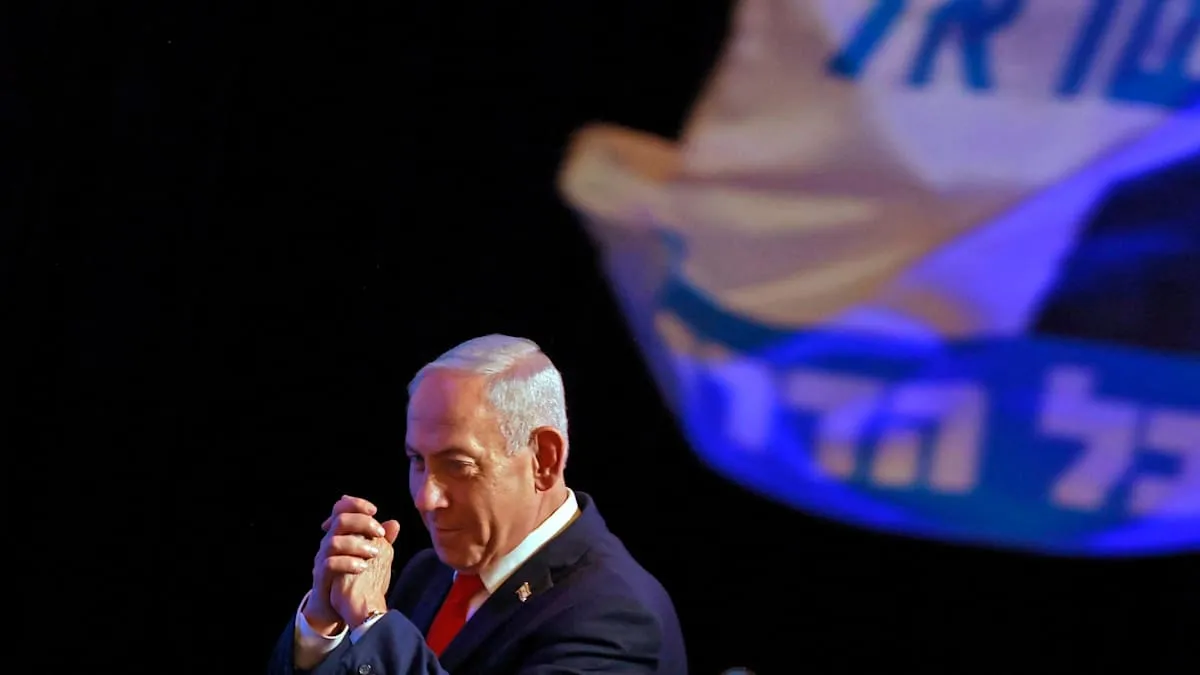
Jerusalem – The parliamentary election in Israel in early 2026 concluded without a clear majority winner, plunging the country into significant political uncertainty. Neither the bloc led by Prime Minister Benjamin Netanyahu nor the challenger coalition under Benny Gantz, managed to secure enough seats in the Knesset to form a government. This situation has fueled widespread speculation regarding the possibility of forming a unity government or even a repeat general election.
These inconclusive results highlight the deep divisions within Israel's political landscape. Analysts observe that Israeli society appears increasingly polarized, making the formation of a stable coalition an increasingly difficult task. This failure follows several previous elections that also faced similar challenges in forming a government.
Melody Sucharewicz, a prominent political consultant in Israel, expressed her concerns about the country's political future. 'We very much hope there will not be repeat elections,' Sucharewicz stated. This remark reflects a common sentiment among the public and political elite, who are weary of the cycle of elections and governmental deadlocks.
The process of forming a government will now enter a complex and potentially lengthy negotiation phase. President Isaac Herzog will likely play a key role in mediating between various political factions, attempting to find common ground to form a coalition capable of leading the nation.
Netanyahu's bloc, traditionally relying on right-wing and ultra-Orthodox parties, requires additional support to reach a 61-seat majority. On the other hand, the more diverse challenger coalition faces similar challenges in uniting a cohesive platform.
This kind of political uncertainty is not new to Israel. History records several periods where the Knesset experienced deadlocks, necessitating repeated election rounds and protracted negotiation processes. Each new election round not only incurs significant costs but also diverts focus from crucial issues facing the nation.
The implications of this deadlock are extensive, ranging from domestic policies to Israel's position on the international stage. Important decisions concerning the economy, security, and regional relations could be delayed without a stable and fully functioning government.
Amidst this domestic political turmoil, focus on external threats and foreign policy remains a priority. Despite frequent upheavals in the Knesset, strategic plans such as Knesset Turmoil Will Not Diminish US-Israel Attack Plans on Iran continue, demonstrating that national security interests transcend internal political intrigues.
Political observers suggest that forming a unity government, encompassing a broader spectrum of parties, could be the most pragmatic solution. However, achieving such an agreement requires significant compromises from both sides, which has proven difficult to materialize thus far.
The hope of the majority of pragmatic Israelis is for the country to quickly establish a stable government that can focus on real challenges and fulfill the aspirations of the people. Failure to do so will only prolong the period of uncertainty and erode public trust in political institutions.
Editorial Insight: The political deadlock in Israel following the 2026 election is not merely an ordinary episode but a reflection of acute political fragmentation. The potential for a unity government, while desired by many, requires brave leadership and exceptional negotiation skills from political actors. Otherwise, the exhausting cycle of repeat elections will only trigger broader regional instability, especially amidst the continuously volatile geopolitical dynamics of the Middle East. Long-term solutions must go beyond mere power-sharing, towards systemic reforms that foster greater consensus.