 Stefani Rindus
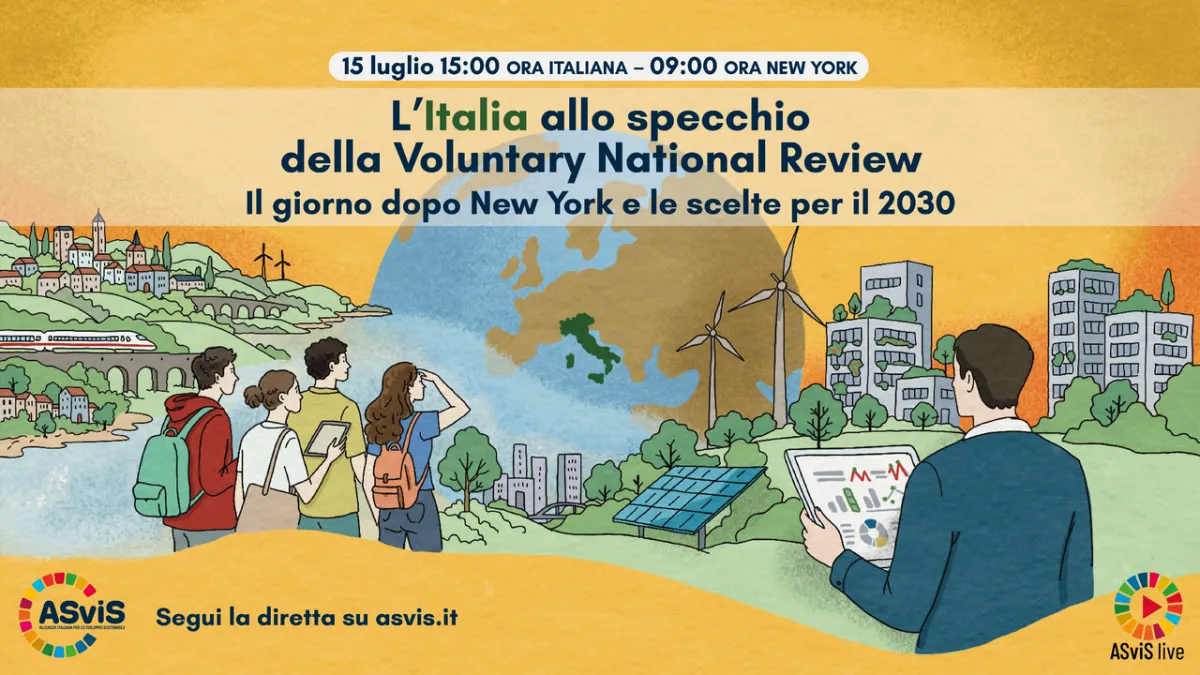
ROME — Italy is once again highlighting its commitment to the 2030 Agenda for Sustainable Development through a crucial meeting organized by ASviS (Italian Alliance for Sustainable Development) today. This in-depth discussion, broadcast live via ANSA.it starting at 3:00 PM local time, serves as a forum for reflection following Italy's Voluntary National Review (VNR) presentation at the United Nations Headquarters in New York.
This meeting aims to comprehensively analyze Italy's achievements, identify lingering challenges, and formulate concrete strategies in the effort to achieve the 17 Sustainable Development Goals (SDGs) this decade.
The Voluntary National Review is an important mechanism for UN member states to present their progress in implementing the 2030 Agenda. Italy has just completed its presentation, and now, the focus shifts to internal evaluation and more effective follow-up planning at the national level.
ASviS, as a coalition of over 300 civil society, research, and business organizations, plays a central role in monitoring and promoting the implementation of SDGs in Italy. This meeting underscores the urgency of collaboration across various sectors to ensure that the transition to a more sustainable future is not just a promise but a reality.
Economists and development experts also highlight the economic dimension of the 2030 Agenda. They emphasize that economic growth must be aligned with sustainability principles, avoiding excessive exploitation of natural resources and exacerbating social inequalities. In this context, the stability of the Italian banking sector is vital. This issue is in line with the focus at the ABI Rome Assembly 2026, which discussed crucial global economic challenges.
Furthermore, the social aspects of sustainable development also receive serious attention. Educational disparities, unequal access to healthcare, and the challenge of unemployment, especially among youth, remain significant tasks for Italy. Innovative solutions and inclusive policies are considered essential to address these problems.
In the environmental sector, Italy faces significant pressure related to climate change, waste management, and biodiversity conservation. Commitment to renewable energy and a circular economy are key pillars of the national green strategy, expected to mitigate the negative impacts of human activities.
The Italian government, through various relevant ministries and agencies, expresses its strong commitment to integrating the 2030 Agenda into national policies. Cross-sectoral coordination and adequate budget allocation are key to the successful implementation of strategic programs.
Today's discussion also involves representatives from the private sector, who are expected to be strategic partners in sustainable innovation and investment. Corporate social responsibility is no longer an option but a necessity to ensure long-term business sustainability.
Civil society, academics, and youth are also seen as vital agents of change. Their role in advocacy, research, and innovation is crucial in shaping public awareness and promoting government and private sector accountability.
Transparency of data and sustainability indicators form the basis for accurate and evidence-based evaluation. ASviS consistently emphasizes the importance of credible data to measure progress and adjust policy directions if necessary.
As 2026 progresses, the deadline for 2030 draws closer. Italy needs to accelerate its pace and ensure that every policy decision today contributes positively to the globally agreed sustainable development goals.
This ASviS meeting is not just a ceremonial event but a serious call for all stakeholders to renew their commitments and strengthen concrete actions. Italy's sustainable future depends on the courage to change and the willingness to collaborate holistically.