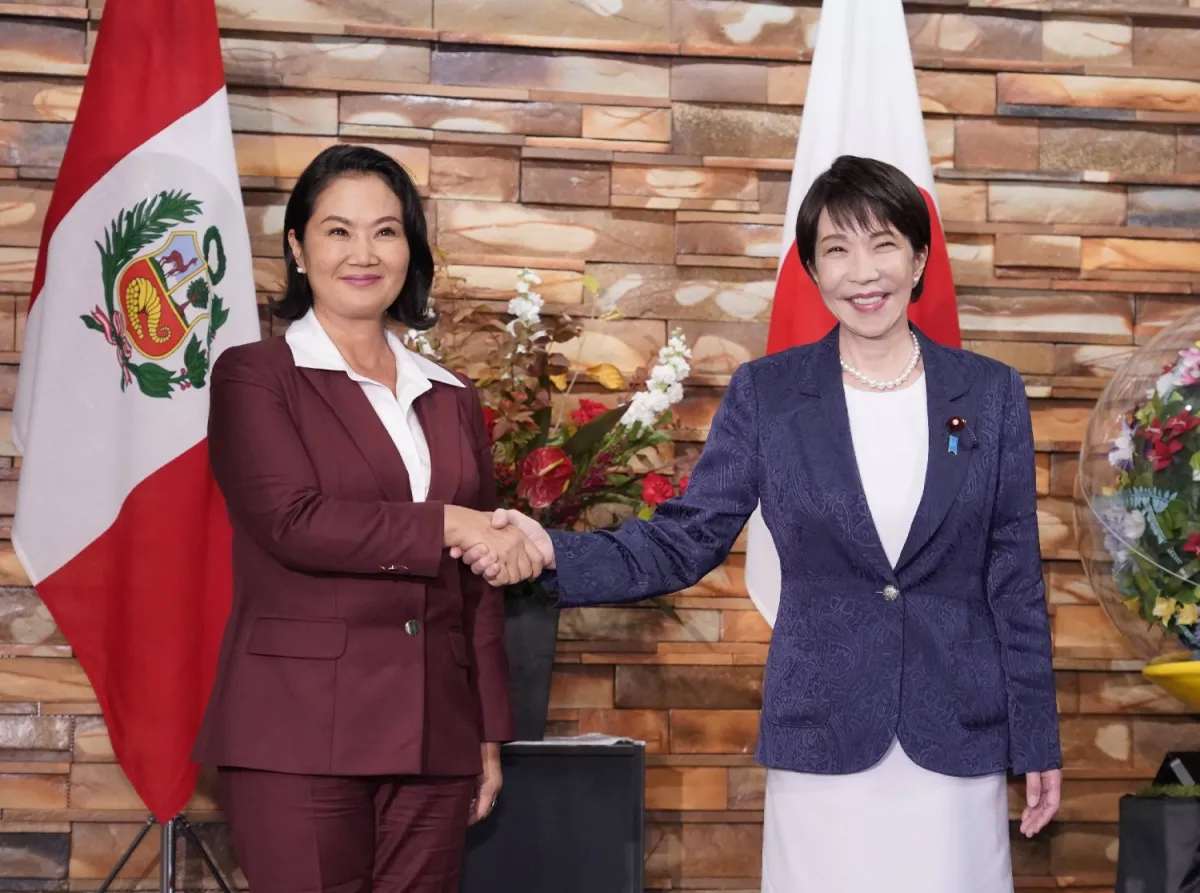
TOKYO – Japan is ambitiously reinforcing its global diplomatic network in 2026, marking a strategic move in the highly potential region of Latin America. Through a series of significant bilateral meetings held in Tokyo on Friday, Japanese Foreign Minister Takaichi led crucial dialogues with the leaders of Chile and Peru, underscoring Japan's serious commitment to deepening cooperation across various vital sectors.
The summit meetings brought Takaichi together with Peruvian President Keiko Fujimori and Chilean President Jose Antonio Kast for their first bilateral discussions with Tokyo. This initiative is not merely a courtesy visit but a strategic diplomatic maneuver designed to stimulate economic, political, and cultural relations amidst an ever-evolving global geopolitical landscape.
Diplomatic sources in Tokyo indicated that the main agenda of the dialogues included strengthening cooperation in trade, investment, renewable energy, and technology exchange. Japan, as a leading economic power and technological innovator, views Latin America, particularly Chile and Peru, as strategic partners with abundant natural resources and expanding markets.
Peruvian President Keiko Fujimori, in a brief statement after the meeting, highlighted the importance of diversifying trade and investment partners for her country. We welcome Japan's initiative to strengthen friendship and cooperation. The potential for partnerships in the mineral, fisheries, and infrastructure sectors is very promising, Fujimori stated, affirming Peru's high hopes for concrete outcomes from this meeting.
Echoing this sentiment, Chilean President Jose Antonio Kast emphasized his country's vision to serve as a bridge between Asia-Pacific and South America. Chile offers stability and a conducive legal framework for foreign investment. Partnership with Japan will unlock new opportunities for innovation and sustainable development, especially in the green energy transition, Kast explained, outlining Chile's commitment to a sustainable development agenda.
This diplomatic step comes as Japan actively seeks to diversify its supply chains and strengthen economic security amid geopolitical tensions. Engagement in Latin America can provide access to essential commodities and open new markets for Japanese products and technology.
Foreign Minister Takaichi did not release a formal press statement immediately after the meetings, but a spokesperson for the Japanese Foreign Ministry indicated that discussions were constructive and achieved initial understandings on several cooperation initiatives. Further details are expected to be announced in the coming weeks, following in-depth technical team reviews.
For Japan, this approach towards Chile and Peru is part of a broader strategy to strengthen its influence beyond traditional Asian circles. By building solid relationships in Latin America, Tokyo hopes to balance the influence of other regional powers and promote a more stable and inclusive international order.
These diplomatic interactions also have the potential to pave the way for collaboration in multilateral forums, such as the United Nations or APEC, where Japan, Chile, and Peru share common interests in global issues ranging from climate change to maritime security.
Editorial Insight: Japan's diplomatic maneuver in Chile and Peru is not merely a routine visit but an indication of Tokyo's strategic shift in seeking new partners and expanding its economic influence. In 2026, as global supply chains face challenges, strengthening ties with resource-rich nations like Peru and Chile is a shrewd move. This demonstrates Japan's willingness to proactively reshape the global geopolitical and economic landscape, with a focus on diversification and long-term stability. The success of this initiative will depend on the implementation of concrete projects and Tokyo's ability to offer significant added value to its partners in Latin America.