 Dorry Archiles
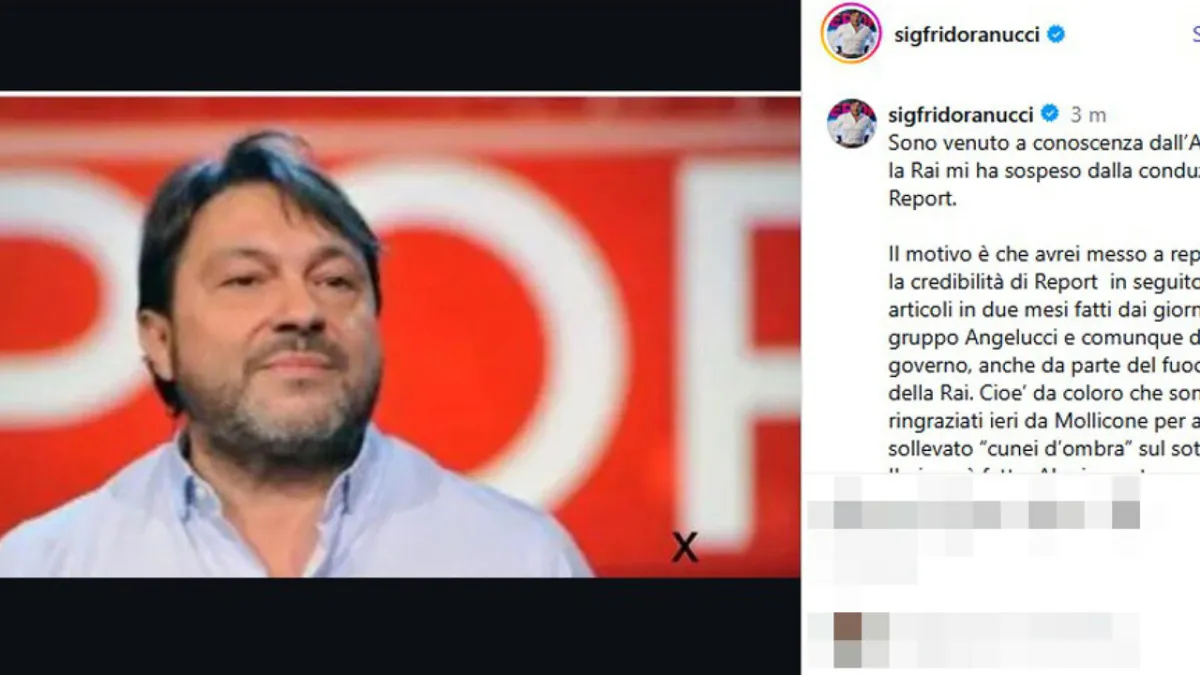
ROME – Prominent investigative journalist, Sigfrido Ranucci, recently voiced profound concerns regarding a potential assignment to Cairo and openly criticized what he termed 'a slap in the face of meritocracy' concerning his replacement. Ranucci's statement immediately sparked intense debate within media circles and among the public, given the sensitivity of the Giulio Regeni case, an Italian student tragically killed in the Egyptian capital years ago.
Ranucci, known for his courageous investigative reporting, expressed his feelings frankly. 'Me in Cairo? Perhaps they hope I end up like Regeni,' he stated, highlighting the potential danger he perceived if assigned to the region. This apprehension reflects the collective trauma within Italian media regarding the Regeni case, for which justice for the victim remains elusive.
The incident involving Giulio Regeni, a young researcher who disappeared in January 2016 and was found dead with signs of torture in Cairo, has been a gaping wound in diplomatic relations between Italy and Egypt. Egyptian authorities have frequently been criticized for a lack of transparency and progress in the investigation, leading many in Italy to feel that justice has not been served. This context underlies Ranucci's unease.
Furthermore, Ranucci also emphatically criticized the process of selecting his replacement. 'The choice of my substitutes is a slap in the face of meritocracy,' he asserted, suggesting a disregard for professional principles and performance in the determination of key positions within his media institution. This statement opens a discussion about management ethics and transparency in decision-making within the journalism industry.
Ranucci's criticism of meritocracy is not merely a personal grievance but reflects a broader uneasiness among media professionals regarding promotion and placement systems that are sometimes perceived as unfair or based on specific interests, rather than on capacity and track record. Journalistic integrity and objectivity depend on independence and transparent internal processes.
Dissatisfaction with these internal processes adds another dimension to the issues raised by Ranucci. It suggests potential conflicts of interest or at least a lack of effective communication between management and experienced journalists. A leading media institution should ensure that personnel decisions are based on competence and demonstrable contributions.
Ranucci's statement cannot be separated from the crucial role of journalists in a democratic society. Freedom of the press and protection for reporters are fundamental pillars. Threats to journalists' safety, both physical and professional, can erode public trust and hinder the pursuit of truth.
The Regeni case itself remains a dark shadow haunting Italy-Egypt relations, and whenever there is an indication of a threat to Italian citizens in Egypt, alarms immediately sound. Ranucci's concern is legitimate, given the risks previously faced by his fellow countryman.
Although Ranucci did not specify the identities of individuals or parties he holds responsible for the alleged disregard of meritocracy, his statement is clearly directed at the internal policies of the institution he serves. This issue demands serious attention from stakeholders in the media world to ensure that professionalism remains at the forefront.
As a senior journalist with a solid reputation, Ranucci's voice carries significant weight. His grievances are not solely about an individual's fate but also about the fundamental principles that should underpin quality journalism. This is a call for introspection for the entire media industry.
The Italian government and international human rights organizations continue to monitor the situation of journalists and its citizens in various parts of the world, especially in areas considered high-risk. Ranucci's statement will likely heighten vigilance regarding the safety of Italian journalists abroad, particularly in Egypt.
Editorial Insight: Sigfrido Ranucci's statement highlights two critical issues: journalist safety in high-risk zones and the integrity of meritocracy within media structures. This is not merely a personal complaint but an indication of a potential degradation of independent, competence-based journalistic values. This case urges profound reflection on media institutions' responsibilities towards their employees and the necessity for transparency and fairness in every decision, to maintain public trust and press freedom.