 Dodi Irawan
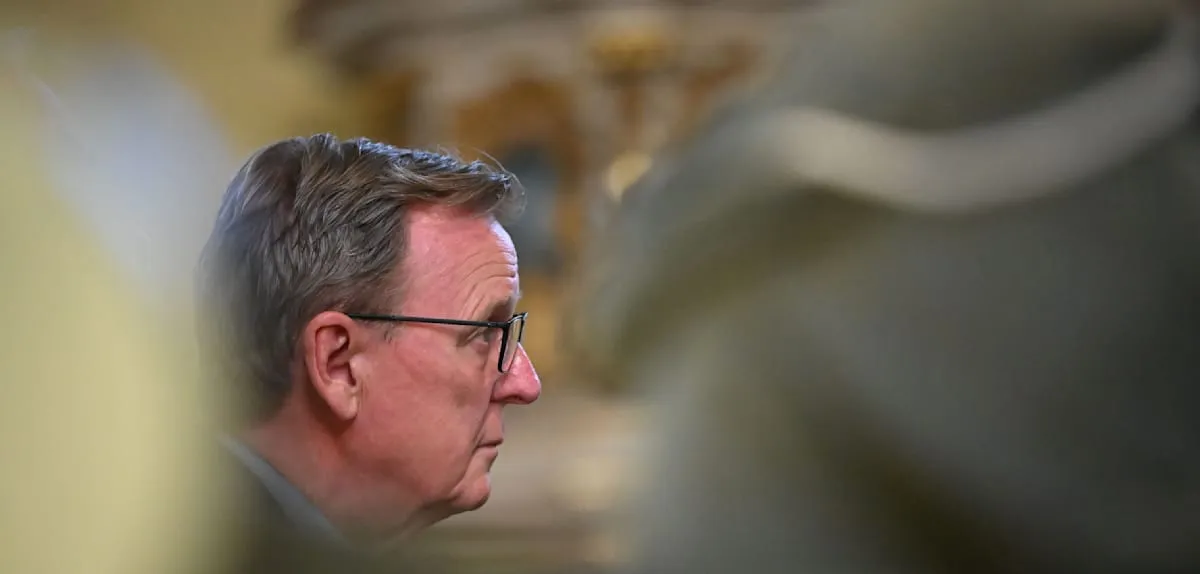
BERLIN – The German political landscape is heating up ahead of state elections in several eastern regions. Die Linke (The Left Party) has launched a scathing critique against BSW (Bundnis Sahra Wagenknecht), accusing it of dangerously close ties to the far-right Alternative for Germany (AfD). This accusation comes from senior Die Linke figures, Bodo Ramelow and Bernd Riexinger, who view Sahra Wagenknecht's political orientation as a path toward an unholy alliance with the controversial AfD figure, Bjoern Hocke.
This criticism is more than just a usual inter-party friction. It reflects deep concerns about the shifting political landscape in Germany, particularly in the eastern regions, which have historically been more susceptible to populist rhetoric and extremism. Die Linke, as a traditional left-wing representative, consistently opposes the ideology espoused by the AfD.
Bodo Ramelow, a veteran Die Linke politician and the current Minister-President of Thuringia, did not hesitate to voice his apprehension. He explicitly described BSW as a 'kingmaker' or a facilitator for the AfD, potentially enabling the AfD's dominance in the regional political arena.
Echoing Ramelow, Bernd Riexinger, former co-chairman of Die Linke, warned of the serious dangers posed by BSW's stance. He highlighted that BSW's rhetoric, which often touches on immigration issues and social policies with a skeptical tone, ironically resembles the narrative consistently promoted by the AfD.
BSW itself is a new party founded by Sahra Wagenknecht, a former charismatic figure from Die Linke. She broke away due to fundamental differences, particularly concerning migration policies, the war in Ukraine, and the future direction of the left-wing party. This split has weakened Die Linke and created an unexpected new player in German politics.
Political observers note that BSW, despite claiming to be a left-wing party focused on social justice, often uses language appealing to the same voter base as the AfD. Issues such as national sovereignty, criticism of elites, and concerns about the impacts of globalization surprisingly converge between the two.
This perceived closeness, according to Die Linke, poses a serious threat to the liberal democratic order in Germany. The AfD is known for its anti-immigrant views, extreme nationalism, and at times, rhetoric that dismisses democratic institutions. Collaboration, even indirect, could legitimize such views.
Upcoming state elections in regions like Brandenburg, Saxony, and Thuringia will be a crucial test for Germany's political map. These areas have long been strongholds for the AfD, and the emergence of BSW is seen as potentially further fragmenting votes, paving the way for the AfD to gain significant positions, even victories.
To date, BSW consistently rejects accusations of closeness to the AfD. They insist that their priority is to represent citizens who feel neglected by traditional parties and to offer pragmatic solutions for the economic and social problems facing Germany.
This situation adds complexity to Germany's already tense political dynamics. Shifts in votes and potential cross-ideological collaborations could lead to unstable coalition governments or strengthen the position of extremist parties in parliament. This also indicates that political turmoil in Germany continues with high intensity.
Editorial Insight: Die Linke's accusations against BSW are not merely typical political maneuvering but a reflection of real concerns about the erosion of democratic values amidst rising populism. If BSW, consciously or not, becomes a bridge for the AfD to power, the implications for Germany's political and social stability will be significant. The state elections in the eastern regions will serve as a crucial barometer to gauge how deeply this ideological shift will take root.