 Debby Wijaya
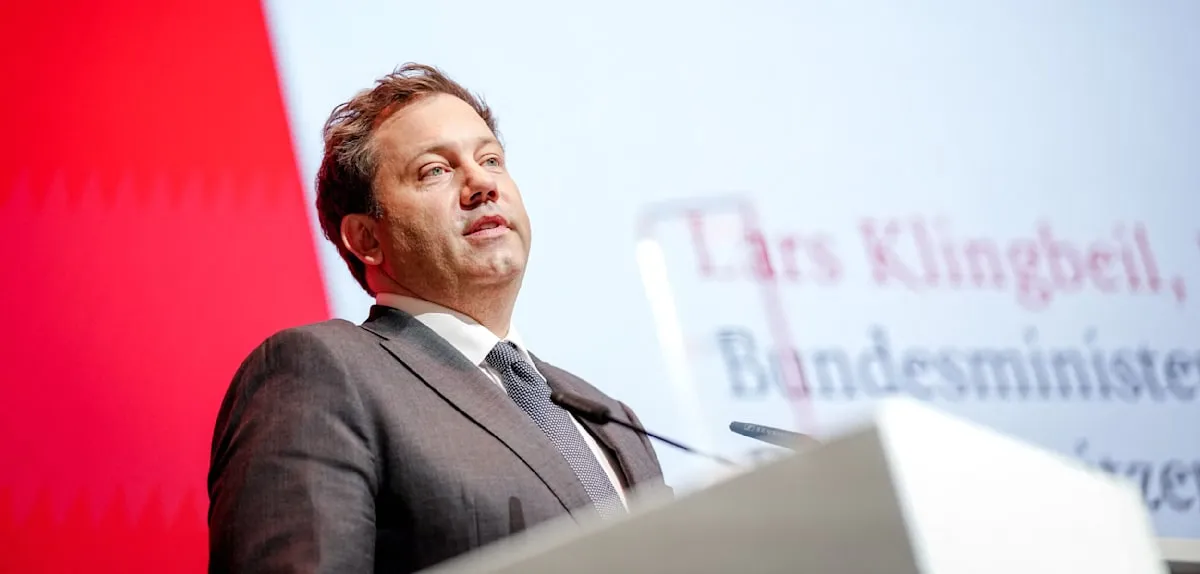
FRANKFURT – The leader of Germany's Social Democratic Party (SPD), Lars Klingbeil, emphatically declared the end of the 'post-Trump era' at his party's economic forum. This declaration is not merely a political statement but a direct call to German automotive industry leaders to assume greater responsibility amidst a rapidly changing global economic landscape.
During a keynote speech at the SPD Economic Forum, Klingbeil highlighted the shifting dynamics of global power. He emphasized that the world must now confront new realities, no longer hiding behind the shadows of Donald Trump's previous presidential policies.
Klingbeil explicitly challenged executives of leading German automotive companies to demonstrate adaptive leadership. They are expected to innovate not only in technology but also in business strategies to face increasingly complex market and geopolitical challenges.
Interestingly, amidst his criticism, Klingbeil acknowledged an 'extraordinary achievement' indirectly brought about during the period of US President Donald Trump's leadership. Although he did not elaborate, strong indications point to a stimulus or reconfiguration of global industry that unexpectedly provided strategic advantages for certain sectors.
This acknowledgment suggests that while Trump's policies were often controversial, some may have forced industries, including in Germany, to accelerate adaptation and diversification processes. US protectionist policies, for example, might have encouraged domestic investment or the search for alternative markets for German manufacturers.
The context of this statement comes at a time when the German automotive industry faces significant pressure. The transition to electric vehicles, fierce competition from Asia, and global supply chain uncertainties are key agendas that must be addressed. Companies like BMW, for instance, have recently made significant strategic adjustments. You can read more about the challenges in this sector in our related article: German Automotive Giant BMW Cuts 1,800 Jobs in China, Profitability Threatened.
According to internal SPD sources, Klingbeil's declaration is an effort to encourage the German coalition government and private sector to be more proactive. This is not a time for nostalgia but for building solid, forward-looking strategies to confront global powers, including the United States, which is once again led by Donald Trump.
Transatlantic economic relations remain a vital pillar for Germany, but the potential return of 'America First' policies will demand a smarter response. Innovation, such as Mercedes' interactive car windows, is key to staying relevant. Mercedes Transforms Car Windows into Interactive Displays, Future of Automotive Arrives 2026.
Threats to AI data centers in Texas or political turmoil in the United States, as the market once predicted, also affect the global investment climate. US domestic politics, even in 2026, continues to deliver surprises that must be anticipated. See our analysis: Democrats Lead Congress: Market Accurately Predicts, Political Surprises Mark US 2026.
Klingbeil's statement also implicitly underscores the complexity of Donald Trump's renewed leadership dynamics. While many countries felt relief when Trump previously left office, some policies under his administration indeed yielded economic impacts worth noting, both positive and negative.
Editorial Insight: Lars Klingbeil's statement marks a shift in German political rhetoric regarding US influence. Declaring the end of the 'post-Trump era' is not merely an acknowledgment of Donald Trump's return to the White House, but a signal that Germany must build its own economic resilience and strategy. It is a call to break free from old dependencies or habits and actively shape the future of its industries, especially the vital automotive sector, in a volatile geopolitical climate. The long-term implications are an increased focus on domestic innovation, market diversification, and a more independent economic diplomacy.