 Angel Doris
WARSAW – Political upheaval in Poland has reached a critical juncture following the surprising resignation of two ambassadors amidst the power struggle for control over the nation's Constitutional Court. This development has triggered serious concerns among political elites, with President Karol Nawrocki explicitly stating that the institutional dispute could potentially jeopardize national security.
The decision by two senior diplomats to step down is not merely an internal incident; it serves as an alarming signal indicating the deepening political and institutional polarization in Warsaw. These resignations occurred during a sensitive period when the integrity and independence of Poland's highest judicial institution are at stake.
The protracted conflict regarding the composition and authority of the Constitutional Court has been a central point of contention in Poland's political landscape for years. This dispute fundamentally involves attempts to determine who holds ultimate authority in interpreting the basic law, a fundamental pillar of modern democracy.
President Karol Nawrocki did not hesitate to voice his concerns. This dispute over the Constitutional Court, which has now spilled into the realm of diplomacy, I deem a serious threat to national security, he stated in an official announcement. This statement underscores that the conflict's impact is not limited to the legal sector but has permeated the nation's overall stability.
The independence of the Constitutional Court is crucial in a democratic system of government. Its function is to act as the guardian of the constitution, ensuring that all branches of government operate in accordance with the country's fundamental law. When this independence is questioned or undermined, the risk of abuse of power and erosion of the rule of law becomes very real.
The ambassadors' resignations represent a rare act of protest, highlighting how seriously they view Poland's domestic political situation. In diplomacy, such actions are often interpreted as an expression of a loss of confidence in the direction of policies or the internal conditions of the home country.
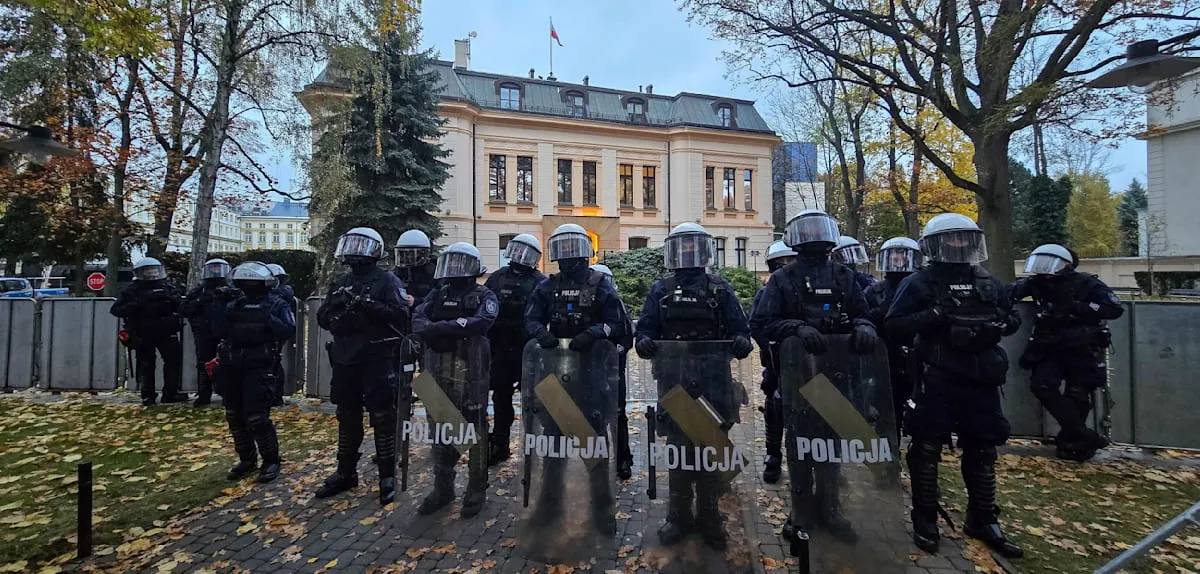
This situation exacerbates tensions that have previously gripped Poland. Previously, Warsaw also saw heightened tensions due to the power struggle for control of the Constitutional Court, which triggered mass protests, indicating that this issue has long been a source of public dissatisfaction and fierce debate.
Political circles domestically have reacted to the resignations with varied responses. Some view it as a courageous act demonstrating the government's failure to maintain constitutional stability, while others might see it as a political maneuver that further muddies the waters.
Internationally, these developments could damage Poland's image as a stable country upholding democratic principles. European Union partners and other international organizations will likely monitor the situation closely, given the importance of institutional stability for regional and global cooperation.
The long-term impact of this constitutional crisis could be extensive, affecting the investment climate, diplomatic relations, and even social cohesion in Poland. The credibility of state institutions is at risk if internal conflicts persist without a constructive and legally compliant resolution.
The Polish government now faces a significant challenge to restore public and international trust, and to ensure that the principles of the rule of law and judicial independence can be re-established. The path to stability may be arduous and require strong political consensus.
Editorial Insight:
The resignation of two Polish ambassadors amidst the struggle over the Constitutional Court is not merely news; it is a reflection of the profound challenges many nations face in maintaining the balance between executive and judiciary powers. President Nawrocki's statement regarding a national security threat indicates that the stakes in this conflict far exceed an ordinary legal dispute. This is a test for the resilience of Poland's democratic institutions and a signal to the international community about the importance of closely observing these developments. The resolution of this conflict will largely determine Poland's future direction, both domestically and internationally, particularly concerning its commitment to democratic values and the rule of law.