 Dodi Irawan
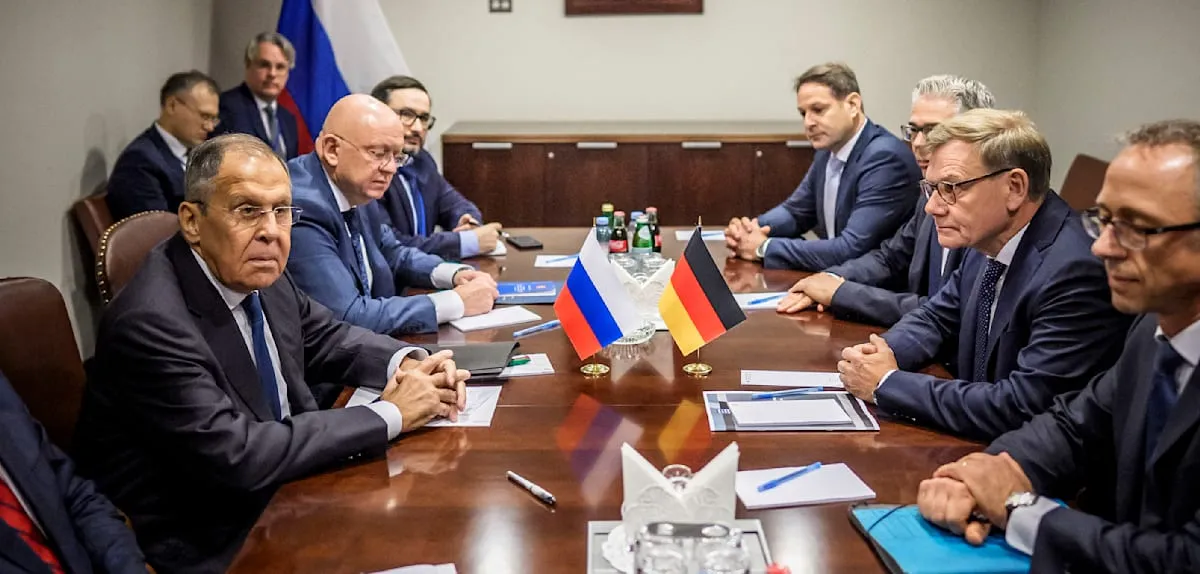
BERLIN – The meeting between German Foreign Minister Wadephul and his Russian counterpart, Sergey Lavrov, continues to fuel intense debate within political circles and international analysis. Following the diplomatic dialogue, several prominent experts and politicians voiced deep concerns, accusing Germany of being humiliated and even trapped by Russia's cunning diplomatic maneuvers. The peak of criticism came from Roderich Kiesewetter, a senior German parliamentarian, who explicitly stated that Lavrov had 'made our Foreign Minister look ridiculous.'
Kiesewetter, known as a vocal figure in foreign affairs, did not hesitate to issue such a scathing statement. He underscored the impression that the meeting, instead of building diplomatic bridges, highlighted Moscow's superiority and Berlin's weak position. His statement immediately resonated, reinforcing a narrative that has developed among political analysts closely observing the dynamics of German-Russian relations.
Observers, most with backgrounds in international strategic studies, agreed that this incident could damage Germany's image on the global stage. They fear that Berlin unwittingly fell into Moscow's broader strategy, designed to diminish Western influence and highlight uncertainties in European Union cohesion.
'This situation is not just a minor incident,' said a veteran diplomat who requested anonymity. 'It indicates that German diplomacy might need a serious calibration. Russia, under Lavrov's leadership, is adept at exploiting every loophole for their narrative advantage.'
The meeting, initially hoped to open constructive dialogue on crucial issues in Eastern Europe and regional security, instead backfired. The focus of discussion has now shifted from the substance of negotiations to the interpretation of a diplomatic incident deemed to undermine Germany's dignity.
According to some experts, Lavrov has a long track record of using sharp rhetoric and confrontational tactics at the negotiating table. This approach often aims to dominate the narrative and put the opposing party on the defensive, a pattern that appears to have recurred in the meeting with Minister Wadephul.
The concerns raised by Kiesewetter and experts also reflect a broader frustration with German foreign policy, which is often accused of being too lenient or indecisive when confronted by more assertive global actors. This, they fear, could make Germany an easy target for political maneuvers.
'Is this an early sign of a shifting power dynamic in Europe?' asked a political commentator on national television, referring to the potential long-term impact of this incident. 'Or is it simply a sign that Germany needs to be more assertive in protecting its interests?'
This event also highlights the complexity of German-Russian bilateral relations, which have long been marked by tension, especially after turbulent geopolitical crises in the Eastern European region. Every diplomatic meeting between the two countries is always under sharp scrutiny, given their strategic roles in the political constellation of the blue continent.
The German government is now under pressure to provide further clarification and demonstrate concrete steps to address the damaging public perception. The silence following the meeting has fueled further speculation, adding to the burden on the Ministry of Foreign Affairs.
Some parties even raised the need for a re-evaluation of Germany's diplomatic communication strategy. 'Transparency and assertiveness are key,' said an opposition politician, criticizing what he called 'narrative weakness' in dealing with provocation.
Editorial Insight:
This diplomatic incident is more than just a verbal spat; it is a reflection of deep geopolitical tensions and a narrative struggle on the international stage. For Germany, this event must serve as a moment of critical reflection on the effectiveness of their diplomatic strategy. Ignoring this perception of humiliation risks weakening Berlin's position in the long run, while an overly aggressive response could further complicate already strained relations. A balance between firmness and prudence will be crucial in navigating the future of German-Russian relations.