 Stefani Rindus
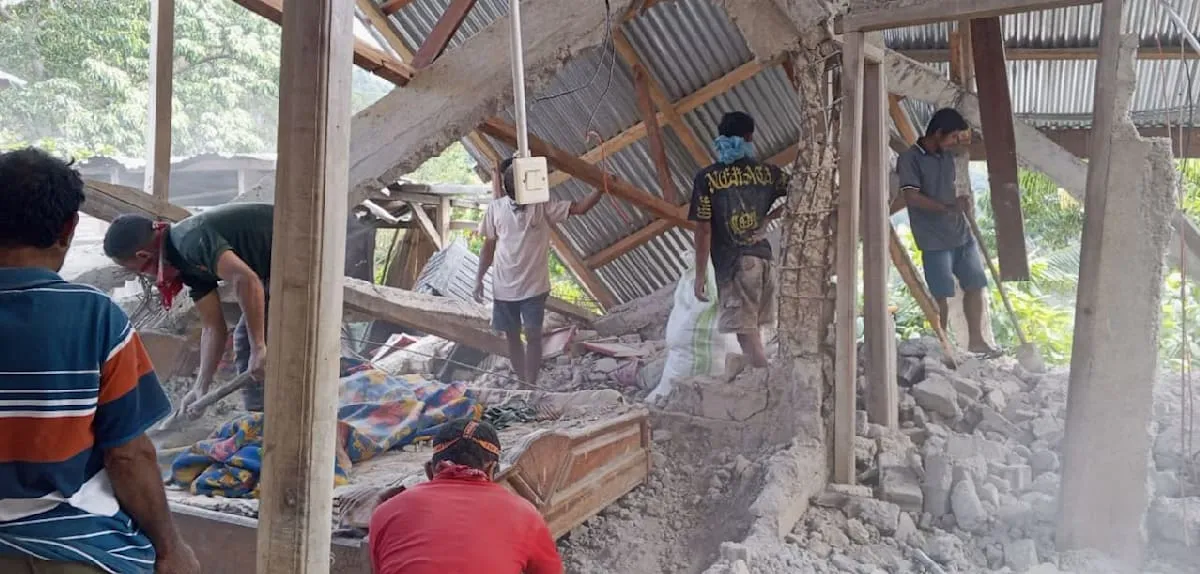
INDONESIA – A powerful earthquake has struck Indonesia, triggering a tsunami warning and compelling thousands of coastal residents to evacuate immediately. The incident, which occurred on Friday morning, has claimed one life, as confirmed by the National Disaster Management Agency (BNPB). Authorities swiftly issued a tsunami alert and ordered the evacuation of populations along the coastline to minimize disaster risks.
The main tremor was followed by a series of strong aftershocks, escalating public anxiety regarding potential further impacts. The Provincial Government of West Sulawesi, as one of the vulnerable regions, immediately activated an emergency alert status in several areas.
Local authorities, through a BNPB spokesperson, urged all citizens to remain calm but vigilant, and to follow the established evacuation directives. Inter-agency coordination proved crucial in this critical situation.
One casualty has been identified as a direct consequence of the earthquake, stated Abdul Muhari, Head of the Data, Information, and Disaster Communication Center of BNPB, during a virtual press conference. Our paramount priority is the safety of our citizens, and we are continuously monitoring the situation in real-time to provide the latest information.
The early tsunami warning was issued after initial analyses from the Meteorology, Climatology, and Geophysics Agency (BMKG) indicated a potential for significant sea level rise in several coastal areas. This analysis was based on the parameters of the earthquake that occurred.
Communities in disaster-prone regions received instructions to immediately seek higher ground, adhering to previously socialized evacuation routes by local governments and BNPB.
Emergency response efforts involved various elements, including SAR teams, the Indonesian National Armed Forces (TNI), the Indonesian National Police (Polri), and local volunteers, who rapidly deployed to the affected locations. They worked tirelessly to ensure the evacuation proceeded smoothly.
President Prabowo Subianto, via his spokesperson, expressed deep condolences for the casualty and instructed all relevant agencies to operate optimally in managing this disaster. He emphasized the importance of synergy between central and local governments in handling challenging emergency situations.
Several villages in the coastal region of Mamuju and Majene appeared deserted after most residents followed evacuation instructions. Citizens demonstrated a high level of awareness regarding potential dangers.
Aerial monitoring revealed long queues of vehicles heading towards higher ground, illustrating public awareness regarding the importance of disaster mitigation and rapid response to early warnings.
The BMKG consistently updated information concerning seismic activity and potential tsunami waves through various communication channels, including mass media and official mobile applications.
Although the tsunami warning was later lifted after several hours as there was no indication of large threatening waves, authorities still advised residents to exercise caution when returning home and to check their surroundings.
Infrastructure damage remains in the initial assessment phase, but preliminary reports indicate cracks in several buildings and public facilities. Field survey teams are working hard to identify all damage impacts.
The emergency response period is anticipated to last several more days to ensure all residents are safe and logistical aid is properly distributed to those in need.
Editorial Insight:
This earthquake impacting Indonesia once again highlights the archipelagic nation's geographical vulnerability to natural disasters. The rapid government response and public awareness in evacuating proved crucial in minimizing casualties. However, this incident also underscores the ongoing need for strengthening earthquake-resistant infrastructure and more extensive disaster mitigation education, especially in tsunami-prone coastal regions.