 Dorry Archiles
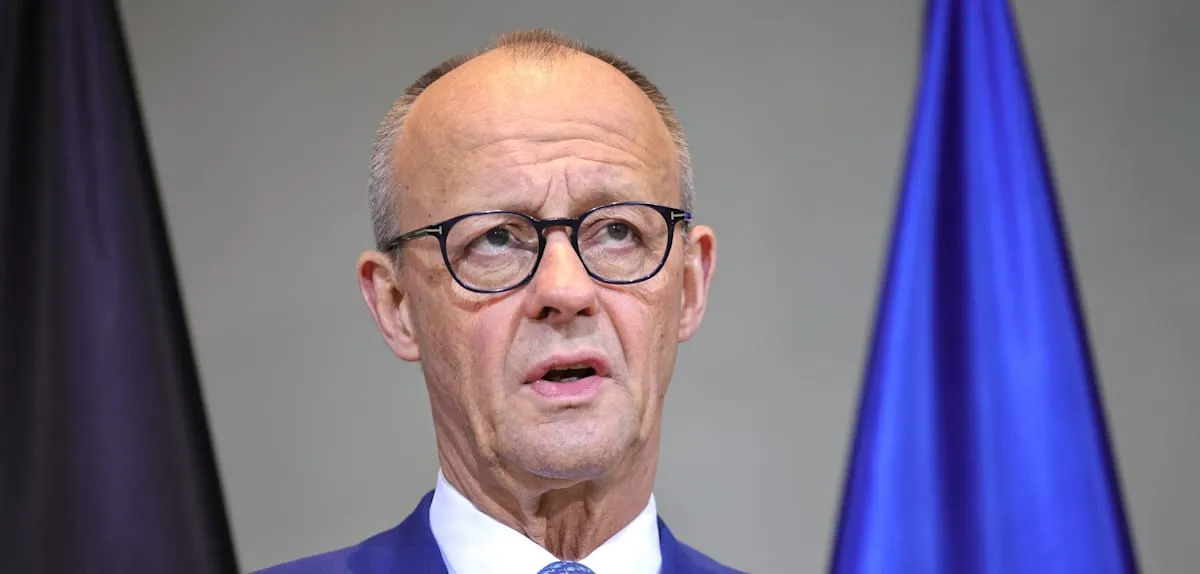
BERLIN – Friedrich Merz, Germany's opposition leader and Chairman of the Christian Democratic Union (CDU) party, recently launched sharp criticism against former Chancellor Angela Merkel's policy regarding Ukraine. Merz demanded security guarantees for Ukraine that he described as very close to NATO membership status, while calling intelligence reports about Russia's potential deployment of nuclear weapons in orbit 'shocking' and a serious global threat. This statement reiterates the geopolitical tensions that continue to cast a shadow over Europe in 2026.
Merz's criticism not only focuses on the past but also projects the urgency of swift action. He believes that NATO's past refusal to grant Ukraine full membership status, especially under Merkel's leadership, created a security vacuum now exploited by aggressors.
In his view, strong and concrete security guarantees for Kyiv are not merely symbolic, but a vital prerequisite for regional stability and the prevention of further conflict. Merz stressed that these guarantees must have force equivalent to Article 5 of the NATO Treaty, which ensures collective defense.
Beyond the Ukraine issue, Merz also strongly voiced his concern over media reports suggesting Russia is considering placing nuclear-armed satellites in Earth's orbit. 'This report is truly shocking and marks a new dimension in a dangerous arms race,' Merz stated.
The potential militarization of space with nuclear weapons raises profound concerns within the international community. Such a move could violate several international treaties on the peaceful use of outer space and could trigger unprecedented global destabilization.
Global political and military analysts agree that this threat requires a coordinated response from world powers. If these reports prove true, it will force a re-evaluation of defense and security strategies at the international level, including among NATO member states.
Merz underscored the importance of strong diplomacy accompanied by clear deterrence messages to Moscow. He argued that the West must speak with one voice, rejecting any attempt to arm space with nuclear capabilities.
The issue of Ukraine's security remains a central focus in German and European foreign policy. Incidents such as Ukraine's claim of bombing two Russian ships in Libyan waters show that the conflict can expand into unexpected areas, adding to the situation's complexity.
The current German coalition government under Chancellor Scholz faces pressure to formulate a firmer and more proactive policy towards Russia, while balancing complex energy needs and economic relations.
Merz's statement also indicates that the CDU party, as the main opposition force, will continue to pressure the government to take a tougher stance in addressing these crucial geopolitical challenges.
The demand for security guarantees resembling NATO membership for Ukraine reflects the view that neutrality is no longer adequate in the face of aggression. This represents a significant paradigm shift from softer diplomatic approaches in the past.
Editorial Insight:
Friedrich Merz's statements reflect a shift in the security narrative in Germany and Europe. With pressure from intelligence reports on nuclear threats in space, and the call for NATO-equivalent security guarantees for Ukraine, Berlin faces a strategic dilemma. Germany's future foreign policy is likely to become more assertive and may involve bolder steps in confronting Russian aggression, to maintain regional and global stability.