 Demian Sahputra
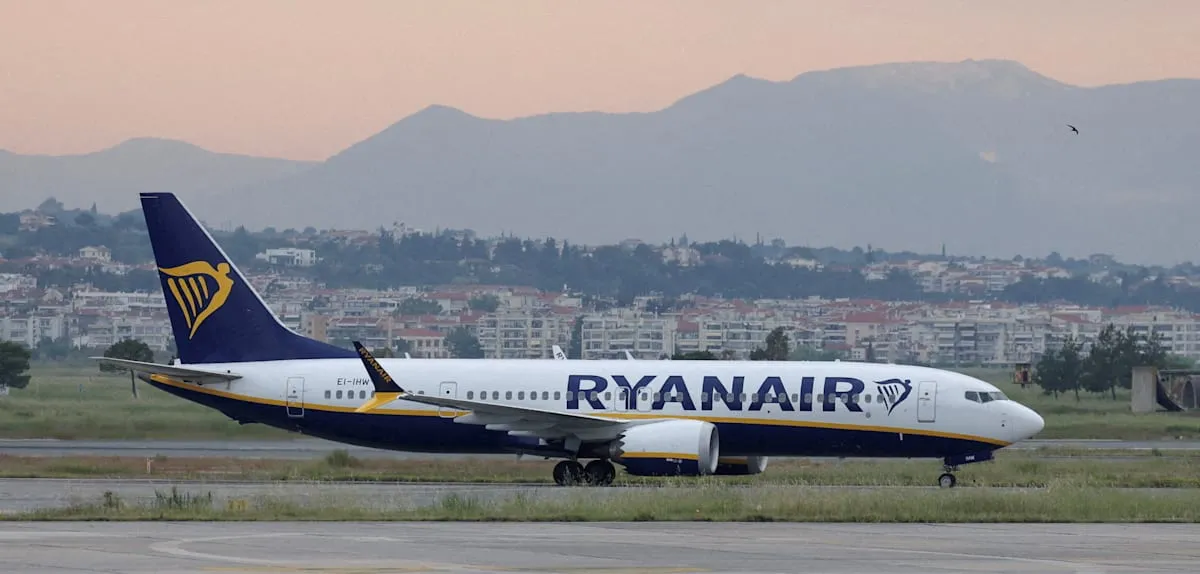
Athens — A terrifying incident shocked a Ryanair flight from Greece to an undisclosed destination in early 2026, when one of the aircraft's windows suddenly shattered mid-flight. This dramatic event resulted in a passenger almost being pulled out of the aircraft, only restrained thanks to the quick response of fellow passengers and cabin crew. The captain immediately took emergency action by aborting the journey.
The startling event occurred at cruising altitude, where the air pressure inside and outside the cabin is vastly different. According to eyewitnesses, a small crack in the window suddenly expanded and shattered, creating a gap large enough to pull out the head and upper body of the passenger seated next to it. The force of the air suction caused a brief panic within the cabin.
Without waiting for instructions, several passengers near the scene quickly grabbed hold of the unfortunate man. They struggled to keep him from being completely ejected from the plane. Cabin crew promptly arrived and helped secure the situation, providing first aid to the passenger who was traumatized and possibly injured.
In response to this emergency, the flight captain, after assessing potential risks and passenger safety, decided to discontinue the journey. The aircraft reportedly made an emergency landing at the nearest airport or returned to its departure airport in Greece for further handling. The primary priority was the safety of everyone on board.
The passenger involved, whose identity has not been disclosed by the airline, reportedly suffered severe shock and some minor injuries as a result of the incident. He immediately received medical attention after the plane landed. Authorities and medical teams were on site to provide support and thorough examination.
Ryanair has not yet issued a detailed official statement regarding the exact cause of the window shattering. However, this incident once again highlights the importance of strict aviation safety standards and comprehensive aircraft maintenance procedures. The international community certainly awaits a transparent explanation from the airline.
An aviation safety expert, Professor Dr. Antonius Schmidt from the Berlin Aerospace University, commented that incidents like this are extremely rare on modern commercial flights. \"Aircraft windows are designed to withstand extreme pressure. A window shattering at cruising altitude indicates potential serious structural damage or material failure that requires in-depth investigation,\" he told media outlets in late February 2026.
Civil aviation authorities from the relevant country, along with air accident investigation teams, are expected to conduct a thorough investigation immediately. The main focus will be on the condition of the aircraft, its maintenance history, and other factors that may have contributed to the failure of this vital component. The results of the investigation are crucial to preventing similar incidents in the future.
This incident is undoubtedly a bitter reminder for the aviation industry about the importance of vigilance and uncompromising maintenance. Although air travel is statistically one of the safest modes of transportation, dramatic incidents such as the one affecting the Ryanair flight always trigger public concern and prompt a review of safety protocols.
Ryanair, known for its low-cost flight operations, now faces intense scrutiny. This incident has the potential to affect its reputation and public trust. Corrective measures and transparency in the investigation will be key to restoring passenger confidence in the airline's commitment to safety.
Several other passengers who witnessed the incident firsthand expressed deep shock and fear. One of them, Mrs. Sofia Müller, a German tourist, stated, \"I never imagined experiencing something this terrifying. We could only pray and try to help as much as we could. It's an experience I will never forget.\"
The psychological impact of such an incident cannot be underestimated. Not only for the passenger who was nearly pulled out, but also for those who witnessed and tried to help. Psychosocial support will be an important part of post-incident management to ensure full recovery for all affected.
The shattering of an aircraft window, an integral part of the cabin's structural integrity, raises serious questions about the maintenance and inspection standards applied by Ryanair. Commercial aircraft undergo a series of strict periodic checks, and the failure of such a component should ideally be detected before takeoff.
This incident is expected to spark further discussions among European aviation regulators and airline associations about enhancing security protocols. The Federation of European Air Pilots (FEAP) may demand a review of aircraft window maintenance procedures across all commercial fleets, especially for airlines operating busy routes.
Although extreme events like this are rare, it underscores that risks in aviation, however small, still exist. Experts emphasize the importance of passengers always adhering to safety instructions and paying attention to safety demonstrations before flights, as in an emergency, every second is precious.
Ryanair will likely face legal claims from affected passengers and will also be closely monitored by aviation authorities to ensure all necessary steps have been taken to prevent similar incidents. The investigation will determine the extent to which negligence, if any, played a role in this unfortunate event.
Aviation history records several incidents of shattered aircraft windows or other cabin integrity issues, although often caused by different factors, such as material fatigue or external damage. Each incident serves as a valuable lesson for the industry to continuously innovate in technology and safety protocols.
An airline's image heavily depends on public perception of its safety. For Ryanair, a low-cost carrier, the challenge to reassure passengers will be even greater, especially in the era of social media where information spreads very quickly. Transparent communication and concrete actions are key.
The European Union Aviation Safety Agency (EASA) is expected to closely monitor this investigation. EASA is responsible for the certification and oversight of aviation safety in Europe, and incidents like this can trigger revisions or tightening of existing regulations for airlines operating in its territory.
Ultimately, this incident confirms that in the world of aviation, there is no room for complacency. Every component, every procedure, and every personnel plays a crucial role in maintaining the safety of millions of lives that depend on the reliability of this mode of air transport.