 Robert Andrison
LIVORNO – The Livorno Prosecutor's Office has officially requested the archiving or closure of the investigation into the Moby Prince maritime tragedy, an incident that claimed 140 lives. This move comes after the District Anti-Mafia Directorate (DDA) of Florence previously reached a similar conclusion in February 2025, once again raising significant questions about justice for the victims and the continuation of the search for truth in one of Italy's worst maritime disasters.
The decision from the Livorno Prosecutor's Office, announced in 2026, marks a bitter new chapter in a legal saga that has spanned decades. Victims' families and the Italian public have long demanded definitive answers regarding the exact cause of the horrific fire and collision that struck the Moby Prince ferry in April 1991.
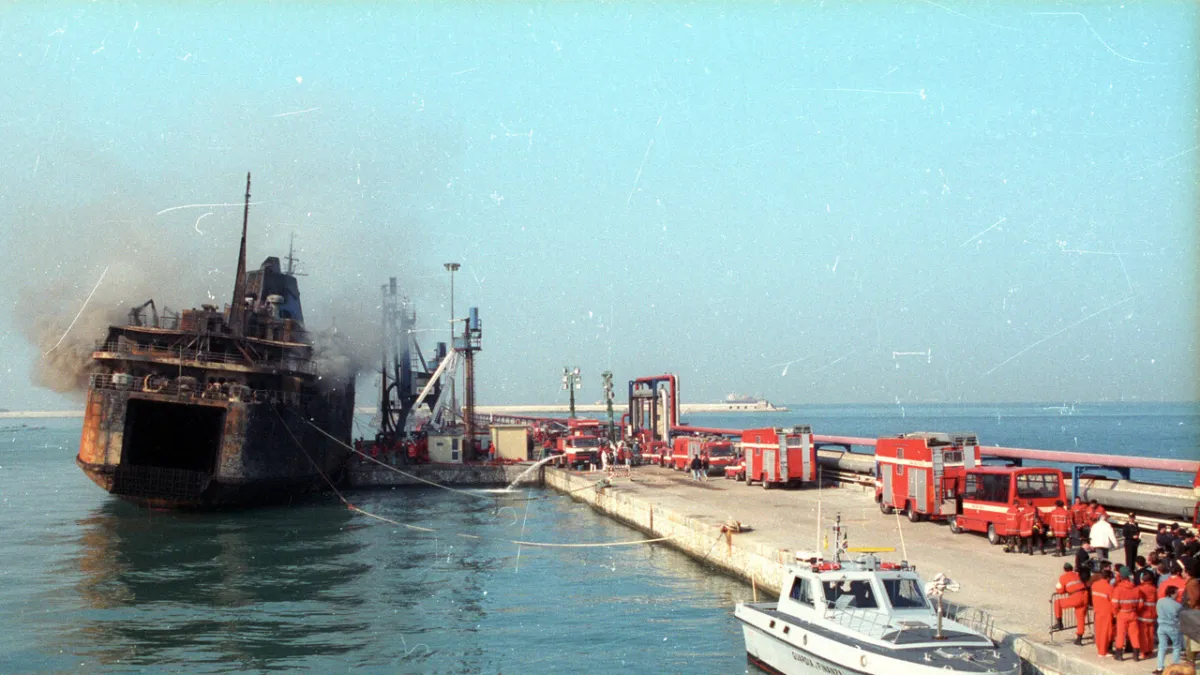
The Moby Prince tragedy stands as one of the most poignant maritime incidents in modern Italian history. On April 10, 1991, the ferry collided with the oil tanker Agip Abruzzo off the coast of Livorno port. The collision resulted in a massive fire on the ferry, killing all 140 people onboard, including crew members and passengers, with only one crew member surviving.
For over three decades, various investigations have been conducted, giving rise to diverse theories and speculations about the incident's cause. These ranged from human error and dense fog conditions to allegations of a third vessel being involved in the accident. However, each investigation has seemingly concluded without satisfactory findings or clear accountability.
The DDA Florence's request to archive the investigation in early 2025 focused on potential mafia involvement in the case, particularly concerning smuggling and illegal activities that might have contributed to the accident. However, with its archiving, the DDA indicated insufficient evidence to pursue charges or establish direct legal connections.
Now, the Livorno Prosecutor's Office is taking a similar step, which, if approved, will effectively close formal legal avenues for further investigation. This decision has the potential to extinguish the hopes of victims' families for full truth and justice through the judicial system.
The victims' families, who have fought relentlessly for decades, expressed deep disappointment over this development. For them, archiving is not merely a legal procedure but a forced closure of a chapter in the search for truth that has never been fully resolved.
Various associations representing the victims' families have voiced their concerns, urging authorities to reconsider the decision. They argue that there are still aspects of the incident that have not been fully uncovered and require further investigation, for the honor of the 140 lives lost.
This move also sparks public debate in Italy regarding the effectiveness and time limits of investigations into complex mass casualty cases. Questions about the extent to which the state is responsible for continuing to seek the truth, even after decades, have resurfaced.
While archiving technically means there is insufficient evidence to proceed with criminal prosecution, for the victims and their families, this does not equate to finding the truth or achieving justice. They hope for a loophole or other legal mechanism that can keep open the path for the answers they desperately seek.
Editorial Insight: The Livorno Prosecutor's Office's decision to request the archiving of the Moby Prince case, following the DDA Florence's move in 2025, is a significant blow to the pursuit of justice. It highlights the legal challenges in complex and prolonged mass tragedy cases, where evidence often becomes scarce over time. While procedurally justifiable, its impact on public trust and victims' families' faith in the justice system warrants serious concern. Closing the case without full clarity can leave a legacy of unhealed wounds, emphasizing the need for alternative mechanisms to ensure accountability, even when formal criminal avenues reach a dead end.