 Chris Robert
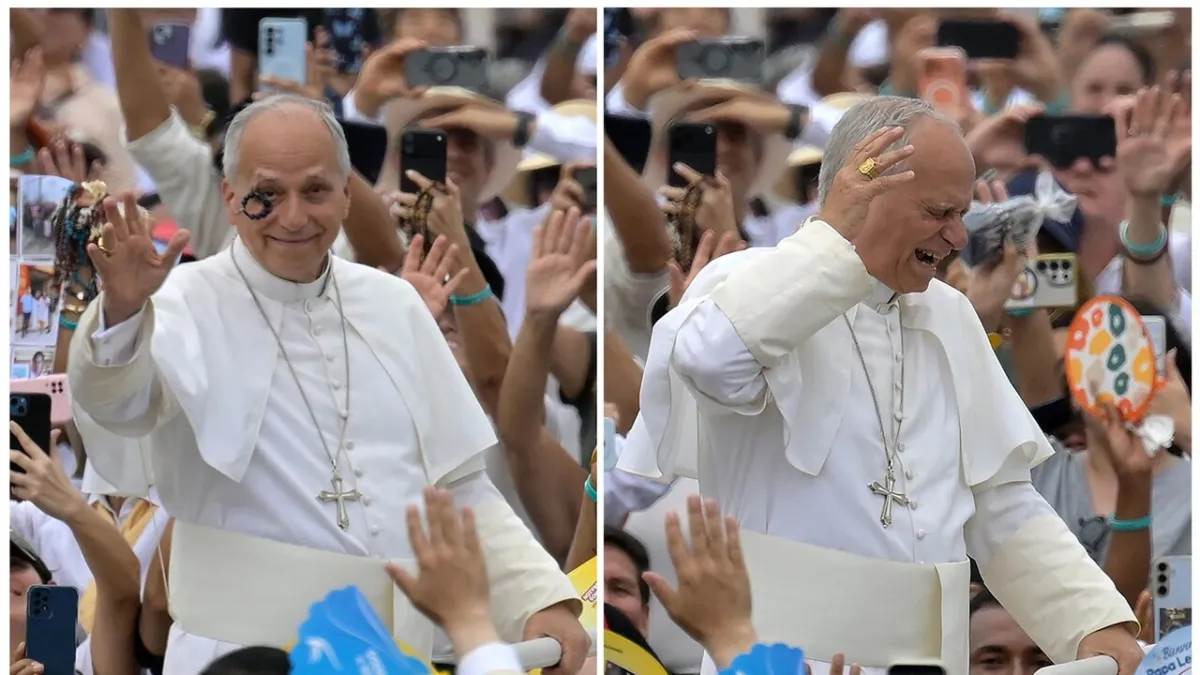
VATICAN CITY – A surprising incident once again marked one of Pope Leo XIV's public appearances. The leader of the global Catholic Church was reportedly hit by a rosary in the face while greeting congregants from atop the Papamobile, the Pope's special vehicle, recently. Although it caused no serious consequences, the incident immediately rekindled discussions about the security and protection protocols for a figure of the Pope's stature.
The event occurred as Pope Leo XIV was passing through an enthusiastic crowd of faithful, as he often does. In an atmosphere full of euphoria, a small object, later identified as a rosary, shot through the air and struck the Holy Father's face. Security officers accompanying the Pope reacted swiftly, but the incident happened very quickly and could not be fully anticipated in the dense crowd.
This is not the first time such an incident has occurred. Internal Vatican sources reveal that the Pope is often the target of small objects thrown by the faithful while on the Papamobile. These actions, although often driven by expressions of affection or a desire to touch the Pope, frequently pose a potential danger to Pope Leo XIV's safety.
Thrown rosaries, letters, or other religious objects are manifestations of overflowing emotions and devotion from the faithful who wish to feel closer to their spiritual leader. However, this phenomenon creates a significant dilemma for Vatican security. They must balance the Pope's openness to his followers with the demands of strict physical protection.
This latest incident, though minor, serves as a serious reminder for the authorities. They need to re-evaluate security strategies without sacrificing the Pope's tradition of always wanting to be among his people. The Pope's accessibility is one of the hallmarks of his leadership, highly valued by millions of Catholics worldwide.
Pope Leo XIV himself is known as a very open figure who always strives to establish personal contact with his faithful. This is evident in his various apostolic visits, including when Pope Leo XIV Captivated Millions, Peru Mass Broke 2026 Record, which was also attended by millions of congregants.
The enthusiasm of the faithful sometimes overflows to the point of being difficult to control. The Pope's security guards, consisting of the Gendarmerie Corps of Vatican City and the Swiss Guard, face immense challenges in ensuring the Pope's safety amidst countless crowds. They must be astute in distinguishing between acts of pure devotion and potential threats that may be disguised.
Incidents like the thrown rosary underscore the complexity of securing a global leader, especially when that figure is a spiritual symbol for billions of people with a diverse range of emotions and intentions. Preventive efforts are key, although difficult to implement perfectly in dynamic public spaces.
Debates about expanding the safe zone around the Papamobile or tightening the Pope's direct interaction with the faithful may resurface. However, any changes must consider the psychological and spiritual impact on the faithful who view meeting the Pope as a sacred moment.
The Vatican will likely issue an appeal to the faithful to be more orderly and respect the Pope's personal space during public appearances. Emphasis on the collective awareness of the faithful is expected to be the first line of defense, complementing the physical security efforts undertaken by the authorities.
Editorial Insight: The incident involving Pope Leo XIV, though minor, reflects the perpetual tension between the need for accessibility of a spiritual leader and the imperative of security in the modern world. This is not merely a matter of physical protection but also a reflection of how public emotions, even those rooted in devotion, can pose unforeseen risks. Vatican security must continue to innovate, perhaps with more advanced surveillance technology, while preserving the value of openness that is central to Pope Leo XIV's papacy.