 Angela Stefani
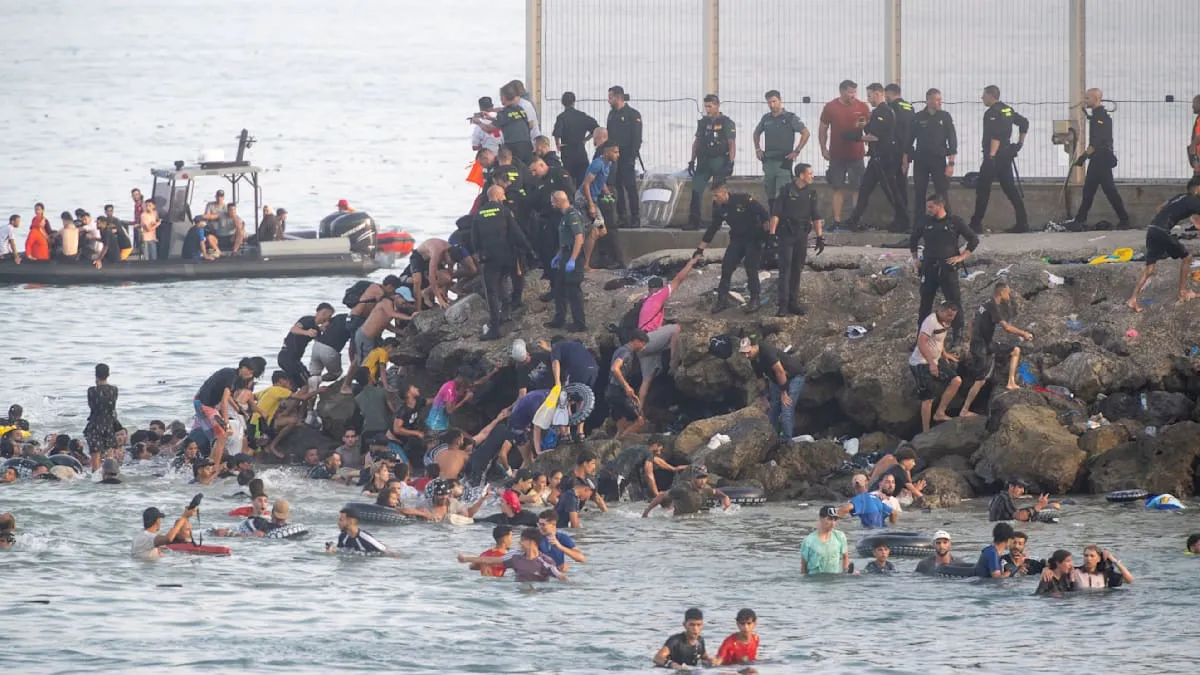
Ceuta — A massive wave of migration once again inundated the Spanish exclave of Ceuta in 2026, fueling strong suspicions that Morocco is leveraging the issue of migration as a political instrument. This invasion by thousands of individuals, representing the largest surge since 2021, has further exacerbated the long-strained bilateral relations between Madrid and Rabat. The situation prompts questions regarding the motives behind this concentrated human movement at one of Europe's most sensitive border points.
Tim Röhn, a prominent Global Reporter from Axel Springer, asserted that this phenomenon is not merely a conventional wave of refugees. "It has absolutely nothing to do with flight — it is a state tool," Röhn stated, offering a sharp perspective on the characterization of the ongoing crisis. His statement indicates an orchestration behind these mass movements, shifting the narrative from a purely humanitarian crisis to a complex geopolitical game.
This analysis reinforces the view that Morocco is strategically employing migratory pressure to achieve specific diplomatic or political objectives with Spain and the European Union. Sudden increases in the number of migrants attempting to cross into Ceuta illegally often coincide with periods of diplomatic tension or demands from Morocco. This is not the first time similar tactics have been observed in regional dynamics.
The Spanish government, through the Ministry of Foreign Affairs under the current Foreign Minister in 2026, has repeatedly expressed deep concern over this escalation. Madrid's response includes deploying additional security forces and appealing to the European Union for intervention. Crisis in Ceuta: Spain Deploys Military to Face Large Migrant Wave is a frequently encountered headline, reflecting the seriousness of the situation on the ground.
The exclaves of Ceuta and Melilla, located on the North African coast, have long been focal points of territorial disputes and vital routes for migrants from various African countries seeking to enter Europe. However, the characteristics of the current surge, with a dominance of migrants originating directly from Morocco or passing through its territory, indicate a different pattern.
The condition of migrants stranded at the border is also alarming. Thousands of people, including children and families, face difficult situations without adequate access to basic facilities. Meanwhile, Spanish authorities are grappling with a humanitarian and security dilemma, amid pressure to adhere to international legal principles. Spain Must Protect Moroccan Migrants, Cannot Expel Them by Force from Ceuta, as per court rulings, adds to the complexity of the situation.
These actions by Morocco, if proven to be a deliberate political strategy, have the potential to undermine the foundations of regional cooperation built between countries in the Western Mediterranean. The European Union also has a significant interest in maintaining the stability of its external borders and will closely monitor these developments. The long-term implications for Morocco-EU relations could be substantial.
History shows that issues such as Western Sahara, fisheries, and the autonomy of Ceuta and Melilla often serve as sources of friction between Rabat and Madrid. Migratory maneuvers can be seen as an attempt by Morocco to gain concessions on these sensitive issues, placing Spain in a difficult position where it must balance sovereignty, humanitarian concerns, and regional stability.
The international community calls for a more collaborative and humane approach to managing migration issues. However, the incidents in Ceuta reiterate that migration is often not just a sociological phenomenon, but also an instrument in increasingly complex global geopolitics. Ceuta Emergency: 49,000 Migrants Storm Spain, Dozens Dead and Humanitarian Crisis Grips Ceuta: Tens of Thousands of Migrants Storm Border, 18 Dead serve as tragic reminders of the consequences of such political conflicts.
In the 2026 context, global political dynamics are increasingly intricate. Morocco, as a strategically positioned country at the gateway to the Atlantic and Mediterranean, plays a crucial role in regional stability. However, the use of tactics that sacrifice thousands of lives and human rights for political gain will always draw condemnation and damage its reputation on the world stage.