 Angela Stefani
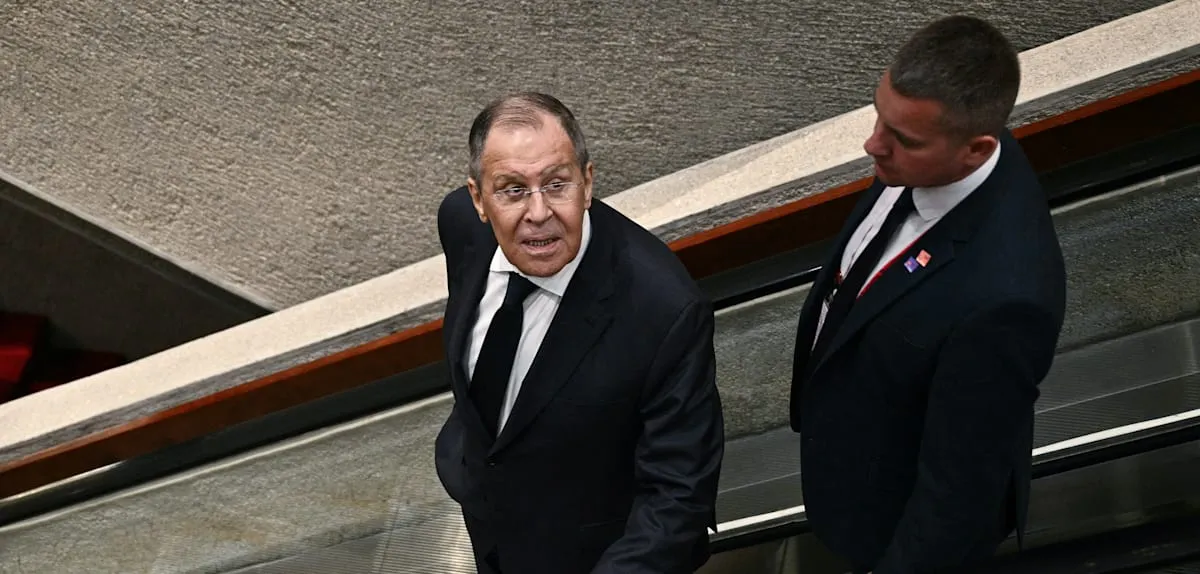
Moscow — Russian Foreign Minister Sergey Lavrov launched a scathing critique against Western arms supply policies, particularly targeting the European Union. His statement came during a diplomatic meeting with high-ranking United States official, Senator Marco Rubio, amidst escalating global geopolitical tensions. Lavrov accused these actions as "unacceptable" maneuvers that provoke regional destabilization and threaten international stability.
This bilateral meeting served as a platform for Lavrov to deliver what he termed a "challenge" to Europe. He explicitly blamed EU member states and their allies for pursuing policies that Moscow believes prolong conflict and undermine prospects for long-term peace. Russia, according to Lavrov, stands ready for negotiations, but only on terms unilaterally set by the Kremlin.
Lavrov's narrative highlights how continuous military aid flowing into Europe, especially in the context of ongoing conflicts at Russia's borders, has created a vicious cycle. This, he asserted, not only exacerbates regional security situations but also erodes trust between major powers. This perspective has been central to Moscow's rhetoric in confronting Western intervention.
"We will not tolerate attempts to undermine our sovereignty or prolong suffering in territories adjacent to our borders through such arms supplies," Lavrov stated, without specifying particular locations or types of weapons. He emphasized that any diplomatic solution must accommodate Russia's fundamental security interests.
Lavrov's comments reflect Moscow's deep-seated concerns regarding the expansion of Western military influence. Over recent years, European nations have significantly increased their defense spending and strengthened military alliances, often backed by the United States. Russia views this increase as a direct threat.
The United States and its European allies maintain that arms supplies constitute legitimate support for sovereign nations, especially in the face of aggression. They argue that military aid is essential for maintaining a balance of power and preventing the escalation of conflict. This position sharply contrasts with Russia's view.
Lavrov accused the European Union's foreign policy of being "destabilizing," a phrase frequently used by Moscow to describe any action not aligned with its geopolitical interests. He pointed to economic sanctions and military support as evidence of confrontational, rather than collaborative, policies. The European Union itself has repeatedly imposed economic sanctions on Russia, with the latest being the 21st sanctions package.
Despite delivering harsh criticism, Lavrov also expressed Russia's readiness for dialogue. However, he firmly underlined that "Moscow's terms" would be the primary basis for any negotiations. This indicates that Russia will not compromise on issues it deems crucial for its security and national interests.
These statements emerge as defense industries in several European countries are actively boosting their production capacities. For instance, Germany is reportedly accelerating its ammunition production, a move aimed at meeting domestic defense needs and supporting allies. This dynamic illustrates the profound perception gap between Russia and the West.
Geopolitical observers interpret Lavrov's statements as an attempt to pressure Western nations into reducing their military support. It can also be seen as a diplomatic strategy to steer future discussions towards negotiations on terms favorable to Russia, amidst global debates concerning the future of European security architecture.
Tensions between Russia and the Western alliance, particularly the United States and the European Union, have been a central axis in international relations for the past few decades. Issues of arms supplies, sovereignty, and spheres of influence remain crucial points that continuously fuel diplomatic friction and strong rhetoric from both sides.
This situation places the international community at a crossroads, where the choice between escalating confrontation or finding constructive diplomatic pathways becomes paramount. The response from the United States and the European Union to Lavrov's statements will largely determine the future trajectory of dynamics between major global powers.