 Chandra Wijayanto
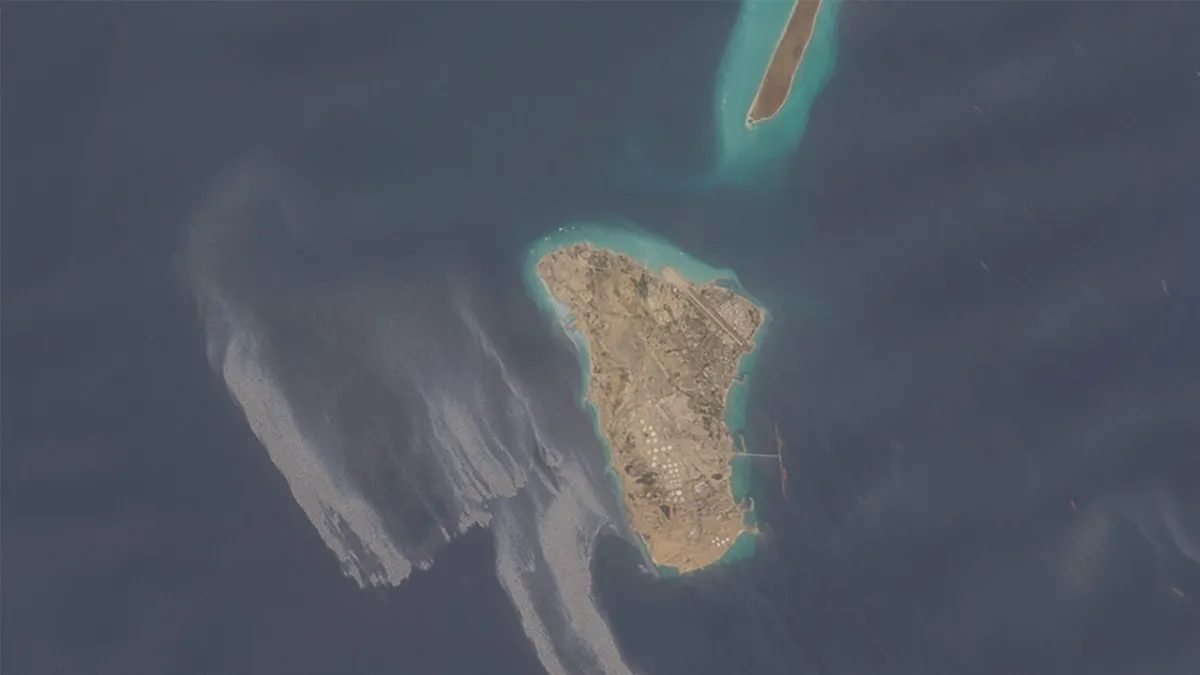
TEHRAN – The United States reportedly launched strikes against three Iranian oil tankers in the strategic waters near Kharg Island, Persian Gulf. This incident occurred as retaliation for a series of rocket attacks that previously targeted American vessels in the region. Tensions between the two superpowers escalated after a missile was identified launching near the critical Kharg facility, a major Iranian oil export hub, raising serious concerns about conflict escalation in the Middle East.
The strikes, confirmed by US intelligence sources, represent a direct response to Iranian maritime aggression. Washington affirmed it would not tolerate threats to international shipping lanes and its military interests in a region vital for global energy supply. This operation indicates a more aggressive US stance in confronting Iranian provocations in 2026.
A prominent oil tycoon, who wished to remain anonymous, offered a sharp comment on the situation. These are just attacks, crumbs. The real conflict is much deeper and untouched, he stated, implying that this incident is merely the tip of the iceberg of complex geopolitical issues. His view highlights the possibility of a larger strategy behind each military action.
Kharg Island serves as Iran's primary oil export terminal, handling over 90 percent of the countrys crude oil exports. Attacks near this location carry significant implications for Irans economic capabilities and global oil supply. Any disruption to shipping lanes or vital facilities there could lead to a surge in world oil prices and economic instability.
This incident unfolds amidst an increasingly fragile global geopolitical landscape in 2026. US President, Donald Trump, known for his firm foreign policy, has repeatedly stated his commitment to maintaining stability in the Middle East. Conversely, Iran continues to strengthen its military presence in the Gulf, often through proxies, fueling prolonged friction with Washington.
Reports of a missile launching near Kharg add a new dimension to the incident. While it remains unclear whether the missile was part of the US strike or an Iranian response, its presence underscores the risk of miscalculation that could quickly transform a limited engagement into a broader confrontation. The international community is closely monitoring these developments.
Several regional Gulf nations have expressed deep concern over this escalation, calling on all parties to exercise restraint. The UN has also urged immediate de-escalation to prevent the outbreak of a larger regional conflict, whose impacts could ripple worldwide. Global stock markets showed minor volatility following the news.
Information regarding a post-war plan mentioned in the source, though vague, suggests that policymakers may already be contemplating long-term scenarios of a potentially widening conflict. This raises questions about how seriously the situation is being assessed by various involved parties and how far they are prepared to face the consequences.
The attacks on oil tankers, a key economic symbol for Iran, represent a significant blow aimed at weakening Tehrans financial capacity. Furthermore, this move also sends a clear security message regarding the US capability to operate effectively in waters considered strategic by Iran. It is a show of force potentially altering regional dynamics.
US allies in the Gulf, such as Saudi Arabia and the United Arab Emirates, will likely observe Irans response and Washingtons countermeasures closely. The stability of oil shipping lanes through the Strait of Hormuz is crucial for the global economy, and any disruption could harm all parties. This situation tests the limits of regional patience.
This latest incident serves as a stark warning to the international community about the fragility of peace in one of the worlds most volatile regions. Foreign policy analysts are calling for more intensive diplomacy to prevent an uncontrolled spiral of escalation. Without meaningful diplomatic intervention, the risk of open conflict will only increase.
Editorial Insight: The US strikes on Iranian tankers and the missile near Kharg mark a significant escalation in a long-running shadow conflict. This action, clearly an assertion of maritime dominance and a response to aggression, could ignite a difficult-to-contain cycle of retaliation. With President Trump back in office and his firm approach, coupled with Irans resolve, the prospect of de-escalation appears dim. The world must brace for energy market volatility and broader regional instability if dialogue does not swiftly pave the way for diplomatic solutions.