 Chris Robert
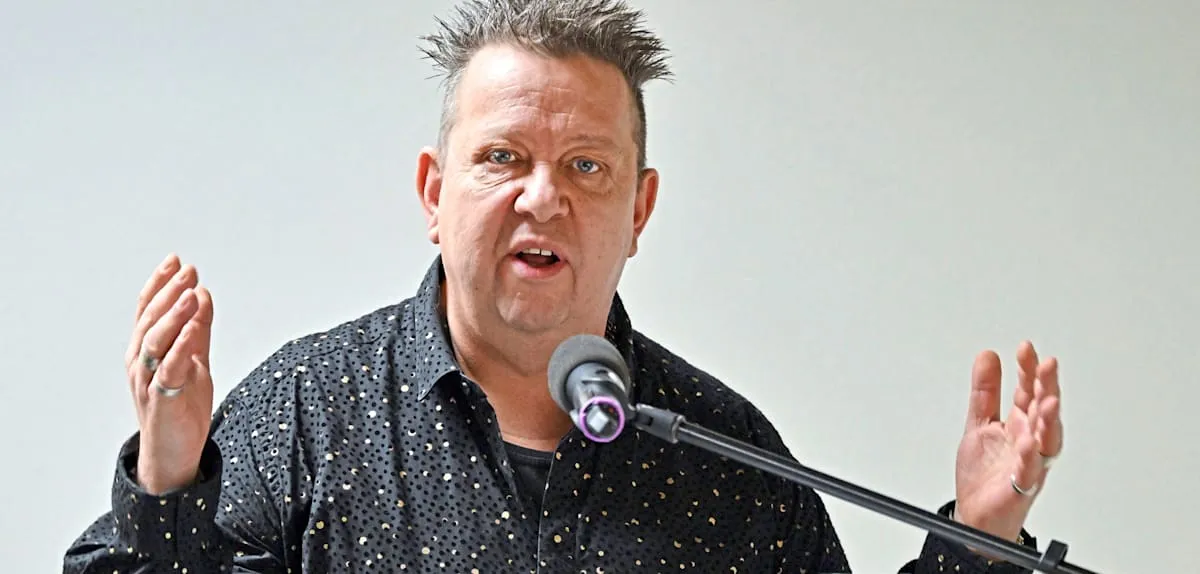
Berlin — Sebastian Krumbiegel, the charismatic vocalist of the legendary music group Die Prinzen, recently called for a more objective and analytical approach to understanding voters of the Alternative for Germany (AfD) party. He urged society to strive to understand the motivations behind supporting the AfD, rather than hastily labeling them. However, Krumbiegel also issued a stern warning against inappropriate racist or antisemitic rhetoric.
Krumbiegel, known for his progressive social views, emphasized the importance of examining the fundamental reasons why individuals choose to support this populist party. The musician's statement comes amidst the dynamic German political landscape of 2026, continually marked by increasing support for the AfD, sparking intense debates about the nation's future direction.
He argued that mere condemnation without understanding would only widen the chasm of polarization. "We must question why people are acting so radically," he stated in an interview. This approach, he believes, is crucial to prevent social disintegration and foster constructive dialogue in an increasingly fragmented society.
The veteran singer identified a thin line separating legitimate conservative views from potentially dangerous reactionary ones. For him, conservatism is a spectrum of thought that acknowledges traditional values and stability, while reactionism tends to reject progress and adhere to discriminatory ideologies.
In the German context, this distinction is particularly crucial, given the nation's dark history of succumbing to extremism. Krumbiegel stressed that differentiating these two spectrums is a fundamental first step to identify and counter destructive narratives.
Krumbiegel's analysis implies that many AfD voters may feel marginalized or unrepresented by established parties. Issues such as immigration, the economy, and dissatisfaction with government policies often serve as key triggers behind their shift in political loyalty.
Concurrently, other German public figures have also voiced similar concerns about the spread of radicalism. The German Minister of Education, for instance, once shook the public with statements about children spreading right-wing radicalism, indicating that this issue has permeated various layers of society.
Krumbiegel's perspective aligns with a broader call to combat extremism. Cultural officials have also called for an ideological war against Nazi-rooted extremism, underscoring the importance of a collective response from all societal elements.
Nevertheless, Krumbiegel firmly warned that empathy for AfD voters should not be interpreted as condoning racist, xenophobic, or antisemitic expressions. "There is no place for such nonsense," he asserted, highlighting the moral boundaries that must not be crossed.
He urged all members of society to maintain vigilance and actively reject all forms of hate speech. Honest and open dialogue, according to Krumbiegel, is the foundation for building an inclusive and democratic society, where differences of opinion can be aired without descending into extremism.
Krumbiegel's statements reflect the urgency for opinion leaders and civil society to engage in deeper discussions about the AfD phenomenon. This is not merely about political preferences, but about understanding the complexity of emotions, concerns, and aspirations that drive some German citizens to make particular political choices.
As an artist, Krumbiegel uses his platform to promote critical thinking and empathy, demonstrating that the role of culture in modern political discourse is vital. He encourages society to look beyond superficial rhetoric and delve into the root causes of issues.
Ultimately, Krumbiegel's message is about the power of understanding versus the danger of judgment. By attempting to rationally delve into the perspectives of AfD voters, Germany can find a path towards more sustainable problem resolution, maintaining unity, and upholding democratic values in 2026 and beyond.