 Angela Stefani
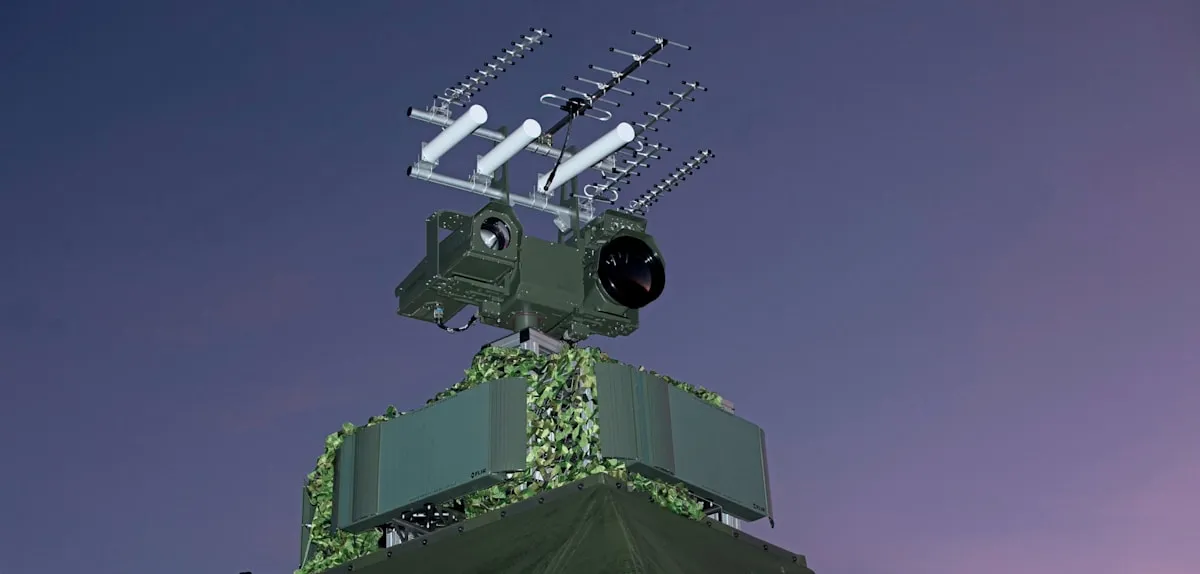
WARSAW – The North Atlantic Treaty Organization (NATO) is progressively implementing a revolutionary new defense strategy, dubbed Kill Web, to fortify its eastern flank against potential geopolitical threats. This integrated system is designed to optimize detection and targeting through automation, while ensuring that the vital role of humans remains paramount in every critical decision on the battlefield.
The development of this Kill Web system marks a significant evolution in NATO's military doctrine, shifting from traditional coordination to a more adaptive and responsive networked approach. This technology aims to accelerate the decision cycle, from threat identification to execution, reducing reaction times which are decisive factors in modern conflicts.
At its core, Kill Web is a highly interconnected defense architecture, integrating various sensor platforms, weapons, and command centers through an advanced digital network. This allows combat units on land, sea, and air to share information in real-time, creating a comprehensive situational picture.
A significant portion of reconnaissance, surveillance, and target acquisition (ISR) tasks will henceforth be carried out by machines, ranging from autonomous drones, artificial intelligence-based sensors, to high-volume data processing systems. This technology is expected to identify threats and present targeting options with accuracy and speed far beyond manual human capabilities.
However, despite the technological efficiency, NATO emphasizes that the ethical and strategic aspects of decision-making remain in the hands of human operators. While machines can process data in milliseconds, the moral considerations and strategic consequences of war are exclusively human domains, stated a senior NATO official who wished to remain anonymous.
The integration of this defense system on Europe's eastern flank, particularly in the Baltic states and Poland, is a direct response to regional security dynamics. Increased tensions and potential threats from the east are prompting the alliance to accelerate the modernization of its military capabilities.
The use of Kill Web also reflects a global trend towards network-centric warfare, where information superiority and rapid response are key to battlefield dominance. This concept has long been tested by global military powers, and NATO is now leading its implementation on the front lines.
Nevertheless, the application of this advanced technology is not without challenges. Cybersecurity issues are crucial, given that highly connected systems are vulnerable to cyberattacks that can cripple or manipulate data. NATO continues to invest heavily in securing its digital infrastructure.
Furthermore, personnel training is a major focus. Soldiers must be trained to interact effectively with complex autonomous systems, understand their limitations and potential, and ensure they can take over control in emergency situations. This requires a paradigm shift in military education.
Kill Web's presence is also expected to provide a significant deterrence effect. With superior detection and response capabilities, the system will make any aggressive endeavor far riskier and more costly for adversaries.
Several NATO member states have begun partial integration of Kill Web components into their military assets, conducting field trials to ensure interoperability and effectiveness. This is a collaborative effort involving massive resource allocation from across the alliance.
This system fundamentally alters the dynamics of defense and offense, placing emphasis on speed, accuracy, and adaptability. Thus, NATO hopes to maintain its technological and operational advantage in an increasingly volatile region. This situation also occurs amidst reports of Russian military setbacks, as highlighted in the article Russia's Military Decline: World War II Era Tanks Deployed, West Highlights Military Regression.
Editorial Insight: The implementation of Kill Web by NATO represents a quantum leap in collective defense strategy. While the promise of efficiency and tactical superiority is immense, the alliance faces significant challenges in balancing automation with human control, particularly concerning the ethics of warfare and the potential for unintended conflict escalation. The success of this system will largely depend on personnel adaptability, the cyber resilience of its infrastructure, and its ability to integrate without causing fatal errors on the front lines.