 Robert Andrison
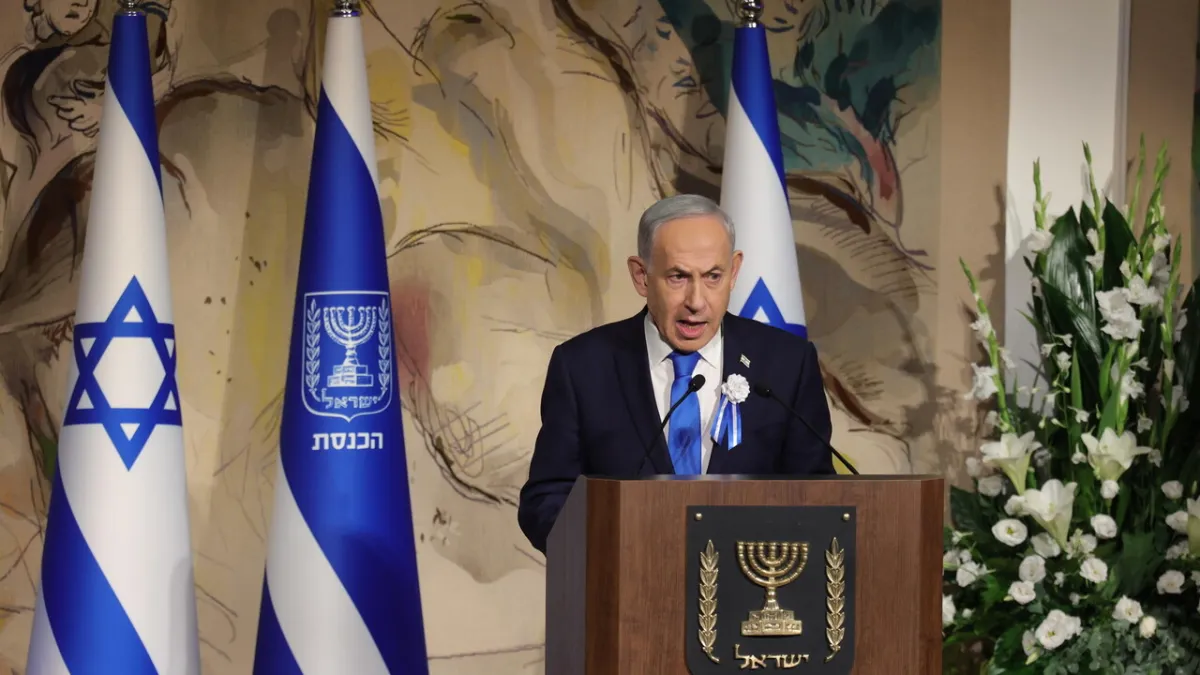
TEL AVIV – Israeli Prime Minister Benjamin Netanyahu has affirmed his resolve to lead a solid government aimed at 'settling accounts' with Iran. This declaration comes amidst an internal political deadlock with Gadi Eisenkot and uncertainties surrounding a Mossad mission in the United States, while the European Union issued a stark warning regarding the humanitarian situation in Gaza.
Netanyahu's firm stance is not without reason. Iran has historically been viewed as an existential threat to Israel, particularly concerning its nuclear program and support for armed groups in the region. For Netanyahu, a stable and united government is an absolute prerequisite for confronting these complex geopolitical challenges.
However, efforts to form or stabilize his cabinet face significant obstacles. The stalemate with Gadi Eisenkot, a senior figure in Israeli politics and security, indicates deep internal divisions. Eisenkot is known for views that sometimes diverge from Netanyahu's hardline stance, especially on security issues and foreign policy.
One source of tension is the alleged secret Mossad mission in the United States, which Eisenkot was reportedly unaware of. Such incidents can erode trust among senior policymakers, raising questions about intelligence coordination and transparency at the highest levels of the Israeli government.
The details of the Mossad mission remain shrouded in secrecy, but its implications are felt in the domestic political arena. If there is indeed a misalignment of information among security ranks, it could weaken the legitimacy of strategic decisions made by Netanyahu's cabinet.
Meanwhile, global attention is focused on the situation in the Gaza Strip. The European Union, through its official statements, expressed profound concern over the 'hell' unfolding in Gaza. They called for the protection of civilians and broader access for humanitarian aid, emphasizing the urgency of resolving the conflict in the territory.
The conditions in Gaza have severely deteriorated following the latest escalation, leading to a dire humanitarian crisis. This EU warning adds diplomatic pressure on Israel to seek sustainable long-term solutions, while also safeguarding regional stability from the potential explosion of a larger conflict.
Political analysts suggest that the tension between Israel and Iran, which is Netanyahu's primary focus, cannot be separated from the dynamics in Gaza. Every step Israel takes in confronting Iran has the potential to trigger a chain reaction that will affect stability in the Gaza Strip and the surrounding region.
Netanyahu's determination to 'close the book' on Iran reflects the view that the threat from Tehran requires a comprehensive response, not only militarily but also through internal political consolidation. However, friction within Israel's own leadership ranks becomes a vulnerability that adversaries could exploit.
In a broader context, the international community, including Pope Leo XIV, has repeatedly called for dialogue and peaceful resolution to address the threats of global uncertainty and violence. Unilateral approaches or actions without internal consensus could further exacerbate an already tense situation.
Editorial Insight:
The current situation in Israel reflects the complex political and security landscape in the Middle East. Netanyahu faces the arduous task of balancing regional ambitions to neutralize the Iranian threat with the urgency of addressing internal vulnerabilities and humanitarian pressures in Gaza. Failure to unite domestic political factions could weaken Israel's position on the global stage and slow down the response to an increasingly volatile crisis.