 Stefani Rindus
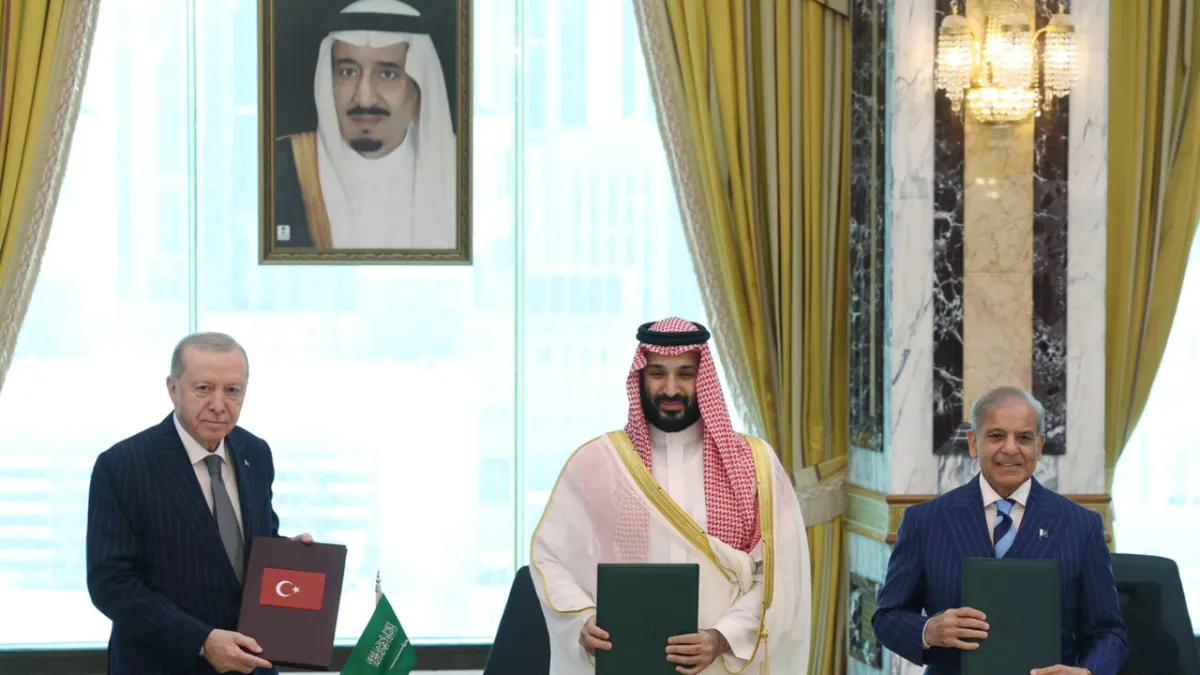
JEDDAH – Three regional powers, Turkey, Saudi Arabia, and Pakistan, officially signed a historic defense pact in Jeddah, Saudi Arabia, in 2026, forming a strategic military alliance predicted to reshape the geopolitical landscape of the Middle East and beyond. This significant agreement, inked by Turkish President Recep Tayyip Erdogan, Saudi Crown Prince Mohammed bin Salman, and the Prime Minister of Pakistan, affirms a commitment to mutual defense, with clauses reminiscent of NATO's Article 5.
This model of collective defense explicitly states that “an attack on one member state will be considered an attack on all member states”, creating a more robust security umbrella for all three parties. The declaration has sparked intense discussions regarding the regional and global implications of this consolidation of power.
“This is not merely a formality, but a collective guarantee for our sovereignty and stability,” stated a senior diplomat involved in the negotiations, underscoring the serious resolve behind the pact. The primary objective of this pact is to strengthen military cooperation, share intelligence, and coordinate defense strategies against common security threats. This move is seen as a collective effort to stabilize a frequently volatile region, while simultaneously projecting greater influence on the international stage.
Initial reactions from Iran were largely skeptical, labeling the pact merely a “paper agreement”. This view reflects the complex geopolitical rivalry in the Middle East, where Iran often finds itself on opposing sides of Saudi Arabia and Turkey on various regional issues.
Comparisons to NATO's Article 5 are unavoidable. That article, as the cornerstone of the North Atlantic Alliance, has been a guarantee of collective security for its member states for decades. The adoption of a similar model by Ankara, Riyadh, and Islamabad indicates an ambition to build an equivalent formal security structure.
As highlighted in a previous article, "Pakta Pertahanan Tiga Negara: Turki, Saudi, Pakistan Ubah Geopolitik Timur Tengah", the formation of this alliance has been anticipated as a significant development. The historical and strategic backgrounds of the three countries indeed show converging security interests.
President Erdogan, in his post-signing speech, emphasized the importance of Muslim solidarity and strategic independence. He also called for closer unity among Islamic nations to address global challenges. Meanwhile, Crown Prince Bin Salman highlighted the necessity of a coordinated response to terrorism and extremism, which continue to be threats in the region. The Prime Minister of Pakistan underscored his country's commitment to contributing to regional peace and stability.
The cooperation agreed upon in this pact includes several key pillars:
- Regular joint military exercises to enhance interoperability and rapid response.
- Exchange of advanced defense technology and military expertise.
- Joint development of weaponry systems tailored to regional needs.
- Closer intelligence coordination in combating asymmetric threats such as terrorism and cyber-attacks.
The formation of this alliance also draws the attention of global powers such as the United States, Russia, and China. Each will closely monitor how this pact will affect their balance of power and strategic interests in the region, especially in the context of energy supply stability and trade routes.
Beyond military aspects, this pact also has the potential to pave the way for closer economic cooperation, including investments in the defense, energy, and infrastructure sectors. This economic synergy could provide additional impetus for stability and growth in the three nations, strengthening their position as key players in the global economy.
Although ambitious, the implementation of this pact will not be without challenges. Differences in national interests, varying geopolitical priorities, and pressure from external powers could pose obstacles. Some analysts also highlight the potential for shifts in traditional alliances and the need for careful diplomacy to avoid conflict escalation in the future.
In addition to Iran, other countries in the Gulf and South Asia will also evaluate the impact of this new alliance. The shift in power could trigger a reorganization of diplomatic and security relations across the regional spectrum, requiring adaptation of foreign policies from various parties.
Editorial Insight: The formation of a defense pact between Turkey, Saudi Arabia, and Pakistan marks a new phase in the global security architecture. This model, adopting NATO's Article 5 principle, is not merely rhetoric but a strong signal of the three nations' aspirations to become more independent balancing powers. If consistently implemented, this alliance has the potential to fundamentally alter regional and global power dynamics, requiring strategic adjustments from other major countries with interests in this crucial region. While potential tensions with Iran exist, the long-term goals of this alliance appear to be more oriented towards internal stability and the projection of long-term geopolitical influence.