 Chandra Wijayanto
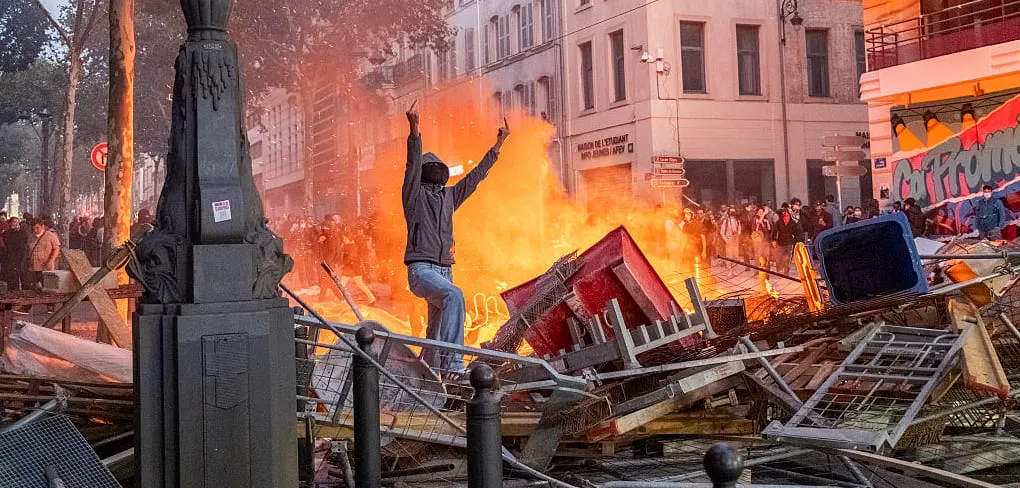
MARSEILLE – The city center of Marseille has been rocked by a wave of mass anarchy following brutal shop looting. Eyewitnesses were shocked to see heartbreaking scenes where parents openly encouraged their children to participate in destruction and theft, while police presence was barely visible for hours. This recent event highlights a crisis of law enforcement and social order in the strategic French port city.
Masked groups were seen moving freely through the heart of the city, unchecked, entering various retail outlets and emptying their contents. These actions were not merely sporadic incidents but appeared organized, sparking fear and desperation among residents and business owners alike.
One eyewitness, who requested anonymity for security reasons, recounted their experience. I saw with my own eyes how some adults, whom I assumed were parents, directed their children, even toddlers, to take items from already damaged stores, they stated with a trembling voice. This is no longer just about looting; it is a collapse of public morality.
This phenomenon underscores a systemic failure in maintaining public order. Reports indicate that police response was minimal, almost non-existent, during several critical hours when the unrest peaked. The absence of law enforcement granted complete freedom to looters to carry out their actions without fear of reprisal.
This incident in Marseille adds to a growing list of social unrest that has plagued France in recent years. A previous article from Cognitodaily.com, France Protests Loom: A Beacon of Europe's Socio-Economic Crisis?, has analyzed how socio-economic tensions in the country have triggered waves of protests and violence. This situation indicates deeper underlying issues than mere ordinary criminal acts.
The involvement of children in the looting raises serious concerns about the future of the younger generation and the psychological impact they might endure. This reflects the urgency of calls such as those conveyed in the article Mattarella Urges Institutions: Stop Ignoring Youth Social Unrest, Prioritize!, which emphasizes the importance of institutions not to overlook social unrest among youth.
1. The French government now faces immense pressure to restore security and order. The public demands explanations for the delayed response from authorities and concrete steps to prevent similar incidents from recurring. Strict law enforcement and effective prevention strategies must be immediately implemented to regain public trust.
This case also brings to mind discussions surrounding Child Detention Decree Shakes Italy, which highlights how issues of children and crime are often linked to social inequality and lack of opportunities. It is crucial for authorities in Marseille to not only address the consequences but also the root causes driving children's involvement in illegal acts.
This looting not only harms small and medium-sized business owners who suffer significant losses but also tarnishes the image of the city of Marseille as a safe destination. The economic and social revitalization of this city will face severe challenges after this incident.
Society hopes that the government can act swiftly and transparently, not only in apprehending the perpetrators but also in formulating long-term policies that can address underlying social problems. Without comprehensive intervention, incidents of this nature have the potential to set a dangerous precedent for social stability across Europe.
Editorial Insight: The incident in Marseille is more than just a criminal act; it is a tangible indicator of the erosion of public trust in law enforcement institutions and a moral crisis within society. The involvement of children, encouraged by their parents, suggests that this chaos is not merely a spontaneous phenomenon but also a reflection of a collective failure to provide a safe and ethical environment. The French government must view this as a serious warning to immediately evaluate existing security strategies and social programs, to prevent a wider escalation of anarchy in the future.