 Chandra Wijayanto
PARIS — More than 20,000 French police and gendarmerie personnel are on high alert, formulating a comprehensive security strategy to safeguard the grand spectacle of the 2026 World Cup in the capital. This massive undertaking stems from invaluable lessons learned from previous international football match security experiences, with the primary goal of ensuring public safety and the smooth execution of this prestigious competition.
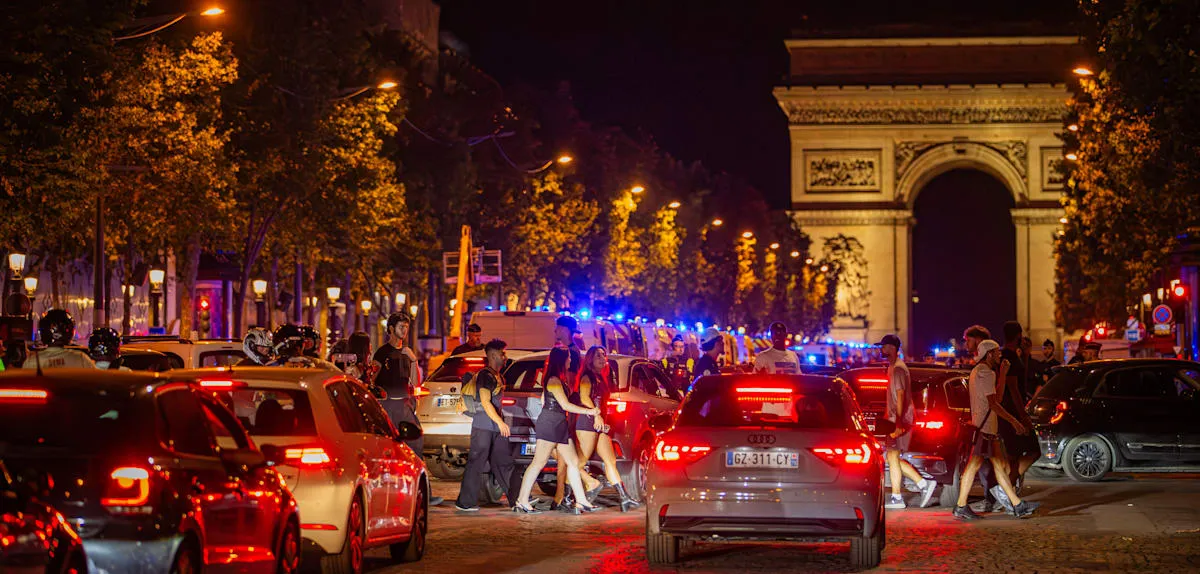
This preparation underscores the French authorities' determination to ensure every security aspect is handled optimally, especially in anticipation of potential crowds and the dynamics of supporter celebrations. Experiences from past “football nights,” often accompanied by car convoys, strict controls, and lengthy barriers, form the basis of a thorough evaluation.
The iconic Champs-Élysées, always a hub for mass celebrations, will be a primary focus of surveillance. Thousands of personnel will be stationed along the avenue, supported by advanced monitoring technology and coordinated access restriction systems. This aims to manage public euphoria without sacrificing public order and security.
Beyond the Champs-Élysées, multi-layered security will also be implemented at various other strategic points, including areas around stadiums, public gathering zones, and major transportation routes. Inter-agency coordination, involving the national police, gendarmerie, and civilian security officers, is key to realizing an integrated and responsive security system.
“We have learned a great deal from every major event we have hosted,” stated Jean-Luc Dupont, Paris Police Prefect, during a press conference in early 2026. “Our top priority is to protect citizens and visitors, while ensuring they can enjoy this football festival safely and comfortably. We will not compromise on public order.”
This strategy highlights France's, and particularly Paris's, commitment as a city that repeatedly hosts international-scale events. The ability to manage large crowds and prevent undesirable incidents is a crucial benchmark for the city's global reputation. Also read the related article: Paris Alarmed: City of Love Prepares for Potential World Cup 2026 Unrest.
The deployment of kilometer-long barriers and random checkpoints across the metropolitan area is an integral part of the security plan. This system is designed to limit unnecessary movement and detect potential threats as early as possible, ensuring public spaces remain safe for all segments of society.
The city government is also activating public education and awareness programs for residents and supporters regarding security rules and procedures during the 2026 World Cup. Public awareness and active participation are expected to be strong supporting elements for the security efforts undertaken by authorities.
Security threats, both from potential civil unrest and acts of terrorism, are always a primary consideration. Therefore, this thorough preparation also includes emergency response simulation exercises and increased personnel capacity to handle various unforeseen scenarios.
The 2026 World Cup is not merely a sporting event, but also a reflection of a nation's capacity to manage logistics, security, and hospitality on a global scale. With the deployment of tens of thousands of personnel, Paris is determined to deliver a safe, orderly, and unforgettable tournament for the entire world.