 Robert Andrison

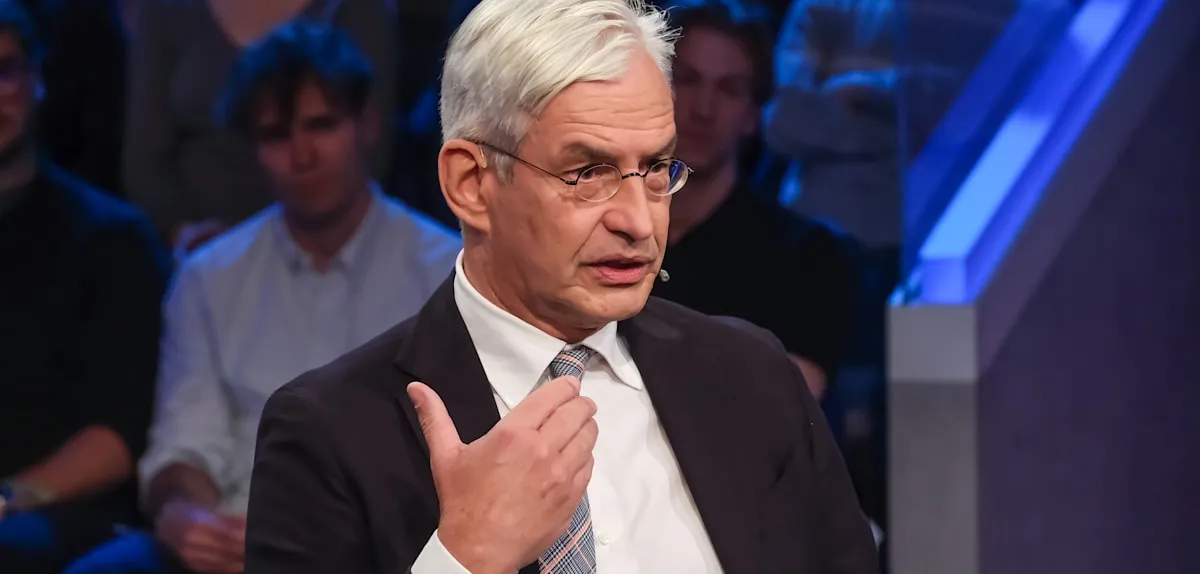
PARIS – The mass violence erupting in recent waves of protests across France transcends a mere domestic incident; it signals a critical warning for the economic and political stability of the entire European continent. Prominent columnist Reinhard Mohr emphatically states that this escalation reflects a 'crisis of European welfare societies as a whole,' cautioning about its potential impact on other nations, including Germany.
The escalating violence, which has garnered global attention, involves the destruction of public and private property, fierce confrontations with security forces, and significant disruption to urban life. Scenes of rising smoke and burning barricades have become symbols of the deep-seated discontent prevalent among sections of French society.
Mohr, a keen observer of European social dynamics, unhesitatingly identifies France as a 'fanal,' or a warning beacon. This beacon highlights the fragility of the social and economic model that has long served as a core pillar of post-war European prosperity. Issues such as economic inequality, insufficient social integration, and distrust in political institutions are at the root of these escalating problems.
'This is not just about France,' Mohr remarked in his analysis, 'we will see what happens in Berlin.' This statement implies serious concern that similar phenomena could spread or are already entrenched in the German capital, renowned as one of Europe's economic powerhouses. Such predictions underscore that seemingly localized problems in France are, in fact, transnational.
The crisis of welfare societies Mohr refers to encompasses challenges in maintaining comprehensive social security systems amidst demographic pressures, migration, and slowing economic growth. This model, which promises a high quality of life and social security, now faces severe tests to remain relevant and sustainable.
Public dissatisfaction manifests not only in street violence but also in increasingly sharp political polarization. Various political factions in France struggle to offer solutions, yet consensus remains elusive, exacerbating existing stalemates. This situation parallels tensions seen in Milan, where youth violence prompted the Mayor to call for comprehensive solutions. Read more about the Milan crisis here.
France's experience offers crucial lessons for other European Union member states. Macroeconomic stability, while vital, is insufficient to guarantee social cohesion. Investment in education, inclusive job creation, and constructive dialogue between governments and society are imperative to mitigate potential social explosions.
Other analysts also highlight how the French crisis resonates with challenges faced by other European nations. For instance, issues of integration and economic dissatisfaction have become sensitive topics in Germany, as demonstrated by the recent scandal involving false refugee claims that shook public trust. Further information on the German scandal can be found here.
European Union leaders now face a complex task: how to address the internal root causes fueling instability in one of its most influential members, while simultaneously preventing a domino effect across the entire bloc. France's stability is critically important for the European project as a whole.
Indeed, the tensions in France also recall other situations involving protests and social unrest, such as the incident at the Louvre where student protests temporarily paralyzed the museum and sparked tensions. See details of the Louvre protests here. This indicates a broader pattern related to public responses to social and political issues.
Editorial Insight:
The escalation of violence in France is a stark warning that Europe's welfare society model requires profound reform. If underlying issues such as economic inequality and social fragmentation remain unaddressed, the potential for political and economic instability across the continent will continue to rise. Policymakers must view this as an opportunity to reassess Europe's socioeconomic foundations to be more adaptive and inclusive in the future. Failure to respond seriously could trigger far broader and unforeseen consequences, as hinted by concerns for the situation in Berlin.