 Stefani Rindus
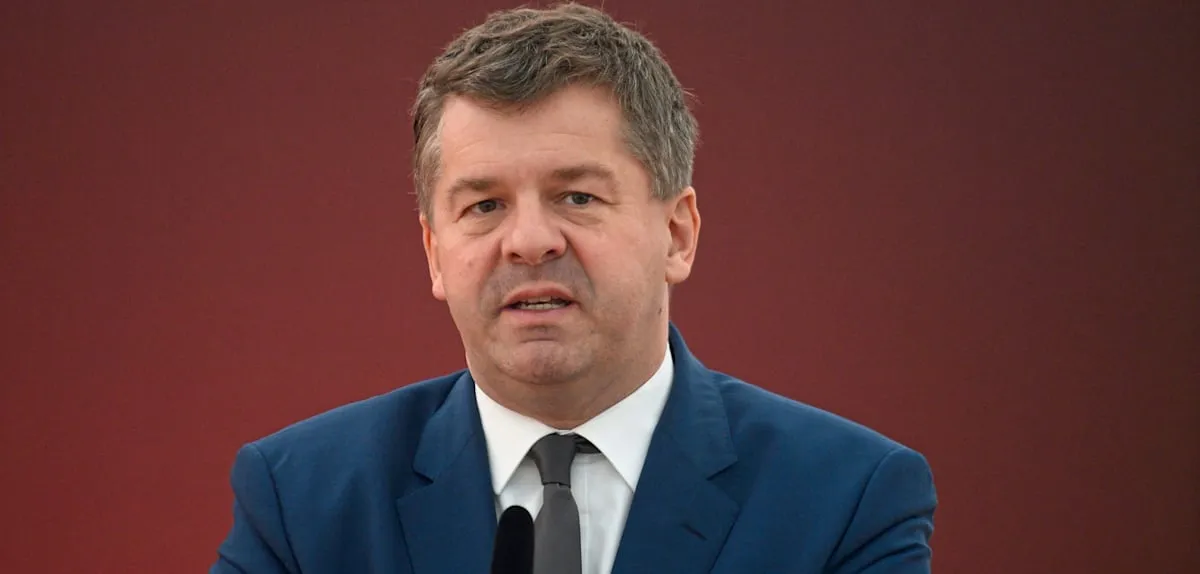
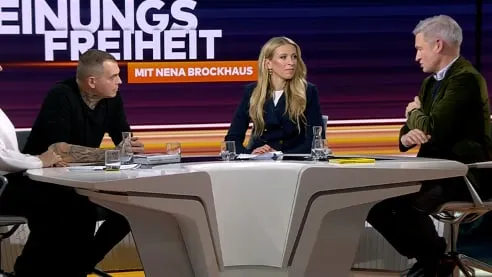
MAGDEBURG – The future of democracy in the German state of Saxony-Anhalt has come under sharp scrutiny following a series of heated political accusations during a panel discussion in 2026. Prominent politicians from across the spectrum, including Sven Schulze of the CDU, Susan Sziborra-Seidlitz of the Green Party, and other figures, exchanged harsh criticisms regarding governing capabilities and their stance on the extremist AfD party, which is deemed capable of undermining democratic foundations. This debate reflects deep concerns about regional political stability.
Sven Schulze, an influential politician from the Christian Democratic Union (CDU), did not hesitate to direct his criticism explicitly at Claudia Wittig. This style cannot be used to govern Saxony-Anhalt, he stated, implying deep dissatisfaction with Wittig's approach to implementing government policies or strategies. This statement opened a Pandora's box of debate about the effectiveness of leadership amidst complex regional challenges.
Conversely, Susan Sziborra-Seidlitz of the Green Party expressed her concerns about potential government paralysis by critiquing Siegmund. According to Sziborra-Seidlitz, Siegmund has absolutely no desire to take the reins of government. This comment underscores serious doubts among political elites regarding the motivation and commitment of officeholders.
Furthermore, Sziborra-Seidlitz also launched strong criticism against the Sahra Wagenknecht Alliance (BSW). She accused BSW of normalizing and downplaying the Alternative for Germany (AfD), a far-right party that frequently sparks controversy. They (BSW) downplay the danger of the AfD, she asserted, highlighting the serious implications of such an attitude for political integrity and democratic values in Germany.
These accusations are not mere empty rhetoric. The AfD has become a significant political force in several eastern German states, including Saxony-Anhalt. The emergence of the new BSW also adds new dynamics to the political landscape, often attracting voters frustrated with established parties. The debate on how to confront the AfD, whether through direct confrontation or normalization, has become a central issue in Germany's heated debates more broadly.
This situation creates a climate of uncertainty that can erode public trust in democratic institutions. When leaders disagree on how to govern or even about threats to the system, political stability becomes vulnerable. Saxony-Anhalt, with its history and socio-economic challenges, urgently needs solid leadership and a clear vision.
The conflict in Saxony-Anhalt also reflects a broader trend in German politics as a whole. Ideological polarization, the rise of populism, and difficulties in forming stable coalitions are challenges that the entire nation must confront. The debate over the future of democracy at the regional level is a reflection of national upheavals.
Political analysts are calling for the warring parties in Saxony-Anhalt to find common ground for the benefit of the people. The need for constructive dialogue and understanding in facing external challenges, such as economic pressures and social tensions, is far more urgent than continuous internal disputes.
Saxony-Anhalt faces various crucial issues, ranging from energy transition and investment withdrawal to demographic problems. Without cohesive and effective governance, solutions to these problems will be difficult to achieve. The credibility of local and regional politics is at stake in every statement and action taken.
Editorial Insight: The political friction in Saxony-Anhalt is a clear indicator of how fragile political consensus is in Germany amidst the surge of alternative parties. Accusations of governing incapacity and the normalization of extremism threaten not only regional stability but also raise questions about the resilience of German democratic institutions in the face of ideological fragmentation. This situation demands leaders to transcend partisan interests to preserve the republic's foundation.