 Demian Sahputra
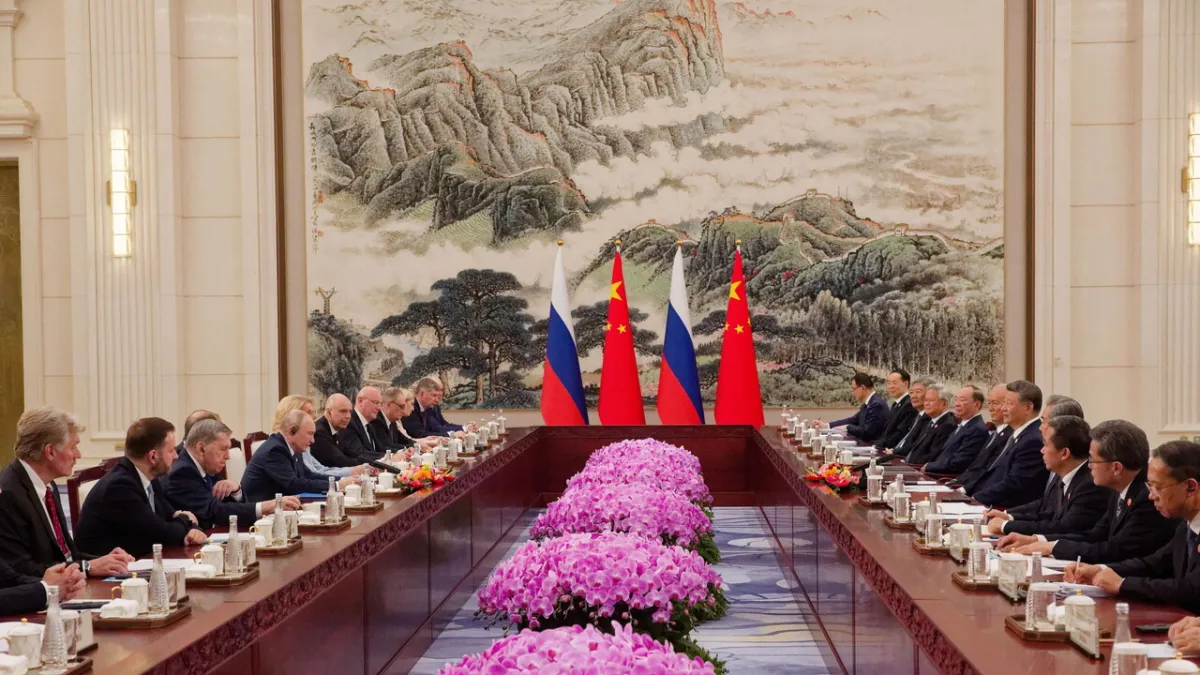
MOSCOW – Russian President Vladimir Putin and Chinese President Xi Jinping have reaffirmed their commitment to building a multipolar world order they claim to be fairer. This declaration follows a series of intense strategic meetings and coordination between the two nations in 2026, aiming to balance Western hegemony and foster global stability through robust bilateral cooperation.
In his latest statement, President Putin emphatically declared, 'With Russia and China, a fairer multipolar world order will come into being.' This statement underscores Moscow's and Beijing's vision to reshape the global power structure, which has historically been dominated by Western nations, particularly the United States.
Echoing Putin's sentiments, President Xi Jinping highlighted the importance of their strategic partnership. The Chinese leader asserted, 'A more stable world is due to the Beijing-Moscow relationship.' This remark reflects the belief that the Russia-China axis is not only crucial for their national interests but also essential for a more balanced global security and economic architecture.
The partnership between Russia and China has expanded rapidly in recent years, driven by aligned geopolitical interests and shared challenges to existing international norms. Russia's 2022 invasion of Ukraine and China's tensions with the United States regarding Taiwan have accelerated the strengthening of this alliance.
Dr. Anya Volkov, a foreign policy observer from Saint Petersburg University, suggests this axis is a natural response to external pressures. 'Both countries see each other as vital partners in confronting what they perceive as Western interventionism and unilateralism,' she stated.
Cooperation extends beyond the political and military sectors. Bilateral trade volumes continue to rise, and both nations actively coordinate within international organizations such as BRICS and the Shanghai Cooperation Organization (SCO). They are also deepening the integration of energy and transport infrastructure.
This vision of a multipolar world order implicitly challenges the model of domination by one or several major powers. Russia and China argue that global decisions should be made through consensus among various power centers, not dictated by a single hegemony.
Reactions from Western nations to this declaration have varied, but largely express concern. Leaders in Washington and Europe view the strengthening of the Russia-China axis as a threat to liberal democratic values and regional stability, especially in the Asia-Pacific and Eastern Europe.
For instance, Japan's strategy under its new Prime Minister appears to be hardening against the Xi-Putin axis. This is indicated by the meeting between Takaichi and US President Donald Trump, which discussed strengthening alliances in the region.
Furthermore, President Xi Jinping has also actively urged stability in the Asia-Pacific and the removal of trade barriers by 2026, demonstrating Beijing's efforts to project an image as a responsible power maintaining regional economic order.
These efforts, while presented as a quest for justice, can also be interpreted as pragmatic steps to secure both nations' strategic interests amidst increasingly heated geopolitical competition. This partnership reflects continually shifting global power dynamics.
The Russia-China axis demonstrates an ambition not only to challenge the status quo but also to reshape the global architecture, with significant long-term implications for international trade, security, and diplomacy.
Editorial Insight:
The declaration from Moscow and Beijing regarding a multipolar world order is more than mere diplomatic rhetoric; it is the foundation for a fundamental shift in global power. Western powers, particularly the United States and its allies, must carefully consider the implications of this partnership. The potential formation of a new power bloc challenging old hegemonies will affect every aspect of geopolitics, from trade to cybersecurity. The expanding influence of these two nations demands a more adaptive approach and constructive dialogue from all parties to prevent extreme polarization that could trigger global instability.