 Chandra Wijayanto
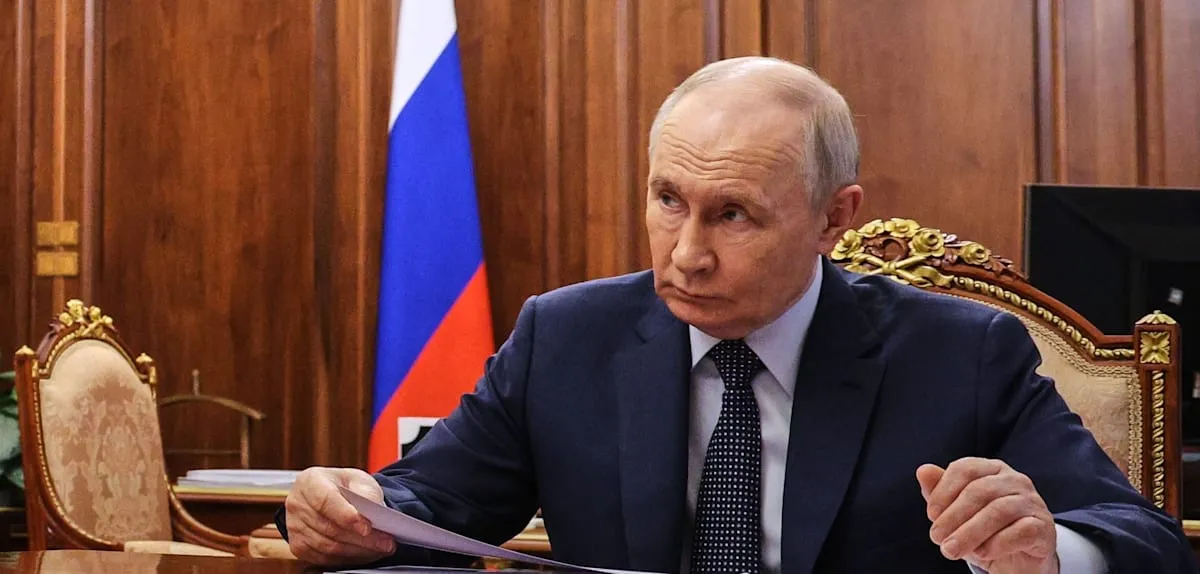
Moscow — The Kremlin, through its spokesman Dmitry Peskov, emphatically dismissed the notion put forth by the 45th President of the United States, Donald Trump, that a series of Ukrainian attacks on Russian territory could serve as a catalyst for ending the war. On the contrary, internal sources indicate that President Vladimir Putin is preparing significant escalation steps in the protracted conflict, raising global concerns about a new phase of intense tension.
Donald Trump, in several public statements, has frequently voiced his belief that increased military pressure from Kyiv on Russia has the potential to force Moscow to cease hostilities. However, this view has received a frank response from the Kremlin, which categorically assesses it as a "fundamental misunderstanding" of strategic realities. Previously, the Kremlin had also stated that Ukrainian attacks on Russia would not end the war.
Peskov, in his statement, emphasized that Ukraine's strategy of targeting Russian territory would provoke a much stronger response from Moscow, rather than de-escalating the conflict. This warning comes amidst a surge in the intensity of Ukrainian drone and artillery attacks often aimed at Russian border towns.
"The idea that launching attacks on our sovereign territory can bring this conflict to an end is an absolute delusion," Peskov stated. "Such provocative actions will only worsen the situation and compel us to implement far more decisive and coordinated retaliatory measures."
Political analysts and intelligence circles with close access to the Kremlin's internal dynamics are reportedly growing increasingly convinced that President Putin is planning a response that goes beyond ordinary diplomatic rhetoric. The scale of this anticipated escalation has the potential to fundamentally and drastically alter the conflict landscape.
The potential forms of escalation being considered are widely varied, ranging from the deployment of larger numbers of troops, the introduction of more advanced weapon systems, to the expansion of the geographical scope of military operations. Analysts note Putin's historical pattern of responding to pressure with increased demonstrations of force.
Donald Trump's stance on the Ukraine conflict has long been a focal point of debate, often contrasting with the dominant narrative in Western countries advocating for unwavering support for Kyiv. His belief in quick negotiations or the ability of Ukrainian attacks to end the war is frequently questioned by the international community.
NATO member states and other Western allies continue to closely monitor every development in Eastern Europe. They remain firm in their commitment to fully support Ukraine's sovereignty and territorial integrity, while also being vigilant about potential shifts in power dynamics that could threaten fragile regional stability.
Escalation of the conflict, if it materializes, would carry massive geopolitical and economic implications, ranging from a potential surge in global energy prices to a deterioration of international relations between major powers. The global community awaits with bated breath to witness the Kremlin's next strategic move.
The prospect of escalation reportedly being planned by President Putin adds a layer of complexity to an already extremely tense crisis. Amidst a spectrum of differing views among world leaders, one undeniable reality is that the future of peace in Eastern Europe remains shrouded in thick uncertainty.